
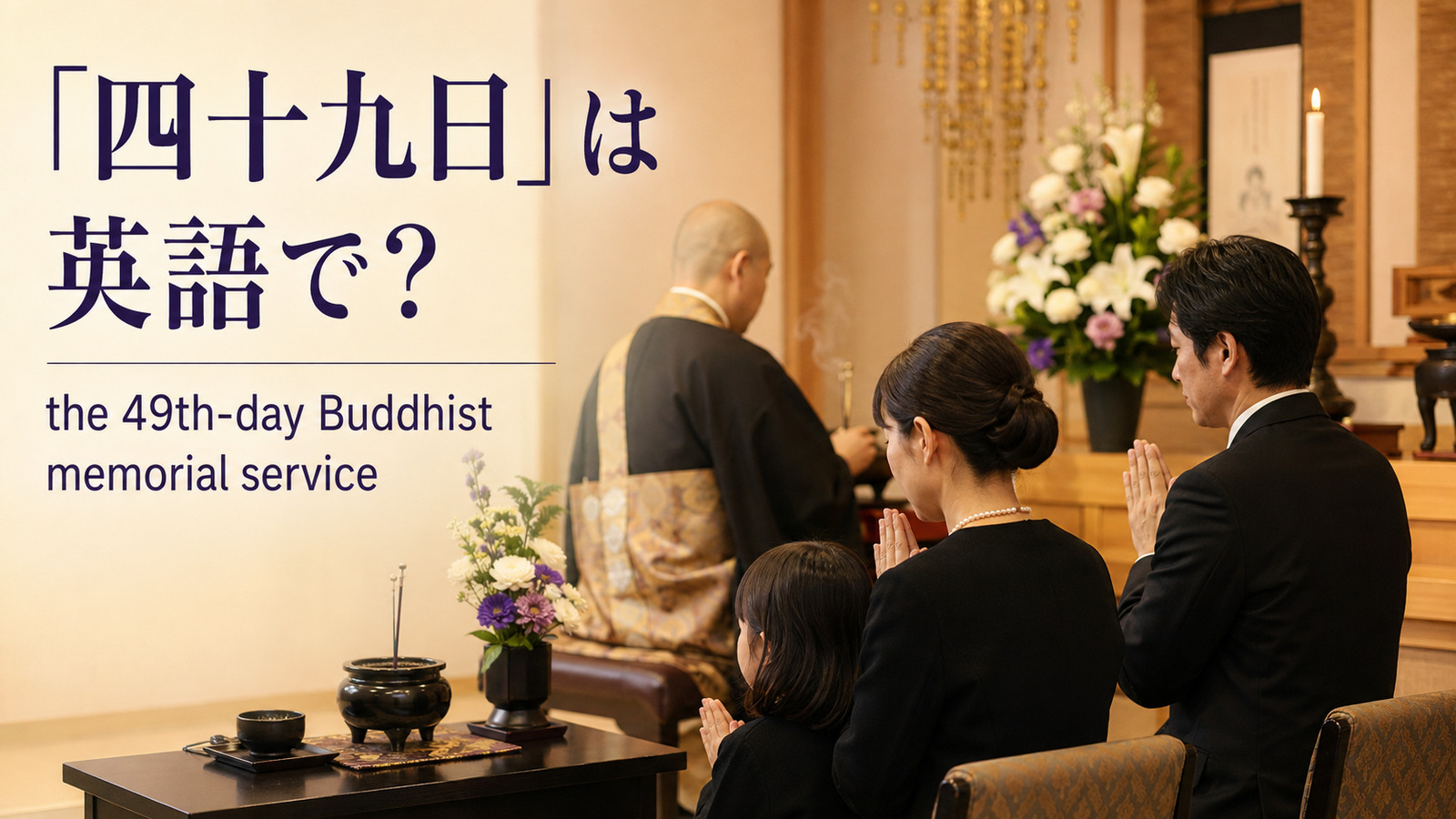
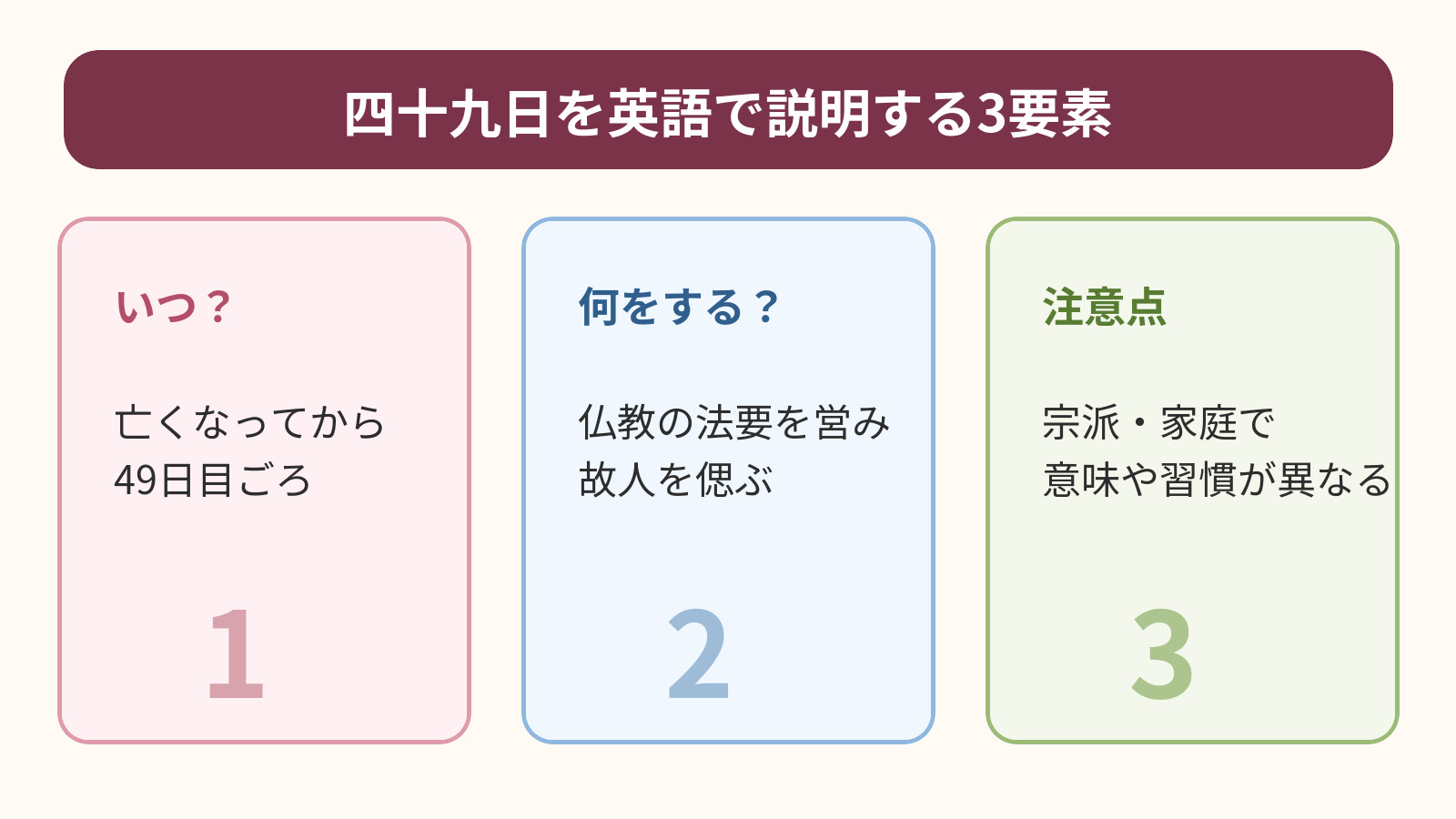
「四十九日」は英語で the 49th-day Buddhist memorial service と説明できます。一語の完全一致はないため、日数・仏教の法要・故人を偲ぶ目的を組み合わせます。
Contents
四十九日の基本表現
We held a Buddhist memorial service on the 49th day after my father’s death.
父が亡くなってから49日目に仏教の法要を営みました。
Our family gathered to remember him.
家族で集まり、父を偲びました。
The date and customs may vary by family and Buddhist tradition.
日付や習慣は家庭や仏教の宗派によって異なる場合があります。
 しゅみすけ(大山俊輔)
49th dayの語順とハイフン
名詞の前で形容詞として使う場合は a 49th-day memorial service とハイフンを入れます。文として「49日目に」と言うなら on the 49th day です。
The service was held on the 49th day.
法要は49日目に行われました。
We attended a 49th-day memorial service.
私たちは四十九日の法要に参列しました。
日本文化として説明する
In many Japanese Buddhist traditions, families hold memorial observances during the weeks after a person dies.
日本の多くの仏教伝統では、死後数週間にわたって法要を営みます。
The 49th day is regarded as an important milestone in mourning.
四十九日は喪の期間における重要な節目とされています。
教義や意味は宗派により異なるため、すべての仏教で同じと断定しないようにします。
納骨・香典返し・忌明けを説明する例文
Some families inter the ashes around the time of the service.
法要の頃に納骨する家庭もあります。
We sent thank-you gifts to those who offered condolences.
お悔やみをくださった方へお礼の品を送りました。
The service marked the end of the formal mourning period for our family.
私たちの家族にとって、その法要が正式な喪の期間の区切りとなりました。
この英語を知らなかったら?【しゅみすけ式】
My mother died 49 days ago. Our family met at a temple. We prayed and remembered her.
母が亡くなって49日たちました。家族でお寺に集まり、祈って母を偲びました。
Buddhist memorial serviceが出なくても、49 days ago、met at a temple、rememberedで場面を説明できます。diedは直接的なので、会話ではpassed awayに替えると穏やかです。
四十九日の案内・出欠連絡で使う英語
Our family will hold the 49th-day memorial service on September 12.
家族で9月12日に四十九日の法要を行います。
The service will be followed by a family meal.
法要のあとに家族で会食します。
Please let us know whether you will be able to attend.
ご出席いただけるかお知らせください。
I’m sorry I cannot attend the service.
法要に出席できず申し訳ありません。
I will take a moment to remember her on that day.
当日は私も故人を偲ぶ時間を持ちます。
法要当日の流れを説明する表現
A Buddhist priest chanted sutras.
僧侶がお経を唱えました。
Family members offered incense one by one.
家族が一人ずつ焼香しました。
We visited the grave after the service.
法要のあと、お墓参りをしました。
The family shared memories over a meal.
家族は食事をしながら思い出を語り合いました。
chant sutras は読経する、offer incense は焼香するという代表的な組み合わせです。実際の手順は宗派で異なります。
忌明けを英語でどう説明する?
「忌明け」に完全一致する一語はありません。the end of the formal mourning period と説明できます。
For our family, the 49th-day service marked the end of the formal mourning period.
私たちの家族では、四十九日の法要が正式な喪の期間の区切りとなりました。
Customs concerning mourning vary among families and Buddhist traditions.
喪に関する習慣は、家庭や仏教の伝統によって異なります。
死後の日数を英語で間違えないために
49 days after his death は「彼の死から49日後」、for 49 days は「49日間」、on the 49th day は「49日目に」です。
- It has been 49 days since he passed away.
彼が亡くなって49日たちました。 - We held the service 49 days after his death.
彼の死から49日後に法要を行いました。 - The family observed a period of mourning for 49 days.
家族は49日間、喪の期間を過ごしました。
相手を傷つけない尋ね方
法要の詳細を興味本位で尋ねると負担になることがあります。話題を相手に委ねる表現が役立ちます。
If you feel comfortable sharing, what happens during the service?
差し支えなければ、法要ではどのようなことをするのですか。
You don’t need to explain if you would rather not talk about it.
話したくなければ、説明しなくても大丈夫です。
しゅみすけ(大山俊輔)
よくある質問(FAQ)
Q. forty-nine daysと49th dayの違いは?
forty-nine days は49日間、the 49th day は49日目を指します。
Q. funeral serviceと同じ?
違います。funeralは葬儀、四十九日は死後に行うmemorial serviceです。
Q. 「四十九日を迎える」は?
It has been 49 days since he passed away. または法要を主語にして We held the 49th-day memorial service. と言えます。
関連記事
法要全般は、「法事・法要」は英語で?、納骨は「納骨する」は英語で?も参考にしてください。
関連表現をまとめて確認する場合は、法要・命日・供養・お墓の英語まとめもご覧ください。