




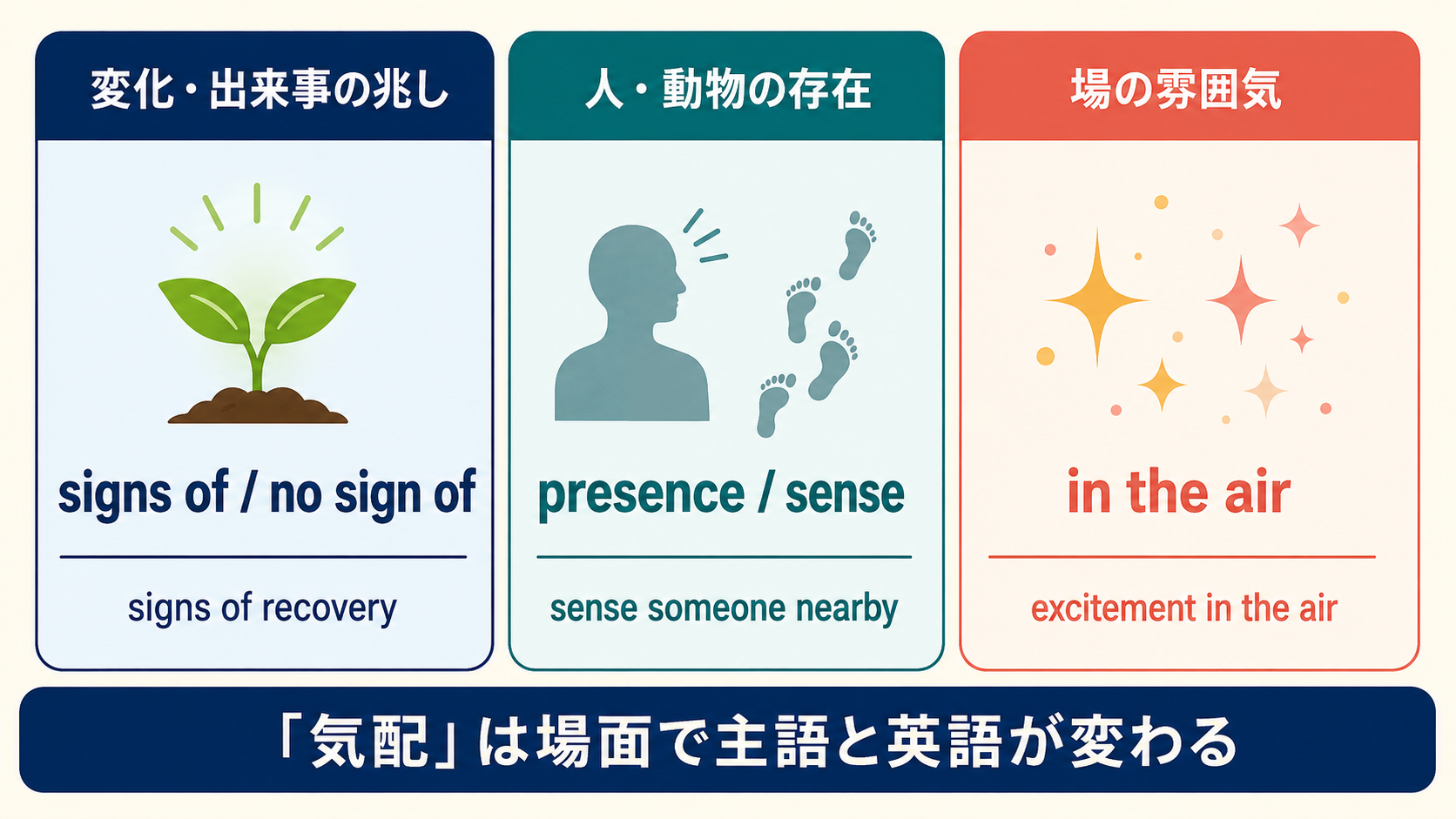
「回復の気配がある」「誰かいる気配がする」「春の気配を感じる」。日本語ではどれも「気配」でまとめられますが、英語では何の気配なのかによって表現が変わります。日本語の形につられて There is a feeling. とすると、意味がぼんやりしたり不自然になったりします。
Contents
先に結論:「気配がある/ない」の基本表現
| 日本語の意味 | 自然な英語 | 例 |
|---|---|---|
| 変化・出来事の兆し | signs of / no sign of | There are signs of recovery. |
| 人・動物の存在 | presence / sense | I sensed someone nearby. |
| 場に漂う雰囲気 | in the air | There was excitement in the air. |
| 目に見える手がかり | evidence / indication | There was no evidence of a break-in. |
いちばん広く使えるのは signs of ~ です。ただし、人がそこにいる「気配」なら presence や動詞の sense、空気中に漂う雰囲気なら in the air が自然です。
 しゅみすけ(大山俊輔)
1.変化の「気配」は signs of ~
sign は、これから起こることを示す「兆し・しるし」です。通常は複数形の signs of + 名詞、または signs that + 文 を使います。
- There are signs of recovery.
回復の気配があります。 - We’re seeing signs of improvement.
改善の気配が見えてきています。 - There are signs that demand is slowing.
需要が鈍化する気配があります。 - The weather shows signs of changing.
天気が変わる気配があります。
There are signs of ~. は兆しが存在することを述べ、show signs of ~ は人・物・状況が兆候を見せることを述べます。詳しい語順はshow signs of の意味と使い方でも確認できます。
「気配がない」は no sign of ~
- There’s no sign of rain.
雨が降る気配はありません。 - There’s still no sign of improvement.
まだ改善の気配がありません。 - He showed no sign of leaving.
彼は帰る気配を見せませんでした。
no signs も可能ですが、決まり文句としては no sign of ~ と単数形がよく使われます。また、There is no sign of him. は「彼が来る気配がない」よりも「彼の姿が見当たらない」という意味になることがあります。
2.人がいる「気配」は presence / sense
人や動物が近くにいると感じる場合、英語では「気配がある」を存在の名詞 presence か、「察知する」という動詞 sense で表します。
- I sensed someone behind me.
後ろに誰かいる気配がしました。 - She felt a presence in the room.
彼女は部屋に誰かいる気配を感じました。 - I could sense that someone was watching me.
誰かに見られている気配がしました。 - There was no sign of anyone inside.
中に人がいる気配はありませんでした。
There is a presence. だけだと、神秘的・不気味な存在を連想させることがあります。日常なら I think someone is here. や I can hear someone inside. のように、感じた根拠をそのまま言うほうが自然です。sense・notice・detect の違いも関連記事です。
3.季節や感情の「気配」は in the air
~ is in the air は、季節・期待・緊張などが周囲に漂い、みんなが感じ取れるという表現です。
- Spring is in the air.
春の気配がします。 - There was excitement in the air.
わくわくした気配が漂っていました。 - You could feel the tension in the air.
緊張の気配が感じられました。 - Change is in the air.
変化の気配があります。
Spring is in the air. は、春そのものが空気中にあるという直訳ではなく、暖かさ・香り・明るさなどから春の訪れを感じる言い方です。
4.気配・兆し・証拠の違い
| 表現 | 中心の意味 | 向いている場面 |
|---|---|---|
| sign(s) | 何かを示す兆し | 回復、雨、変化、問題 |
| presence | 人・物がそこにいること | 人の気配、存在感 |
| sense | 感覚で察知する | 視線、人、危険、変化 |
| in the air | 場に漂う雰囲気 | 季節、期待、緊張、恋愛 |
| evidence | 判断を支える証拠 | 侵入、犯罪、調査 |
| indication | 判断材料となる兆候 | 仕事、分析、やや硬い説明 |
evidence は単なる予感ではなく、観察できる証拠を指します。There was no evidence of forced entry. は「無理に侵入した形跡はなかった」です。
5.主語と語順のポイント
- There are signs of + 名詞:There are signs of progress.
- 主語 + show signs of + 名詞/動名詞:She showed signs of getting tired.
- 人 + sense + 名詞/that節:I sensed danger. / I sensed that something was wrong.
- 名詞 + be in the air:Change is in the air.
日本語は「気配がある」を主語なしで言えますが、英語では兆しが存在するのか、誰かが察知するのか、雰囲気が漂うのかを文の形で示します。
日常・仕事・人間関係で使う例文
日常・旅行
- There’s no sign of the bus yet.
バスが来る気配はまだありません。 - I sensed someone outside the tent.
テントの外に誰かいる気配がしました。 - Rain is in the air.
雨の気配がします。
仕事
- We’re finally seeing signs of growth.
ようやく成長の気配が見えてきました。 - There’s no indication that the deadline will change.
締め切りが変わる気配はありません。 - I sense some hesitation from the client.
クライアントが少しためらっている気配を感じます。
恋愛・人間関係
- Love was in the air.
恋の気配が漂っていました。 - He showed no sign of being upset.
彼は怒っている気配を見せませんでした。 - I sensed that she wanted to leave.
彼女が帰りたそうな気配を感じました。
短い会話例
A: Do you think the market is recovering?
市場は回復していると思いますか?
B: Yes, we’re seeing a few positive signs.
はい、良い兆しがいくつか見えています。
A: Is anyone in the office?
オフィスに誰かいますか?
B: I don’t think so. There’s no sign of anyone.
いないと思います。人の気配がありません。
しゅみすけ(大山俊輔)
日本人が間違えやすい言い方
× There is a sign to recover.
sign of + 名詞/動名詞 を使い、There are signs of recovery. または There are signs that it is recovering. とします。
× I feel someone in the room.
人の存在を察したなら I sense someone in the room. が明確です。feel someone は文脈によって「人の体に触れる」の意味にもなります。
× There is a mood of spring.
「春の気配」なら、自然な定型表現 Spring is in the air. が使えます。
この表現を知らなければ、どう言えばいい?
難しい単語を使わず、気配の中身を説明しましょう。
- It looks like things are getting better.
良くなってきているようです。 - I think someone is nearby.
近くに誰かいると思います。 - It feels like spring is coming.
春が来そうな感じがします。 - Nothing is happening yet.
まだ何も起きていません。
少し説明的でも、何を感じたのかが相手にはっきり伝わります。
FAQ
「~する気配がない」は英語で?
show no sign of doing が便利です。たとえば「彼は帰る気配がない」は He shows no sign of leaving.。「まだ始まる気配がない」なら There’s no sign of it starting yet. と言えます。
「人の気配がない」は There is no person ですか?
There is no person. は不自然です。There’s no one here.(誰もいない)、There’s no sign of anyone.(人の気配がない)が自然です。
「嫌な気配がする」は?
危険や問題を直感したなら I sense trouble. や Something feels wrong. が自然です。単なる予感なら「嫌な予感がする」の検索意図に近くなります。
sign と indication の違いは?
sign は日常会話でも使う広い「兆し」。indication はデータや状況から判断する「兆候・示唆」で、仕事や分析の文脈に向いています。
まとめ
「気配がある/ない」は一語で固定せず、意味から選びます。変化の兆しなら signs of / no sign of、人の存在なら presence / sense、場に漂う雰囲気なら in the air が基本です。「何の気配か」を具体化すると、英語の主語と語順も自然に決まります。
「根拠がある/ない」との違いも気になる方は、「根拠がある/ない」は英語で?もあわせてご覧ください。