

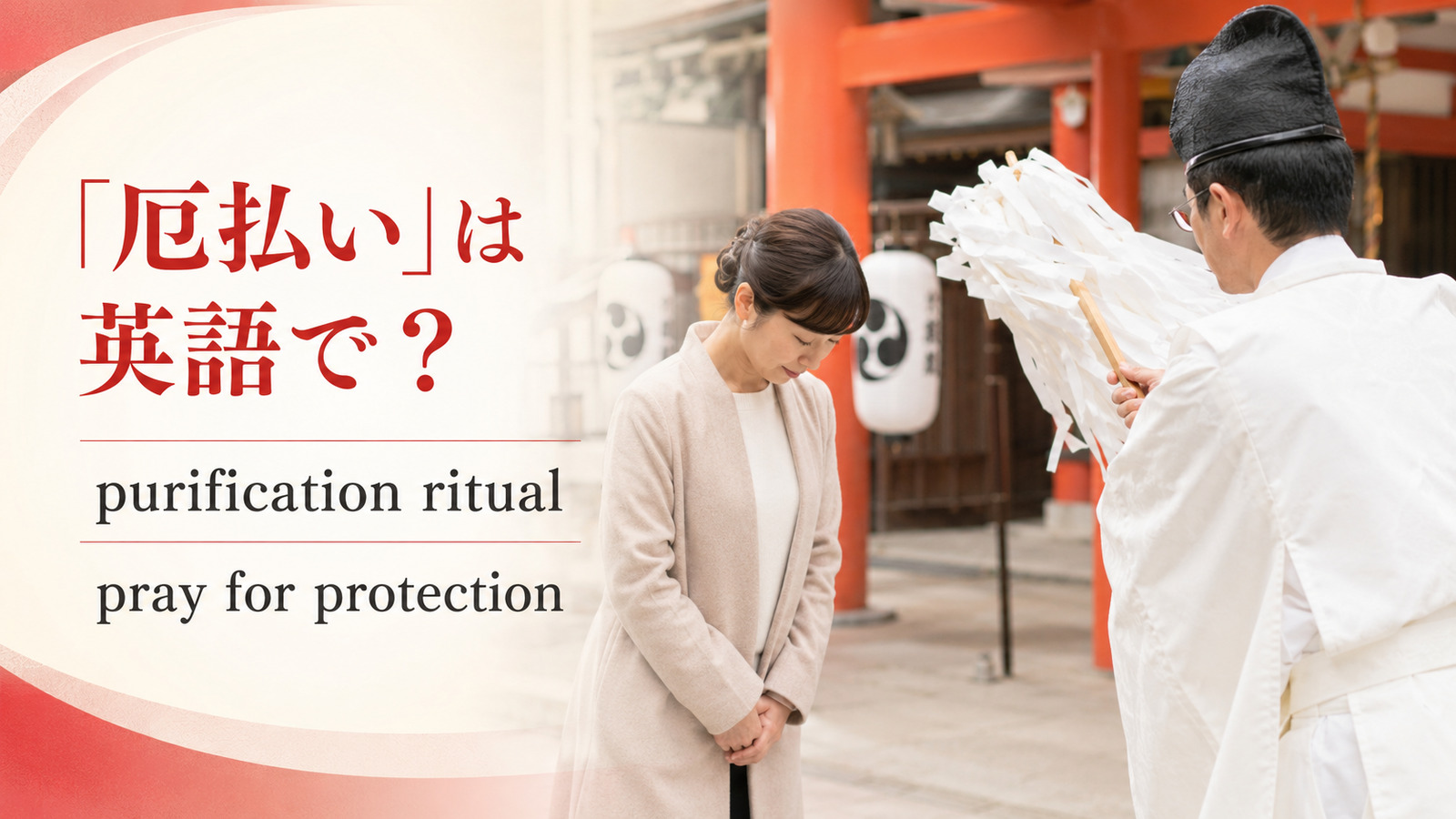
「厄払い」は、儀式なら a purification ritual、目的なら pray for protection from misfortune と説明します。完全一致する英単語はありません。
Contents
厄払いの英語は目的で使い分ける
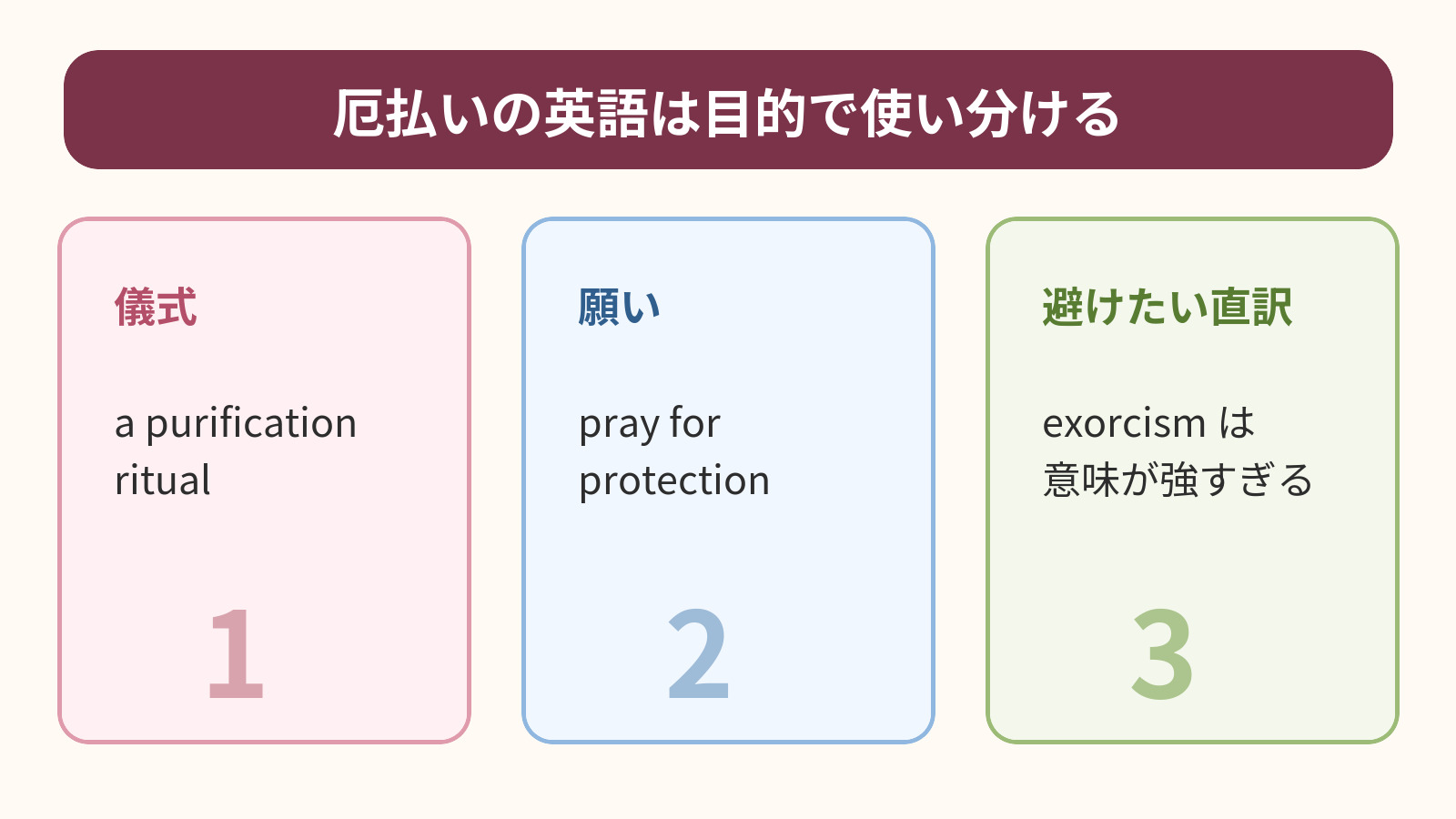
I went to a Shinto shrine for a purification ritual.
厄払いの儀式を受けるため神社へ行きました。
We prayed for protection from misfortune.
災いから守られるよう祈りました。
A Shinto priest performed the ritual.
神職が儀式を執り行いました。
 しゅみすけ(大山俊輔)
厄年を英語で説明する
Yakudoshi refers to certain ages traditionally believed to bring a higher risk of misfortune.
厄年とは、伝統的に災いが起こりやすいと考えられる特定の年齢を指します。
The ages differ for men and women in traditional Japanese custom.
日本の伝統習慣では、男性と女性で年齢が異なります。
現代の受け止め方や地域差があるため、traditionally believed とし、事実として断定しないのが大切です。
日常会話で使える例文
This year is considered an unlucky age for me.
今年は私にとって厄年とされています。
I received a blessing at the shrine.
神社でご祈祷を受けました。
I bought a protective amulet.
災い除けのお守りを買いました。
The custom varies by region and shrine.
この習慣は地域や神社によって異なります。
この英語を知らなかったら?【しゅみすけ式】
In Japan, some ages are thought to be unlucky. I went to a shrine and asked to be safe.
日本では、いくつかの年齢は運が悪いと考えられています。私は神社へ行き、無事を願いました。
purificationやmisfortuneが出なくても、unlucky、go to a shrine、be safeで中心的な意味は伝わります。ただし宗教儀式の詳しい形式は省略した説明です。
厄払いを受ける前後の会話表現
予定を伝える
I’m going to a shrine this weekend to receive a purification blessing.
今週末、厄払いのご祈祷を受けるため神社へ行きます。
I made a reservation for the ritual.
ご祈祷の予約をしました。
The ceremony will take about thirty minutes.
儀式は30分ほどかかる予定です。
終わったあとに感想を話す
I felt calmer after the ceremony.
儀式のあと、気持ちが落ち着きました。
The priest explained the meaning of the ritual.
神職が儀式の意味を説明してくれました。
I received an amulet to carry with me.
身に付けるお守りを受けました。
purify・protect・ward offの違い
purify は人や場所を清める、protect は災いから守る、ward off は悪いものを寄せ付けないという意味です。
- The ritual is meant to purify the person.
その儀式は人を清めるためのものです。 - We prayed for protection throughout the year.
一年を通した加護を祈りました。 - The amulet is believed to ward off misfortune.
そのお守りは災いを遠ざけると考えられています。
信仰上の効果を客観的事実として断定せず、is believed toやis meant toを使うと中立的です。
厄払いと日常の「厄落とし」を区別する
日常会話では、嫌な出来事のあとに買い物や旅行をして気分を切り替えることを比喩的に「厄落とし」と呼ぶ場合があります。この場合は宗教儀式ではないため、do something to change my luck や make a fresh start が近い表現です。
After a difficult year, I wanted to make a fresh start.
大変な一年のあと、気持ちを新たにしたいと思いました。
I treated the trip as a way to leave the bad year behind.
その旅行を、悪い一年を過去にする機会と考えました。
海外の人へ厄年を丁寧に説明する会話例
A: Why are you going to the shrine?
なぜ神社へ行くのですか。
B: This is traditionally considered an unlucky age for me, so I’m going for a purification ritual.
今年は伝統的に私の厄年とされるため、厄払いへ行きます。
A: Do all Japanese people do that?
日本人は全員するのですか。
B: No. It depends on the person, family, and region.
いいえ。本人、家庭、地域によります。
しゅみすけ(大山俊輔)
厄払いについて英語で質問するときの表現
厄払いを受ける本人に質問するときは、信仰の強さを決めつけず、予定や体験を尋ねる形が自然です。
Is this your first time receiving a purification blessing?
厄払いのご祈祷を受けるのは今回が初めてですか。
Did your family recommend the ritual?
ご家族にその儀式を勧められたのですか。
Do you need to prepare anything beforehand?
事前に何か準備する必要がありますか。
What happens during the ceremony?
儀式ではどのようなことをするのですか。
I hope the year ahead brings you peace and good health.
これからの一年が穏やかで健康なものになりますように。
「本当に効果があるの?」と直接尋ねるよりも、本人にとっての意味や体験を聞くほうが丁寧です。厄年を信じる程度は人によって異なるため、Do you believe in unlucky ages? と尋ねる場合も、否定的な口調にならないよう注意しましょう。
よくある質問(FAQ)
Q. 「厄を落とす」はremove bad luck?
日常的な説明には使えますが、儀式ならundergo a purification ritualが自然です。
Q. 「お祓い」と「厄払い」は同じ英語?
重なる場合があります。お祓いは広くpurification、厄払いはprotection from misfortuneという目的を加えると区別できます。
Q. superstitionと言ってよい?
相手の信仰を否定的に響かせる可能性があります。traditional beliefやcustomが中立的です。
関連記事
神社での祈りの説明は、「安産祈願」は英語で?も参考にしてください。