




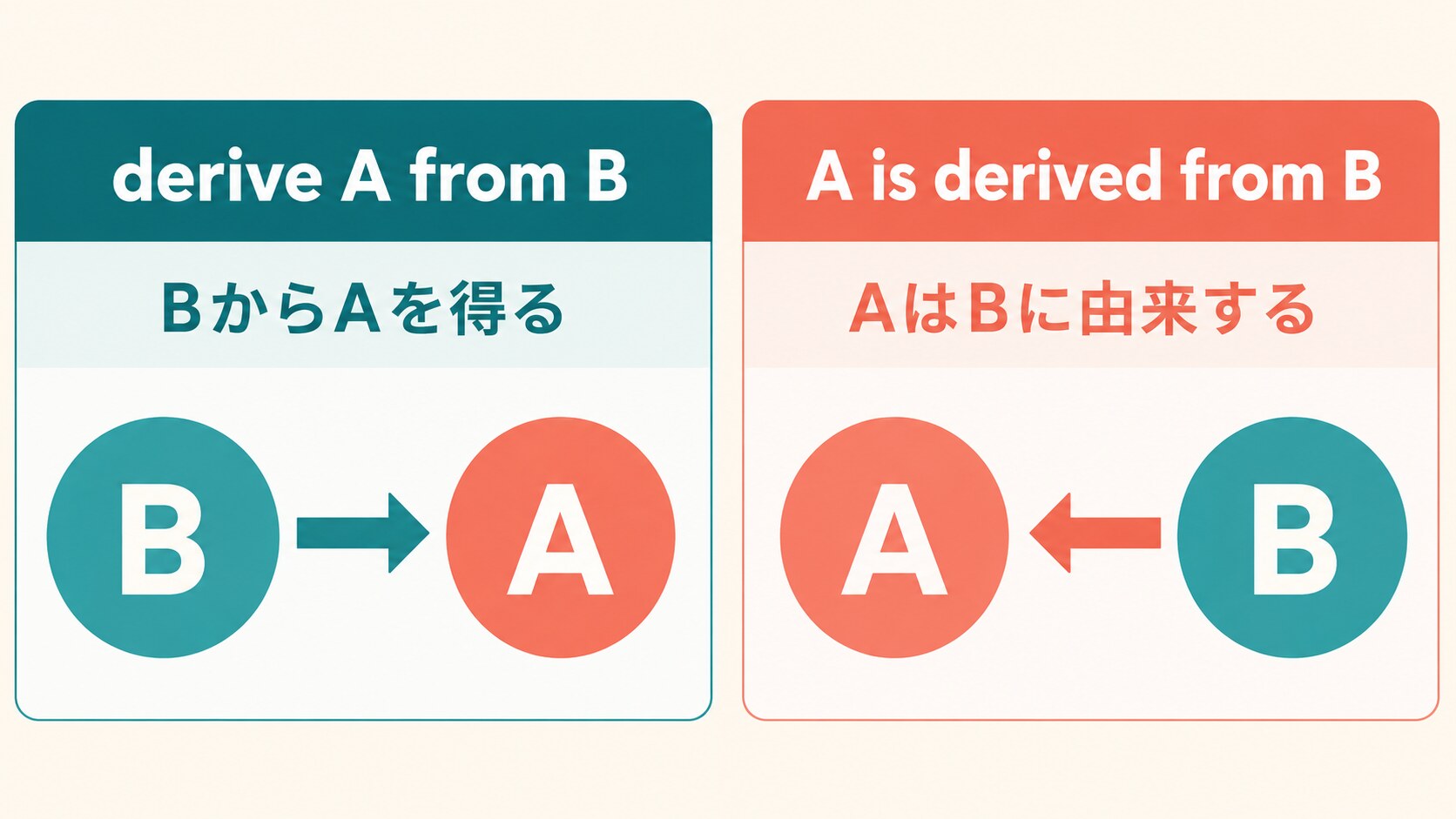
derive A from B は、「BからAを引き出す・得る」という意味です。知識から結論を導く、経験から利益を得る、ある原料から成分を取り出す、といった場面で使われます。
また、受動態の A is derived from B は「AはBに由来する・AはBから作られる」という意味で、語源や原料の説明によく登場します。この記事ではAとBの語順、derive from・be derived from の違い、come from・extract との使い分けまで整理します。
 しゅみすけ(大山俊輔)
Contents
derive A from Bの意味と語順
基本の型は次のとおりです。
derive + A + from + B = BからAを引き出す・得る
- A:得られる結果・利益・情報・成分
- B:Aが出てくる源・起点
We derived useful insights from the customer survey.
私たちは顧客アンケートから有益な知見を得ました。
She derives great satisfaction from helping others.
彼女は人を助けることから大きな満足感を得ています。
Scientists derived the formula from basic physical principles.
科学者たちは基本的な物理原理からその公式を導き出しました。
fromは「源・起点」を示す
from の中心には「起点から離れて出てくる」という感覚があります。derive A from B では、Bを出発点として、そこからAが取り出される流れを示します。
たとえば derive confidence from experience なら、経験が源Bで、そこから自信Aが生まれるイメージです。
from が場所だけでなく、原因・材料・情報源を表す仕組みは、be-rize.comのfromのコアイメージ解説で詳しく確認できます。
deriveでよく使われる3つの意味
1.利益・喜び・満足を得る
derive benefit / pleasure / satisfaction from ... は、少し改まった文章やビジネス英語でよく使われます。
Both companies will derive benefits from the partnership.
両社はその提携から利益を得るでしょう。
He derives a sense of purpose from his work.
彼は仕事から生きがいを得ています。
I derive a lot of pleasure from cooking for my family.
私は家族のために料理することから大きな喜びを得ています。
2.情報から結論・知識を導き出す
データ、証拠、経験などをもとに、結論や意味を引き出す場合にも使います。
What conclusion can we derive from these results?
これらの結果から、どのような結論を導き出せますか。
Most of our knowledge is derived from direct experience.
私たちの知識の多くは、直接の経験から得られています。
The team derived its estimate from last year’s sales data.
チームは昨年の売上データから見積もりを算出しました。
3.原料・源から成分や製品を得る
食品、薬品、エネルギーなどが何を原料・供給源としているかを説明するときにも使われます。
This medicine is derived from a tropical plant.
この薬は熱帯植物から作られています。
The region derives most of its electricity from wind power.
その地域は電力の大部分を風力発電から得ています。
Many flavors are derived from natural ingredients.
多くの香料は天然原料から作られています。
A is derived from Bは「AはBに由来する」
受動態の A is derived from B では、結果Aを主語にします。日本語では「AはBから得られる」「AはBに由来する」「AはBから作られる」と訳します。
The word “salary” is derived from the Latin word for salt.
salaryという単語は、塩を意味するラテン語に由来します。
Her confidence is derived from years of experience.
彼女の自信は長年の経験から来ています。
This information was derived from public records.
この情報は公開記録から得られたものです。
derive fromだけでも「〜に由来する」
A derives from B のように、derive を自動詞として「AはBに由来する」の意味で使うこともあります。
The custom derives from an ancient tradition.
その習慣は古代の伝統に由来します。
ただし、語源・原料・情報源の説明では is derived from が非常によく使われます。まずは受動態の形を使えるようにすると安心です。
場面別の自然な例文
仕事・データ分析
We derived the forecast from three years of sales data.
私たちは3年分の売上データから予測を立てました。
The company derives nearly half of its revenue from overseas markets.
その会社は売上の半分近くを海外市場から得ています。
学習・成長
You can derive valuable lessons from failure.
失敗から貴重な教訓を得ることができます。
She derived confidence from speaking English every day.
彼女は毎日英語を話すことで自信を得ました。
恋愛・人間関係
He derives too much of his self-worth from his partner’s approval.
彼は自分の価値を、パートナーから認められることに頼りすぎています。
We both derive comfort from knowing we can talk honestly.
私たちは、率直に話せると分かっていることから安心感を得ています。
暮らし・健康
Your body derives energy from the food you eat.
体は食べたものからエネルギーを得ます。
Some people derive more benefit from morning exercise than evening exercise.
夜より朝の運動のほうが効果を得やすい人もいます。
derive・come from・extract・obtainの違い
| 表現 | 中心のニュアンス | 例 |
|---|---|---|
| derive A from B | 源Bから価値・結果Aを引き出す。やや硬め | derive benefit from experience |
| A comes from B | Aの出所・原因はB。日常的で広く使える | This idea came from Maya. |
| extract A from B | Bの中からAを物理的・技術的に取り出す | extract oil from seeds |
| obtain A from B | BからAを入手する。取得に焦点 | obtain data from users |
deriveとcome from
come from は「〜から来る」という最も分かりやすい表現です。derive は、源から何らかの価値・意味・結果を引き出す響きがあり、文章や説明でよく使われます。
This word comes from French.
この単語はフランス語から来ています。
This word is derived from French.
この単語はフランス語に由来します。
deriveとextract
extract は、液体・成分・情報などを「中から取り出す作業」を強く意識させます。derive は物理的な抽出に限らず、利益・喜び・結論などにも広く使えます。
Oil is extracted from the seeds.
種から油が抽出されます。
The product’s health benefits are derived from the oil.
その製品の健康効果は、その油に由来します。
よくある間違い
1.AとBを逆にしない
「経験から自信を得る」は、経験が源B、自信が結果Aです。
正:derive confidence from experience
誤:derive experience from confidence(意味が逆になります)
2.fromをofにしない
derive は起点を示す from と組み合わせます。
誤:This word is derived of Latin.
正:This word is derived from Latin.
3.日常の「もらう」すべてに使わない
友人からプレゼントをもらったなら、普通は I got a present from my friend. と言います。derive は、源から利益・感情・知識・成分などを得る場面に向いています。
しゅみすけ(大山俊輔)
中学英語で簡単に言い換えるなら
- We got useful ideas from the survey.(アンケートから役立つ考えを得ました)
- This word comes from Latin.(この単語はラテン語から来ています)
- I learned a lot from the experience.(その経験から多くを学びました)
- Wind gives the town most of its electricity.(風力が町の電力の大部分を供給しています)
まとめ
derive A from B の核は、「源Bから、結果・価値Aを引き出す」です。
derive A from B:BからAを得る・引き出すA is derived from B:AはBから得られる・Bに由来するA derives from B:AはBに由来する- 利益・満足・結論・収入・原料などとよく使う
まずは We derived useful insights from the data. と This word is derived from Latin. の2文で、能動態と受動態の語順を身につけてみてください。
同じA・B型でも語順が逆方向になる表現として、deprive A of Bの意味と使い方も比較すると理解が深まります。ほかの表現は、英熟語・定型表現の総合ガイドから確認できます。