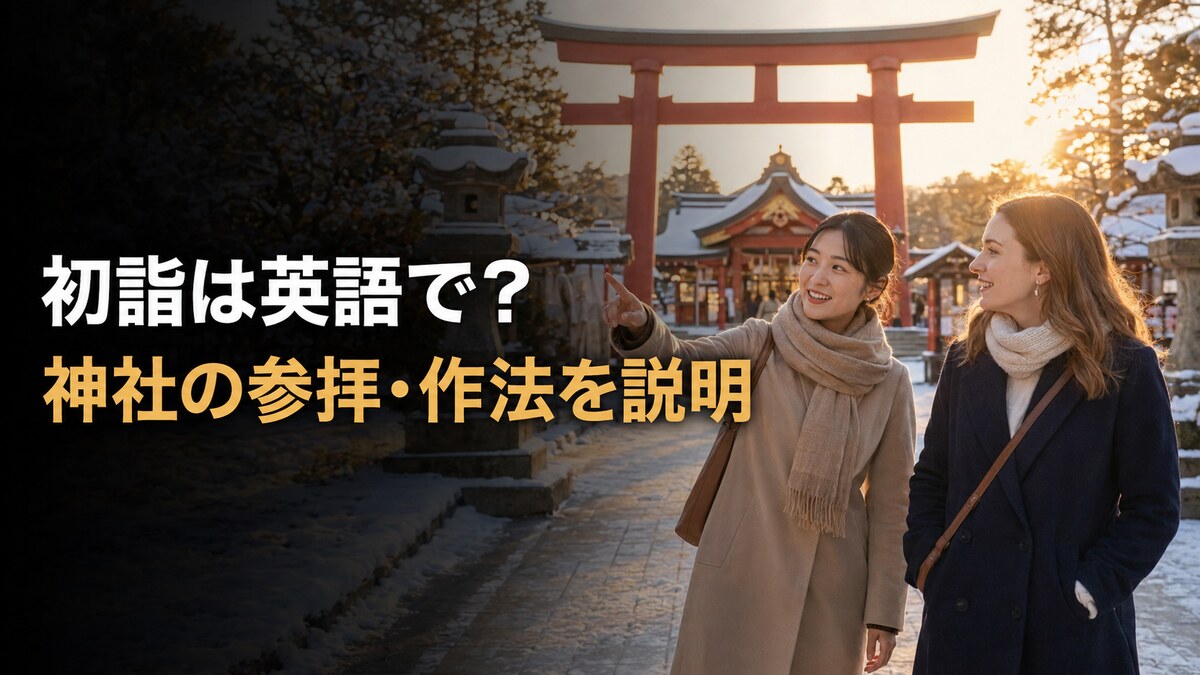
お正月に外国人の友達から「初詣って何?」「神社ではどうやってお参りするの?」と聞かれたら、英語で説明できますか?
「初詣」に完全一致する英単語はありません。短く伝えるなら、次の表現が分かりやすいでしょう。
Hatsumode is the first shrine or temple visit of the New Year.
初詣は、新年になって初めて神社やお寺を訪れることです。
日本独自の文化なので、hatsumode と日本語のまま紹介し、後ろから説明を添えるのが自然です。
この記事では、初詣の説明から鳥居、手水、お賽銭、二礼二拍手一礼、おみくじまで、外国人を神社へ案内するときにそのまま使える英語を順番に紹介します。

Contents
初詣は英語で?自然な説明の仕方
初詣は the first shrine visit of the New Year
神社へ行く場合は the first shrine visit of the New Year、お寺も含めるなら the first shrine or temple visit of the New Year と説明できます。
Many people in Japan visit a shrine or temple at the beginning of the year.
日本では多くの人が年の初めに神社やお寺を訪れます。
We call the first shrine or temple visit of the year “hatsumode.”
その年最初の神社やお寺への参拝を「初詣」と呼びます。
People pray for health, happiness, and good luck in the coming year.
人々は新しい年の健康、幸せ、幸運を祈ります。
初詣は神社だけでなくお寺へ行く場合もあるため、文化全体を説明するときは a shrine or temple とすると正確です。
「初詣に行く」は英語で?
I’m going to a shrine for hatsumode.
初詣に神社へ行きます。
We visited Meiji Shrine for hatsumode.
私たちは初詣で明治神宮を訪れました。
Did you go anywhere for hatsumode?
初詣はどこかへ行きましたか?
I went to pray at a shrine on New Year’s Day.
元日に神社へお参りに行きました。
日本文化を知っている相手なら go for hatsumode でも通じます。初めて聞く相手には、最初に hatsumode の意味を一度説明してあげましょう。
「神社」「参拝」「お参り」は英語で?
神社は Shinto shrine
「神社」は shrine、より正確には Shinto shrine と言います。「お寺」は Buddhist temple です。
This is a Shinto shrine, not a Buddhist temple.
ここは仏教寺院ではなく、神道の神社です。
A torii gate marks the entrance to a sacred Shinto space.
鳥居は神道の神聖な空間への入口を示します。
神社とお寺の違いや shrine の発音を詳しく知りたい方は、関連記事の「神社は英語で?shrineの読み方・発音とお寺との違い」をご覧ください。
参拝する・お参りするの自然な表現
日常会話では、何をしたかに合わせて表現を選びます。
visit a shrine
神社を訪れる/参拝する
go to a shrine to pray
お祈りをするため神社へ行く
pray at a shrine
神社で祈る
worship at a shrine
神社で礼拝する
worship は宗教的な「礼拝」を表す少し硬い言葉です。日本語の軽い「神社にお参りしてきた」なら、I visited a shrine. や I went to a shrine to pray. のほうが会話では自然です。
神社の参拝方法を英語で説明しよう
神社ごとに作法が異なる場合がありますが、ここでは多くの神社で案内される一般的な流れを紹介します。現地に掲示がある場合は、その神社の案内に従いましょう。
1.鳥居の前で軽くお辞儀をする
Before going through the torii gate, give a small bow.
鳥居をくぐる前に、軽くお辞儀をします。
The torii gate marks the entrance to the shrine’s sacred grounds.
鳥居は神社の神聖な境内への入口を示しています。
「鳥居をくぐる」は go through the torii gate または pass through the torii gate と言えます。英語では文として説明するときに主語が必要なので、古い記事にありがちな “Passing through …” だけではなく、We pass through … のように言いましょう。
2.参道の端を歩く
It is customary to avoid walking down the center of the path.
参道の中央を避けて歩くのが習わしです。
The center is traditionally considered the path for the kami.
中央は伝統的に神様が通る場所と考えられています。
kami は単に god と置き換えるより、日本語のまま使って Shinto deities or spirits(神道の神々・神霊)と補足すると伝わりやすくなります。

3.手水舎で手と口を清める
「手水舎」は purification fountain や water purification pavilion と説明できます。固有の文化なので temizuya と言ったあとで説明しても構いません。
Before praying, we purify ourselves by rinsing our hands and mouth.
お参りの前に、手と口をすすいで身を清めます。
Use the ladle to rinse your hands.
ひしゃくを使って両手を清めます。
Pour some water into your hand to rinse your mouth. Do not touch the ladle with your mouth.
手に水を受けて口をすすぎます。ひしゃくに直接口をつけないでください。
purify は「清める」、rinse は「すすぐ」、ladle は「ひしゃく」です。現在は口をすすがない方式や、手水舎を使用しない神社もあるため、現地の案内を優先します。
4.お賽銭を入れ、鈴を鳴らす
Place a coin in the offering box.
賽銭箱に硬貨を入れます。
Give a small offering.
少額のお賽銭を納めます。
If there is a bell, ring it before you pray.
鈴があれば、お祈りの前に鳴らします。
「お賽銭」は an offering、「賽銭箱」は an offering box です。donation でも大意は通じますが、神前に供えるという文化には offering がよく合います。
5.二礼二拍手一礼をする
「二礼二拍手一礼」は、英語では動作をそのまま順番に伝えるのが一番簡単です。
Bow deeply twice, clap your hands twice, make your wish or say a prayer, and bow once more.
深く2回お辞儀をし、2回拍手をして、願い事やお祈りをし、最後にもう一度お辞儀をします。
短い名称としては two bows, two claps, and one bow と言えます。
At many shrines, people follow the “two bows, two claps, and one bow” ritual.
多くの神社では「二礼二拍手一礼」の作法でお参りします。
The ritual may vary from shrine to shrine.
作法は神社によって異なる場合があります。
神社とお寺では一般的な作法が異なります。お寺では通常、神社のように拍手をせず、静かに手を合わせます。
At a Buddhist temple, put your hands together quietly instead of clapping.
お寺では拍手をせず、静かに手を合わせます。
おみくじ・お守り・絵馬を英語で説明しよう
おみくじを引く
「おみくじ」は日本語のまま omikuji と呼び、a paper fortune または a fortune slip と説明すると自然です。
Would you like to draw an omikuji?
おみくじを引いてみますか?
Omikuji are paper fortunes that tell you about your luck.
おみくじは運勢を教えてくれる紙のお告げです。
I got daikichi, the best luck.
大吉が出ました。
If you get a bad fortune, you can tie it to a designated rack or tree.
悪い運勢が出たら、所定の結び所や木に結ぶことができます。
draw a fortune でも意味は伝わりますが、物としてのおみくじを明確にするなら draw a fortune slip や get an omikuji が分かりやすいでしょう。
大吉・吉・凶の英語や、恋愛・健康・仕事など運勢欄の読み方は、おみくじは英語で?大吉・凶・運勢を説明する例文で詳しく紹介しています。
お守りを買う
「お守り」は a lucky charm や a protective amulet と説明できます。
Omamori are protective charms sold at shrines and temples.
お守りは神社やお寺で授与される災いから守るための縁起物です。
There are different charms for health, love, safe travel, and success in exams.
健康、恋愛、交通安全、合格祈願など、さまざまなお守りがあります。
日本語では「買う」と言いますが、神社側の日本語では「授与する」「受ける」と表現することがあります。外国人へ簡潔に案内する会話では buy an omamori でも問題なく通じます。
絵馬に願い事を書く
Ema are small wooden plaques on which people write their wishes.
絵馬は願い事を書く小さな木の板です。
You can write your wish on an ema and hang it here.
絵馬に願い事を書いて、ここに掛けることができます。
外国人を初詣に案内する英会話例
A: What is hatsumode?
初詣って何?
B: It’s the first shrine or temple visit of the New Year. People pray for good luck and happiness.
新年になって初めて神社やお寺へ行くことだよ。みんな幸運や幸せを祈るんだ。
A: Is there anything special I should do?
何か特別な作法はある?
B: Yes. I’ll show you how to purify your hands first. Then we’ll make an offering and pray.
うん。まず手を清める方法を見せるね。そのあと、お賽銭を入れてお参りしよう。
A: Can I draw a fortune too?
おみくじも引ける?
B: Of course! Let’s see what kind of luck you’ll have this year.
もちろん!今年はどんな運勢か見てみよう。
難しい文化用語を一語で翻訳しようとせず、短い英語で動作や目的を説明するのがコツです。
初詣・神社参拝の英語でよくある質問
「参拝」は visit と worship のどちら?
観光や日常会話の「神社へ行く」は visit a shrine が自然です。祈ったことを伝えるなら pray at a shrine、宗教的な礼拝を強調するときは worship at a shrine を使えます。
「お願い事をする」は英語で?
make a wish が使えます。「健康を祈る」のように内容を言うなら、pray for good health と表現します。
I made a wish for the New Year.
新年の願い事をしました。
We prayed for our family’s health.
家族の健康を祈りました。
「神様」は英語で god でいい?
一般的な説明では god や deity が使えます。ただし神道の「神」は、自然・祖先・神霊などを含む独自の概念です。kami, or Shinto deities and spirits と日本語を残して説明すると誤解が少なくなります。
初詣はいつまで?と英語で聞くには?
How long does the hatsumode season last? と聞けます。初詣の時期に全国一律の厳密な期限はなく、三が日を中心に、松の内など地域や家庭の習慣に合わせて参拝します。
初詣に出かけることの多い三が日と、正月飾りを飾る松の内の違いは、「松の内・三が日は英語で?」で整理しています。
まとめ:初詣は英語で短く説明できる
初詣は、まず次の一文を覚えておけば説明できます。
Hatsumode is the first shrine or temple visit of the New Year.
参拝の案内では、go through(くぐる)、rinse(すすぐ)、place(入れる)、bow(お辞儀をする)、clap(拍手する)、pray(祈る)といった基本動詞を順番に並べれば十分です。
年末年始全体の挨拶や文化表現は、親記事の「年末年始は英語で?年末・お正月の挨拶、単語、日本文化の表現集」もあわせてご覧ください。