


「暗黙の了解」は、英語では tacit understanding や unspoken understanding と表せます。ただし、日本語の「暗黙の了解」には、二人が言葉にせず分かり合っている状態、職場や集団の不文律、はっきり口にしない合意など、少しずつ違う場面があります。
先に結論
- tacit understanding
明言されていないが双方が理解している了解 - unspoken understanding
言葉にしなくても分かり合っている了解 - unspoken rule
文章にはないが皆が守っている不文律 - unspoken agreement
口には出していない合意・取り決め

Contents
「暗黙の了解」はtacit understanding
tacit は「直接言葉にされていないが、行動や状況から理解されている」という意味の形容詞です。発音の目安は「タシット」に近く、tacit understanding で「暗黙の了解」「黙って共有されている理解」を表します。
- There was a tacit understanding that we would not discuss the issue.
その問題については話し合わないという暗黙の了解がありました。 - We had a tacit understanding that whoever arrived first would save a seat.
先に着いた人が席を取るという暗黙の了解がありました。 - It was a tacit understanding between the two teams.
それは両チーム間の暗黙の了解でした。 - Everyone seemed to accept the arrangement as a tacit understanding.
皆、その取り決めを暗黙の了解として受け入れているようでした。
tacit は少し硬めの語です。日常会話でも使えますが、説明・報道・ビジネス文書などにもよく合います。
 しゅみすけ(大山俊輔)
会話で分かりやすいunspoken understanding
unspoken は、un+spoken で「口に出されていない」という意味です。unspoken understanding は、恋人・家族・友人・同僚などが「わざわざ言わなくても分かっている」状態を、比較的そのまま表せます。
- We have an unspoken understanding that we give each other space after work.
仕事のあとはお互い一人の時間を持つという暗黙の了解があります。 - There was an unspoken understanding between us.
私たちの間には暗黙の了解がありました。 - They share an unspoken understanding about how to divide the work.
彼らは仕事の分担について、言葉にしない了解を共有しています。
tacit understanding と意味は近いものの、unspoken は「口にしていない」という意味が見えやすいため、初心者にも組み立てやすい表現です。
職場や集団の「不文律」ならunspoken rule
「会議では上司より先に退出しない」「共有スペースでは電話をしない」のように、明文化されていなくても皆が従う決まりなら unspoken rule が自然です。
- It’s an unspoken rule that we don’t call each other after 9 p.m.
午後9時以降はお互いに電話しないのが暗黙のルールです。 - There is an unspoken rule against eating at your desk.
自分の机で食事をしないという暗黙のルールがあります。 - In our family, helping with the dishes is an unspoken rule.
私たちの家族では、皿洗いを手伝うのが暗黙のルールです。
understanding は「分かり合っている状態」、rule は「守ることを期待される決まり」です。日本語ではどちらも「暗黙の了解」と呼べますが、英語では役割を分けると自然です。
口に出していない「合意」ならunspoken agreement
unspoken agreement は、二人以上が同じ方針で行動しているものの、その内容を明確には話し合っていない場合に使います。
- We had an unspoken agreement not to mention the mistake.
そのミスには触れないという暗黙の合意がありました。 - There seemed to be an unspoken agreement to keep the meeting short.
会議を短く済ませるという暗黙の合意があるようでした。 - They reached no formal agreement, but there was an unspoken agreement between them.
正式な合意には至りませんでしたが、二人の間には暗黙の合意がありました。
agreement は「合意・取り決め」に焦点があります。単に同じことを理解しているだけなら understanding、同じ方針に従うなら agreement が合います。
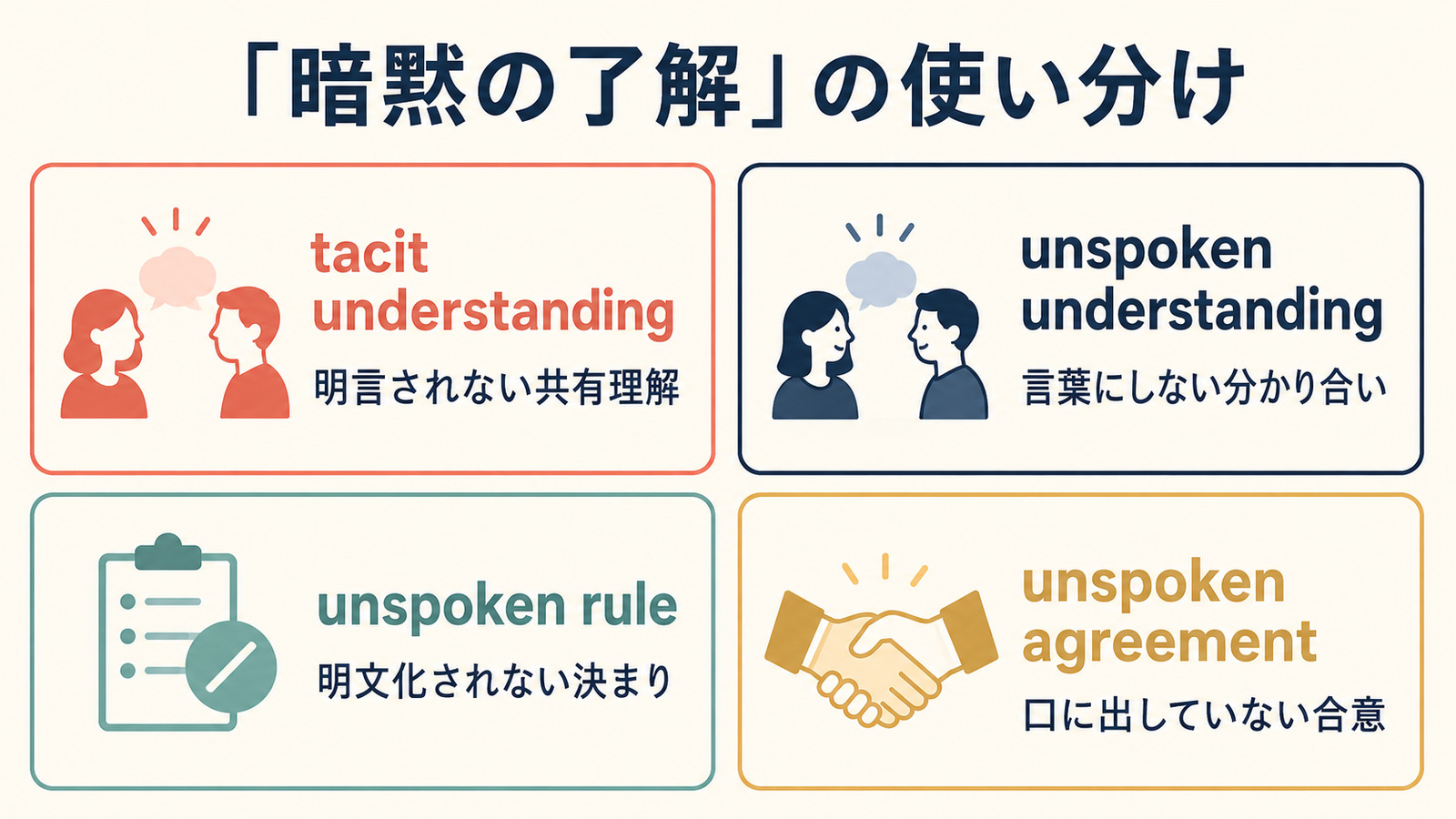
4つの表現の違い
| 表現 | 中心の意味 | 向いている場面 |
|---|---|---|
| tacit understanding | 明言されていない共有理解 | 説明・仕事・やや硬めの会話 |
| unspoken understanding | 言葉にしない分かり合い | 家族・友人・恋人・同僚 |
| unspoken rule | 明文化されていない決まり | 職場・集団・家庭の不文律 |
| unspoken agreement | 口にしていない合意 | 同じ方針や行動を取る関係 |
「暗黙の了解になっている」はどう言う?
- It’s generally understood that we take turns.
交代で担当するのが暗黙の了解になっています。 - Everyone knows not to bring it up.
その話を持ち出さないことは皆が分かっています。 - We all know how it works.
どうすることになっているか、皆分かっています。 - No one says it, but everyone follows the rule.
誰も口にはしませんが、皆そのルールに従っています。
It’s understood that … は「〜ということになっている」「〜だと了解されている」という便利な形です。必ずしも tacit や unspoken を使わなくても、暗黙の了解になっている状態を自然に伝えられます。
よくある間違い
- △ silent understanding
意味を推測できる場合はあるが、定番は tacit understanding または unspoken understanding。 - × an understand
understand は動詞。名詞は understanding。 - △ どの場面でも tacit understanding
不文律なら unspoken rule、具体的な合意なら unspoken agreement が分かりやすい。 - △ common sense を「暗黙の了解」とする
common sense は「常識」。特定の人々の間の了解とは限らない。
自然な会話例
職場の不文律を説明する
A: Is there a dress code here?
B: Not officially, but there’s an unspoken rule that we dress formally for client meetings.
A: Good to know.
友人同士の了解を話す
A: Do you and Maya talk about work at dinner?
B: No. We have an unspoken understanding that dinner is our time to relax.
A: That sounds healthy.
話題にしない合意を説明する
A: Why didn’t anyone mention the argument?
B: There was a tacit understanding that we should move on.
A: I see.
この表現を知らなかったら?
tacit understanding が出てこなくても、「誰も言わない」「でも皆が分かっている」と基本語に分ければ伝えられます。
- We never talked about it, but we both know.
話し合ったことはありませんが、二人とも分かっています。 - No one says it, but everyone knows.
誰も言いませんが、皆が分かっています。 - It is not a written rule, but everyone follows it.
書かれたルールではありませんが、皆が従っています。 - We did not make a formal agreement, but we do the same thing.
正式な合意はしていませんが、同じように行動しています。
しゅみすけ(大山俊輔)
関連する英語記事
- read between the linesの意味とread the roomとの違い
- 「空気を読む」は英語で?
- between you and meの意味と使い方
- see eye to eyeとon the same pageの違い
まとめ|分かり合いならunderstanding、不文律ならrule
- やや硬めの「暗黙の了解」は tacit understanding
- 言葉にしない分かり合いは unspoken understanding
- 集団や職場の不文律は unspoken rule
- 口に出していない合意は unspoken agreement
- 難しい表現が出なければ No one says it, but everyone knows. で伝えられる
まずは身近な習慣について、It’s an unspoken rule in our family.(それは家族の暗黙のルールです)を、そのまま使える一文として覚えておきましょう。