




attribute A to B は、「AをBのせい・おかげだと考える」「Aの原因はBだとする」という意味です。Aには結果や性質、Bにはその原因・理由・人物などが入ります。
たとえば、They attributed the success to teamwork. は「彼らは、その成功はチームワークのおかげだと考えました」。成功のようなよい結果にも、失敗や問題のような悪い結果にも使えます。
 しゅみすけ(大山俊輔)
Contents
attribute A to Bの意味と基本構造
attribute A to B = believe that A was caused or created by B。結果・変化・特徴などのAを、その原因や源であるBに結びつける表現です。
- A:結果・出来事・性質・作品・発言
- B:原因・理由・人物・出典
Many people attribute her success to hard work.
多くの人は、彼女の成功は努力のおかげだと考えています。
この文では、her success が結果A、hard work が原因Bです。
前置詞 to は、結果Aを原因Bへ結びつける方向を示しています。toの基本イメージをパーツから確認したい場合は、be-rize.comのtoのコアイメージは「到達点を含む矢印」もあわせてご覧ください。
attribute A to Bの4つの使い方
1.よい結果を「〜のおかげ」と考える
成功、成長、改善などの原因を説明します。
- She attributes her success to her team.
彼女は自分の成功をチームのおかげだと考えています。 - The company attributed the increase in sales to its new campaign.
会社は売上増加を新しいキャンペーンの効果だとしました。 - He attributes his recovery to regular exercise.
彼は回復できたのは定期的な運動のおかげだと考えています。
2.悪い結果を「〜が原因」と考える
失敗、減少、遅延、問題などの原因にも使えます。
- They attributed the delay to bad weather.
彼らは遅延の原因を悪天候だとしました。 - The manager attributed the mistake to poor communication.
マネージャーは、そのミスは意思疎通不足が原因だと考えました。 - Analysts attribute the decline to rising costs.
アナリストは、その減少をコスト上昇によるものだと考えています。
attribute自体には「よい」「悪い」という評価はありません。AとBの内容によって、日本語では「おかげ」「せい」「原因」と訳し分けます。
3.作品・発言をある人物のものとする
絵画、文章、発言などの作者・発言者を特定するときにも使います。
- The painting is attributed to a student of Rembrandt.
その絵はレンブラントの弟子の作品だとされています。 - This quote is often attributed to Einstein.
この言葉は、しばしばアインシュタインの発言とされています。
この用法では、作者や出典が完全に確定しているというより、証拠や伝承をもとに「〜のものとされる」という慎重な言い方になることがあります。
4.性質・特徴を人や物に帰する
ある特徴や態度を、人の性格・経験・文化などに結びつける用法です。
- She attributed his calmness to years of experience.
彼女は彼の落ち着きを長年の経験によるものだと考えました。 - Some researchers attribute the difference to cultural factors.
一部の研究者は、その違いを文化的要因によるものと考えています。
受動態A is attributed to Bの使い方
attribute A to B は、受動態の A is attributed to B でも非常によく使われます。
能動態:Experts attribute the change to several factors.
専門家は、その変化をいくつかの要因によるものと考えています。
受動態:The change is attributed to several factors.
その変化は、いくつかの要因によるものとされています。
受動態では、「誰がそう考えているか」よりも、結果Aと原因Bの関係に焦点を当てられます。そのため、ニュース、報告書、論文、ビジネス文書でよく見られます。
- The improvement was attributed to better training.
その改善は、研修の向上によるものとされました。 - The error can be attributed to human oversight.
その誤りは、人為的な見落としが原因だと考えられます。 - Much of the growth is attributed to overseas demand.
成長の大部分は、海外需要によるものとされています。
attribute A to Bと類似表現の違い
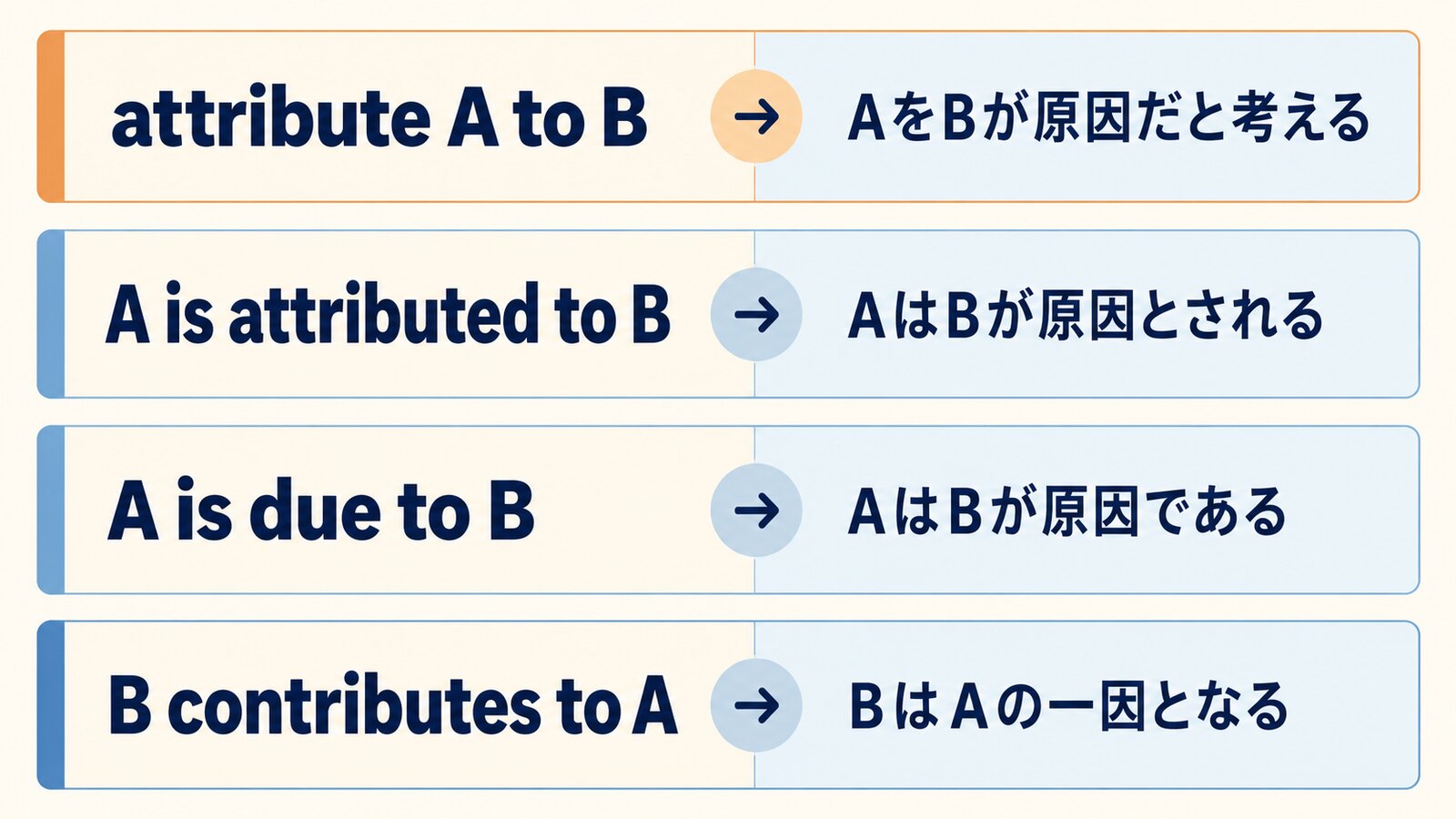
attribute A to B:Aの原因をBだと判断する
誰かが結果Aと原因Bを結びつけている、という判断・分析を含みます。
Researchers attribute the change to warmer temperatures.
研究者は、その変化を気温上昇によるものと考えています。
A is due to B:AはBが原因である
be due to は原因関係を直接述べます。誰がそう判断したかには焦点を当てません。
The delay was due to bad weather.
遅延は悪天候が原因でした。
The delay was attributed to bad weather. なら、「遅延は悪天候によるものと判断・説明された」という響きです。
B contributes to A:BはAの一因となる
contribute to は、BがAを生む複数の要因の一つであることを示します。Bだけが唯一の原因だとは限りません。
Lack of sleep contributes to poor concentration.
睡眠不足は集中力低下の一因となります。
credit A to B:よい結果AをBのおかげとする
credit A to B は、成功や功績など、主によい結果をBのおかげだと認めます。
She credits her confidence to her mentor.
彼女は自信を持てたのは指導者のおかげだと考えています。
attribute A to Bはよい結果にも悪い結果にも中立的に使えますが、creditは功績や感謝のニュアンスを伴いやすい表現です。
blame A on B:悪い結果AをBのせいにする
blame A on B は、失敗や問題の責任をBに負わせる、より感情的・批判的な表現です。
He blamed the mistake on the software.
彼はそのミスをソフトウェアのせいにしました。
attributeは分析的で比較的中立、blameは責任追及の響きがあります。
ascribe A to B:AをBに帰する
ascribe A to B はattribute A to Bに近い、ややフォーマルな表現です。性質、原因、作品の出典などに使われます。
She ascribed his behavior to stress.
彼女は彼の行動をストレスによるものだと考えました。
attributeの発音と名詞・動詞の違い
attribute は、動詞と名詞でアクセントの位置が変わります。
- 動詞 attribute:第2音節にアクセント。意味は「〜に帰する」
- 名詞 attribute:第1音節にアクセント。意味は「属性・特質」
attribute A to Bでは動詞なので、後ろ寄りの音を強く発音します。音だけでなく、動詞ならAとBをtoで結ぶという型ごと覚えるのがおすすめです。
仕事で使えるattribute A to Bの例文
- We attribute the strong results to improved customer service.
私たちは、好調な業績を顧客サービスの改善によるものと考えています。 - The drop in productivity was attributed to system issues.
生産性の低下は、システム上の問題によるものとされました。 - Management attributed the high retention rate to flexible working conditions.
経営陣は、高い定着率を柔軟な勤務条件のおかげだと考えました。 - The discrepancy may be attributed to a data-entry error.
その不一致は、データ入力ミスが原因かもしれません。 - Analysts attribute the company’s growth to overseas expansion.
アナリストは、会社の成長を海外展開によるものと考えています。 - Part of the success can be attributed to careful planning.
成功の一部は、綿密な計画によるものと考えられます。
日常で使えるattribute A to Bの例文
attribute A to Bは日常会話ではややフォーマルですが、健康、性格、習慣の原因を説明するときに使えます。
- He attributes his energy to a healthy diet.
彼は元気なのは健康的な食事のおかげだと考えています。 - I attributed her silence to tiredness.
私は、彼女が黙っていたのは疲れていたからだと思いました。 - She attributes her patience to raising three children.
彼女は忍耐強くなったのは3人の子どもを育てた経験のおかげだと考えています。 - They attributed the strange noise to the wind.
彼らは、その奇妙な音は風のせいだと考えました。
しゅみすけ(大山俊輔)
よくある間違い
AとBを逆にする
Aは結果、Bは原因です。
○ They attributed the success to teamwork.
彼らは、成功をチームワークのおかげだと考えました。
語順を逆にすると、「チームワークという結果を成功が原因だと考える」という不自然な関係になります。
attribute to BとAを省略しすぎる
能動態では通常、何を原因に結びつけるのかを示す目的語Aが必要です。
× They attributed to bad weather.
○ They attributed the delay to bad weather.
受動態でbe動詞を忘れる
受動態は A + be attributed to B です。
× The delay attributed to bad weather.
○ The delay was attributed to bad weather.
contribute toと同じ語順にする
attribute A to B は「結果A→原因B」、B contributes to A は「原因B→結果A」です。
- They attributed the problem to stress.
彼らは、その問題をストレスが原因だと考えました。 - Stress contributed to the problem.
ストレスがその問題の一因となりました。
ミニクイズ
空欄に最も自然な語を入れてください。
- They attributed the improvement _____ better training.
彼らは、その改善をよりよい研修によるものと考えました。 - The delay was attributed _____ a technical problem.
遅延は技術的な問題によるものとされました。 - Poor communication contributed _____ the mistake.
意思疎通不足がそのミスの一因となりました。 - The cancellation was _____ to bad weather.
中止は悪天候が原因でした。
答え:1. to 2. to 3. to 4. due
まとめ
- attribute A to B は「AをBが原因だと考える」
- Aには結果、Bには原因・人物・出典が入る
- 受動態の A is attributed to B は報告書やニュースで頻出
- be due to は原因関係を直接述べる
- contribute to は複数ある原因の一つを示す
- credit A to B はよい結果、blame A on B は悪い結果と責任に焦点を当てる
直前のA熟語を復習するなら、attend toの意味とattend・deal with・take care ofとの違いもあわせてどうぞ。
Aから始まる熟語を体系的に探すには、英熟語・イディオム・定型表現の総合ガイド、前置詞句をまとめて確認するには前置詞句一覧をご活用ください。