



高校英語では、単語の知識だけでなく、複数の語を一つの意味のまとまりとして読む力が必要になります。英熟語を知らないと、一語ずつ訳せても文全体の意味がつながらないことがあります。
この記事では、高校生が覚えたい英熟語・定型表現を120個厳選し、「基礎」「動詞・前置詞」「長文読解」「大学受験」の4段階に整理しました。すべてに短い独自例文と日本語訳を付けています。
 しゅみすけ(大山俊輔)
Contents
高校英熟語と中学英熟語の違い
中学では get up や look for のような生活表現が中心ですが、高校では account for、in terms of、anything but のように、説明・論理・抽象的な判断を担う表現が増えます。中学範囲から復習したい方は「中学英語の英熟語90選」から始めてください。
高校英熟語の覚え方
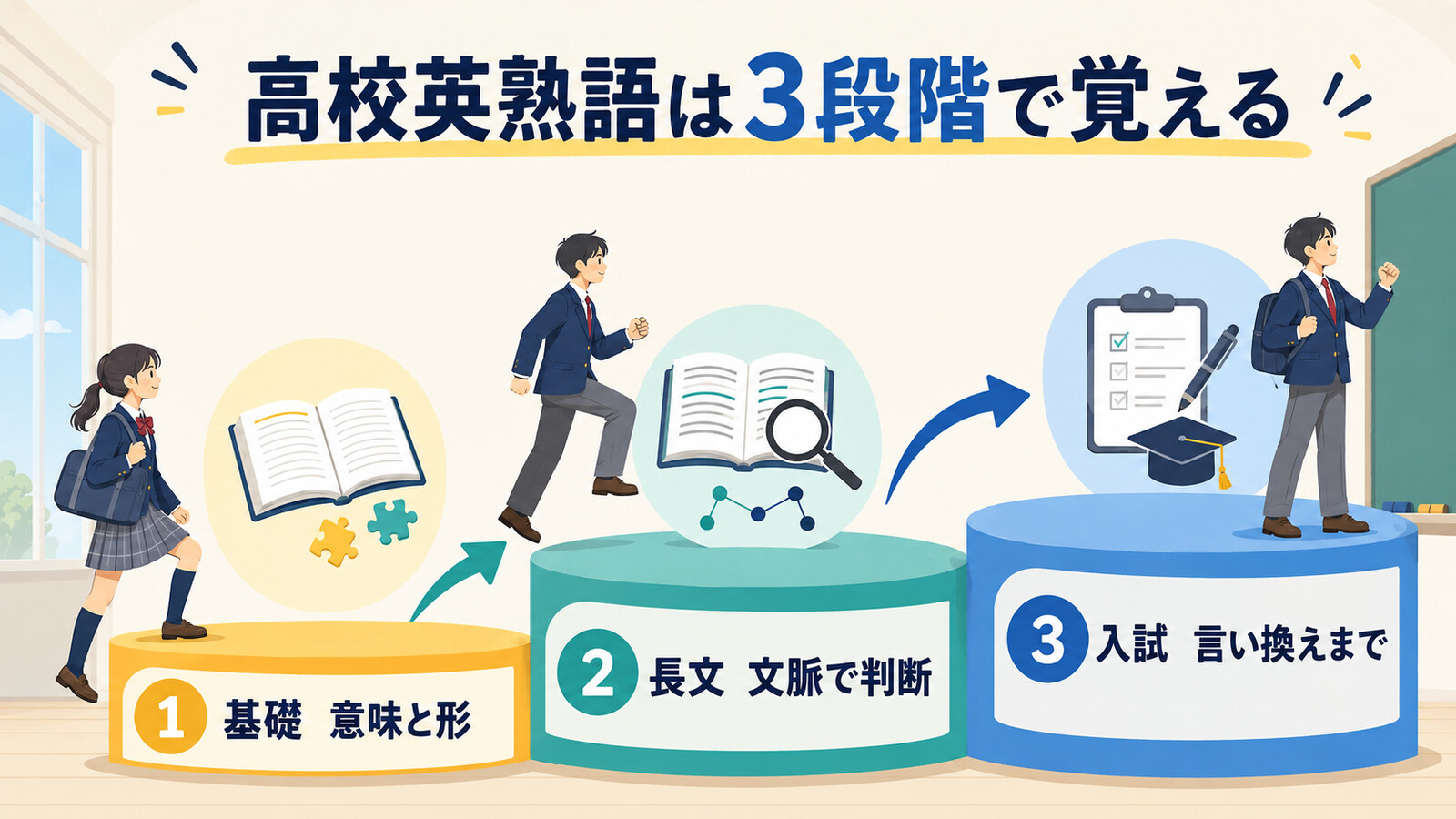
- 形を崩さず覚える:object to のように前置詞まで一組にする。
- 長文の働きを見る:on the other hand なら対比が始まると予測する。
- 簡単な英語へ言い換える:put off を do it later と説明できるようにする。
1. 基礎を固める英熟語30選
まずは会話や英文の土台になる副詞句・前置詞句です。日本語訳だけでなく、文中の置き場所も例文で確認しましょう。
| 英熟語 | 意味 | 例文 |
|---|---|---|
| at present | 現在は | I am busy at present. 私は現在忙しいです。 |
| in fact | 実際は | In fact, I knew the answer. 実は答えを知っていました。 |
| in general | 一般に | In general, cats dislike water. 一般に猫は水を嫌います。 |
| in public | 人前で | He rarely speaks in public. 彼はめったに人前で話しません。 |
| in common | 共通して | We have a lot in common. 私たちには共通点が多くあります。 |
| on purpose | わざと | She did not break it on purpose. 彼女はわざと壊したのではありません。 |
| by accident | 偶然に | I met him by accident. 偶然彼に会いました。 |
| for a while | しばらくの間 | Please wait here for a while. しばらくここで待ってください。 |
| once in a while | ときどき | We eat out once in a while. 私たちはときどき外食します。 |
| from time to time | ときどき | I still call her from time to time. 今でもときどき彼女に電話します。 |
| at the same time | 同時に | They arrived at the same time. 彼らは同時に到着しました。 |
| in advance | 前もって | Book your seat in advance. 前もって席を予約してください。 |
| on the way | 途中で | I saw Mai on the way home. 帰宅途中にマイを見かけました。 |
| by hand | 手で | This bag was made by hand. このかばんは手作りです。 |
| by mistake | 間違って | I opened your email by mistake. 間違ってあなたのメールを開きました。 |
| for free | 無料で | Children can enter for free. 子どもは無料で入れます。 |
| at once | すぐに/同時に | Please come here at once. すぐここへ来てください。 |
| in a hurry | 急いで | I left home in a hurry. 急いで家を出ました。 |
| out of order | 故障して | The elevator is out of order. エレベーターは故障中です。 |
| out of date | 時代遅れで | This information is out of date. この情報は古くなっています。 |
| up to date | 最新の | Keep the list up to date. 一覧を最新に保ってください。 |
| at risk | 危険にさらされて | Some species are at risk. 危険にさらされている種もあります。 |
| in need of | 〜を必要として | The building is in need of repair. その建物は修理が必要です。 |
| in charge of | 〜を担当して | Aya is in charge of sales. アヤは営業を担当しています。 |
| on behalf of | 〜を代表して | I spoke on behalf of the team. チームを代表して話しました。 |
| as a result | その結果 | It snowed; as a result, school closed. 雪が降り、その結果学校は休みになりました。 |
| to some extent | ある程度 | I agree with you to some extent. ある程度あなたに賛成です。 |
| at any rate | とにかく | At any rate, we must decide today. とにかく今日決めなければなりません。 |
| in other words | 言い換えれば | In other words, the plan failed. 言い換えれば、その計画は失敗しました。 |
| for the time being | 当分の間 | We will stay here for the time being. 当分ここに滞在します。 |
2. 動詞・前置詞ごと覚える英熟語30選
高校では動詞と前置詞・副詞の組み合わせが一気に増えます。後ろに続く前置詞まで含め、一つの動詞のように覚えましょう。
| 英熟語 | 意味 | 例文 |
|---|---|---|
| account for | 〜を説明する/占める | How do you account for the change? その変化をどう説明しますか。 |
| apply for | 〜に申し込む | She applied for the job. 彼女はその仕事に応募しました。 |
| approve of | 〜をよいと認める | My parents approve of my choice. 両親は私の選択を認めています。 |
| bring about | 〜を引き起こす | The discovery brought about major change. その発見は大きな変化をもたらしました。 |
| call for | 〜を必要とする | This situation calls for patience. この状況には忍耐が必要です。 |
| carry out | 〜を実行する | We carried out the experiment. 私たちは実験を実施しました。 |
| come across | 〜に偶然出会う | I came across an old photo. 古い写真を偶然見つけました。 |
| come up with | 〜を思いつく | Can you come up with another idea? 別の案を思いつけますか。 |
| consist of | 〜から成る | The course consists of five lessons. その講座は5つの授業から成ります。 |
| contribute to | 〜に貢献する | Exercise contributes to good health. 運動は健康に役立ちます。 |
| cope with | 〜にうまく対処する | She learned to cope with stress. 彼女はストレスへの対処を学びました。 |
| count on | 〜を当てにする | You can count on me. 私を頼りにしていいですよ。 |
| depend on | 〜に依存する/次第だ | Success depends on preparation. 成功は準備次第です。 |
| do away with | 〜を廃止する | The school did away with the old rule. 学校は古い規則を廃止しました。 |
| get along with | 〜とうまくやる | I get along with my classmates. クラスメートとうまくやっています。 |
| get rid of | 〜を取り除く | We need to get rid of this waste. この廃棄物を処分する必要があります。 |
| give rise to | 〜を生じさせる | The rumor gave rise to confusion. そのうわさは混乱を招きました。 |
| go through | 〜を経験する/調べる | She went through a difficult period. 彼女は困難な時期を経験しました。 |
| keep up with | 〜に遅れずついていく | I cannot keep up with the class. 授業についていけません。 |
| look into | 〜を調査する | The police are looking into the case. 警察は事件を調査しています。 |
| make up for | 〜を埋め合わせる | I worked late to make up for lost time. 遅れを取り戻すため残業しました。 |
| object to | 〜に反対する | Many residents objected to the plan. 多くの住民が計画に反対しました。 |
| put off | 〜を延期する | We put off the meeting until Friday. 会議を金曜日まで延期しました。 |
| refer to | 〜に言及する/参照する | The word refers to a young animal. その語は動物の子を指します。 |
| rely on | 〜に頼る | Do not rely only on translation. 翻訳だけに頼らないでください。 |
| result in | 〜という結果になる | The error resulted in a delay. そのミスで遅れが生じました。 |
| stand for | 〜を表す | What does this symbol stand for? この記号は何を表しますか。 |
| take advantage of | 〜を利用する | Take advantage of this opportunity. この機会を活用してください。 |
| take over | 〜を引き継ぐ | Mika will take over the project. ミカがプロジェクトを引き継ぎます。 |
| turn out | 〜だと分かる | The rumor turned out to be false. そのうわさは誤りだと分かりました。 |
3. 長文読解で重要な英熟語30選
長文では、理由・対比・条件・言い換えを示す表現が論理の道しるべになります。熟語を見つけたら、前後がどうつながるかを考えてください。
| 英熟語 | 意味 | 例文 |
|---|---|---|
| as for | 〜について言えば | As for cost, we need more data. 費用については、さらにデータが必要です。 |
| as to | 〜に関して | There is doubt as to its safety. その安全性には疑問があります。 |
| apart from | 〜は別として/〜に加えて | Apart from rain, the trip was perfect. 雨を除けば旅行は完璧でした。 |
| due to | 〜が原因で | The flight was delayed due to fog. 霧のため便が遅れました。 |
| owing to | 〜のために | Owing to illness, he stayed home. 病気のため彼は家にいました。 |
| thanks to | 〜のおかげで | Thanks to your advice, I succeeded. 助言のおかげで成功しました。 |
| with regard to | 〜に関して | I have a question with regard to fees. 料金に関して質問があります。 |
| in terms of | 〜の点では | The plan is good in terms of cost. 費用の点ではよい計画です。 |
| in addition to | 〜に加えて | In addition to English, she studies German. 英語に加えてドイツ語も学んでいます。 |
| in contrast to | 〜とは対照的に | In contrast to his brother, Ken is quiet. 兄とは対照的にケンは物静かです。 |
| regardless of | 〜にかかわらず | Anyone can join regardless of age. 年齢にかかわらず参加できます。 |
| in case of | 〜の場合には | In case of fire, use the stairs. 火災の場合は階段を使ってください。 |
| in case | 〜するといけないので | Take a coat in case it gets cold. 寒くなるといけないので上着を持っていって。 |
| even if | たとえ〜でも | I will go even if it rains. たとえ雨でも行きます。 |
| as if | まるで〜のように | He talks as if he knew everything. 彼は何でも知っているかのように話します。 |
| now that | 今や〜なので | Now that we are ready, let us begin. 準備ができたので始めましょう。 |
| provided that | もし〜ならば | You may go provided that you return early. 早く戻るなら行ってもよいです。 |
| so long as | 〜する限り | You can stay so long as you are quiet. 静かにする限り滞在できます。 |
| for fear that | 〜しないように | She whispered for fear that the baby might wake. 赤ちゃんを起こさないよう小声で話しました。 |
| in order that | 〜するために | Speak clearly in order that everyone can hear. 全員に聞こえるよう明瞭に話してください。 |
| no matter how | どんなに〜でも | No matter how busy I am, I exercise. どんなに忙しくても運動します。 |
| whether or not | 〜かどうかにかかわらず | I will go whether or not he comes. 彼が来るかどうかにかかわらず行きます。 |
| not so much A as B | AというよりむしろB | He is not so much angry as disappointed. 彼は怒っているというより失望しています。 |
| the moment | 〜するとすぐに | Call me the moment you arrive. 着いたらすぐ電話してください。 |
| in that | 〜という点で | Humans differ in that they use complex language. 人間は複雑な言語を使う点で異なります。 |
| on the other hand | 他方では | It is cheap; on the other hand, it is fragile. 安い一方で壊れやすいです。 |
| for one thing | 一つには | For one thing, we lack enough time. 一つには時間が足りません。 |
| above all | とりわけ | Above all, be honest with yourself. 何より自分に正直でいてください。 |
| in particular | 特に | I like winter sports, skiing in particular. 冬のスポーツ、特にスキーが好きです。 |
| as a whole | 全体として | The class performed well as a whole. クラス全体としてよくできました。 |
4. 大学受験で差がつく英熟語30選
大学受験では、直訳しにくい構文や言い換えが狙われます。語順と後ろに続く形まで含めて覚えることが重要です。
| 英熟語 | 意味 | 例文 |
|---|---|---|
| anything but | 決して〜ではない | The test was anything but easy. その試験は決して簡単ではありませんでした。 |
| nothing but | 〜にすぎない | It was nothing but a misunderstanding. それは単なる誤解でした。 |
| all but | ほとんど | The work is all but finished. 仕事はほぼ終わっています。 |
| cannot help doing | 〜せずにはいられない | I cannot help laughing at the story. その話を聞くと笑わずにいられません。 |
| cannot … too | いくら〜してもしすぎではない | You cannot be too careful. いくら注意してもしすぎではありません。 |
| have difficulty doing | 〜するのに苦労する | I had difficulty finding the office. 事務所を見つけるのに苦労しました。 |
| make it a rule to | 〜することにしている | I make it a rule to read daily. 毎日読むことにしています。 |
| be used to doing | 〜することに慣れている | I am used to getting up early. 早起きに慣れています。 |
| be worth doing | 〜する価値がある | The museum is worth visiting. その博物館は訪れる価値があります。 |
| there is no doing | 〜することはできない | There is no knowing what will happen. 何が起こるか分かりません。 |
| It goes without saying that | 〜は言うまでもない | It goes without saying that health matters. 健康が大切なのは言うまでもありません。 |
| when it comes to | 〜のこととなると | When it comes to math, she is excellent. 数学のこととなると彼女は優秀です。 |
| be bound to | きっと〜する | The new service is bound to succeed. 新サービスはきっと成功します。 |
| be likely to | 〜しそうだ | Prices are likely to rise. 価格は上がりそうです。 |
| be supposed to | 〜することになっている | You are supposed to submit it today. 今日提出することになっています。 |
| be willing to | 進んで〜する | I am willing to help. 喜んで手伝います。 |
| be reluctant to | 〜するのをためらう | He was reluctant to admit the error. 彼はミスを認めるのをためらいました。 |
| be about to | まさに〜しようとしている | The train is about to leave. 電車はまさに出発するところです。 |
| be on the point of doing | まさに〜しようとしている | I was on the point of calling you. ちょうど電話しようとしていました。 |
| had no sooner A than B | AするとすぐBした | I had no sooner sat down than the phone rang. 座るとすぐ電話が鳴りました。 |
| hardly A when B | AするとすぐBした | Hardly had we left when it began to rain. 出発するとすぐ雨が降り始めました。 |
| by no means | 決して〜ではない | This task is by no means simple. この課題は決して単純ではありません。 |
| at a loss | 途方に暮れて | I was at a loss for words. 言葉に詰まりました。 |
| make sense | 意味をなす/筋が通る | Your explanation makes sense. あなたの説明は筋が通っています。 |
| take … for granted | 〜を当然と思う | Do not take clean water for granted. きれいな水を当然と思わないでください。 |
| come to terms with | 〜を受け入れる | She came to terms with the change. 彼女はその変化を受け入れました。 |
| make the most of | 〜を最大限に活用する | Make the most of your time abroad. 海外での時間を最大限活用してください。 |
| keep in mind | 〜を心に留める | Keep the deadline in mind. 締め切りを覚えておいてください。 |
| lose sight of | 〜を見失う | Do not lose sight of your goal. 目標を見失わないでください。 |
| put up with | 〜を我慢する | I cannot put up with the noise. その騒音には我慢できません。 |
似た表現で間違えやすいポイント
because of と because
because of の後ろは名詞、because の後ろは文です。because of the rain と because it rained の形で比べましょう。
be used to doing と used to do
be used to doing は「〜することに慣れている」、used to do は「以前は〜したものだ」です。ここでは to の後ろの形まで見る必要があります。
in time と on time
in time は「手遅れになる前に間に合って」、on time は「予定時刻どおりに」という違いがあります。
しゅみすけ(大山俊輔)
しゅみすけ式:出てこなければ簡単な英語で言い換える
- carry out the plan → do the plan
- put off the meeting → have the meeting later
- be reluctant to answer → not want to answer
- the result makes sense → I can understand the result
試験では正確な熟語が必要ですが、会話では基本語に分解しても構いません。言い換えを一緒に考えると、熟語の意味も深く理解できます。
大学受験へ向けた復習順
最初から120個を英作文できる必要はありません。「英語を見て意味が分かる」→「空所に入る前置詞が分かる」→「日本語から英語にできる」の順に進めましょう。高校入試範囲を目的別に確認する場合は「高校入試によく出る英熟語60選」も利用できます。
個別の専門記事は「英熟語・定型表現一覧 A–Z」、動詞中心の表現は「句動詞一覧」、前置詞別の整理は「前置詞を使う英熟語一覧」をご覧ください。
まとめ
高校英語の英熟語は、単なる暗記項目ではなく、英文の論理と意味を組み立てるパーツです。まず基礎の意味と形を覚え、長文の文脈で働きを確認し、最後に入試で問われる言い換えまで進みましょう。1日5個なら24日で一巡できます。
英熟語ターゲット1000を使って学ぶ
市販教材と組み合わせて周回する場合は「英熟語ターゲット1000の使い方・覚え方」で、Part別の進め方と個別解説への入口を確認できます。