



中学英語の英熟語は、単語を一語ずつ暗記するよりも、よく一緒に使われる語をひとかたまりで覚えるほうが実戦的です。たとえば look だけでなく、look at(見る)や look for(探す)の形で覚えると、読解にも英作文にもそのまま使えます。
この記事では、中学校で触れることの多い英熟語・定型表現を、中1・中2・中3の学年別に90個まとめました。教科書によって登場学年は前後するため、学年は「学習の目安」として使ってください。
 しゅみすけ(大山俊輔)
Contents
中学英語の英熟語はどう覚える?
英熟語は、学年が上がるほど形が長くなり、意味も抽象的になります。まずは生活の動作、次に前置詞を含むまとまり、最後に文と文をつなぐ構文へ進むと整理しやすくなります。
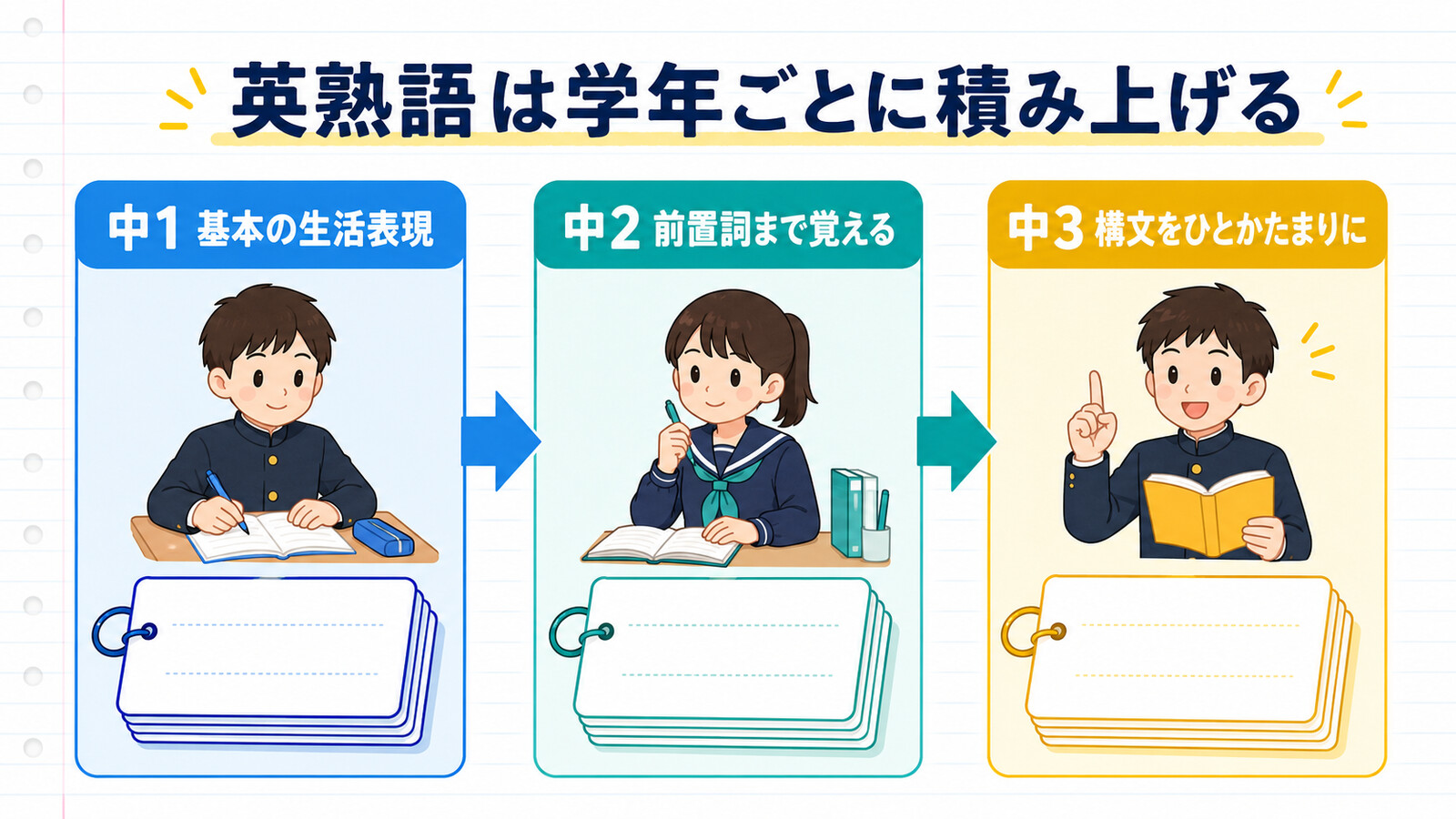
- 中1:get up、go home など、毎日の動作や場所を表す表現
- 中2:be interested in、agree with など、前置詞まで含めて覚える表現
- 中3:not only A but also B、in order to など、文を組み立てる表現
熟語の全体像から確認したい方は「英熟語・イディオム・定型表現の違いと覚え方」も参考にしてください。
中1で覚えたい英熟語・定型表現30選
中1では、学校・家庭・時刻・日課に関わる表現が中心です。動詞だけで切らず、get up や listen to のように後ろの語までセットで覚えましょう。
| 英熟語・定型表現 | 意味 | 例文 |
|---|---|---|
| a lot of | たくさんの | We have a lot of homework today. 今日は宿題がたくさんあります。 |
| a little | 少しの(数えられない名詞) | I need a little water. 水が少し必要です。 |
| a few | 少しの(数えられる名詞) | I have a few questions. 質問がいくつかあります。 |
| all day | 一日中 | It rained all day. 一日中雨が降りました。 |
| all right | 大丈夫/よろしい | Are you all right? 大丈夫ですか。 |
| at home | 家で | My father is at home. 父は家にいます。 |
| at school | 学校で | We eat lunch at school. 私たちは学校で昼食を食べます。 |
| every day | 毎日 | I practice English every day. 私は毎日英語を練習します。 |
| from A to B | AからBまで | The shop is open from nine to five. 店は9時から5時まで開いています。 |
| get up | 起きる | I get up at six. 私は6時に起きます。 |
| go home | 家に帰る | Let’s go home together. 一緒に帰りましょう。 |
| go to bed | 寝る | I usually go to bed before eleven. 私はたいてい11時前に寝ます。 |
| have a good time | 楽しく過ごす | We had a good time at the festival. 祭りで楽しく過ごしました。 |
| here you are | はい、どうぞ | Here you are. This is your ticket. はい、どうぞ。あなたの切符です。 |
| in front of | 〜の前に | Let’s meet in front of the station. 駅の前で会いましょう。 |
| listen to | 〜を聞く | I listen to music on the bus. 私はバスで音楽を聞きます。 |
| look at | 〜を見る | Look at this picture. この写真を見てください。 |
| look for | 〜を探す | I’m looking for my keys. 鍵を探しています。 |
| next to | 〜の隣に | Sit next to me. 私の隣に座ってください。 |
| of course | もちろん | Of course I can help you. もちろん手伝えます。 |
| on foot | 徒歩で | I go to school on foot. 私は歩いて学校へ行きます。 |
| play with | 〜と遊ぶ/〜を使って遊ぶ | The children are playing with a ball. 子どもたちはボールで遊んでいます。 |
| talk about | 〜について話す | We talked about our summer plans. 夏の予定について話しました。 |
| thank you for | 〜をありがとう | Thank you for your help. 手伝ってくれてありがとう。 |
| there is/are | 〜がある・いる | There is a cat under the table. テーブルの下に猫がいます。 |
| this way | こちらへ/このように | This way, please. こちらへどうぞ。 |
| wake up | 目を覚ます | I woke up early this morning. 今朝は早く目が覚めました。 |
| wait for | 〜を待つ | Please wait for me here. ここで私を待ってください。 |
| would like to | 〜したい | I’d like to visit Canada. カナダを訪れたいです。 |
| each other | お互いに | We help each other after class. 私たちは放課後に助け合います。 |
中1表現のポイント:冠詞・前置詞までセットにする
go home には通常 to を付けませんが、go to school には to が必要です。また、a few は数えられる名詞、a little は数えられない名詞に使います。このような小さな違いまで含めて一つの形として覚えるのがコツです。
中2で覚えたい英熟語・定型表現30選
中2では、動詞・形容詞と前置詞の組み合わせが増えます。日本語訳だけでなく、「どの前置詞が続くか」まで確認してください。
| 英熟語・定型表現 | 意味 | 例文 |
|---|---|---|
| after school | 放課後に | We play tennis after school. 私たちは放課後にテニスをします。 |
| agree with | 〜に賛成する | I agree with your idea. あなたの考えに賛成です。 |
| arrive at | 〜に到着する | We arrived at the museum at ten. 私たちは10時に博物館へ着きました。 |
| be afraid of | 〜を怖がる | My sister is afraid of dogs. 妹は犬を怖がります。 |
| be different from | 〜と異なる | This answer is different from mine. この答えは私のものと違います。 |
| be famous for | 〜で有名だ | The town is famous for its apples. その町はリンゴで有名です。 |
| be good at | 〜が得意だ | Ken is good at cooking. ケンは料理が得意です。 |
| be interested in | 〜に興味がある | I’m interested in space. 私は宇宙に興味があります。 |
| be late for | 〜に遅れる | Don’t be late for class. 授業に遅れないでください。 |
| be proud of | 〜を誇りに思う | We are proud of our team. 私たちはチームを誇りに思っています。 |
| be surprised at | 〜に驚く | I was surprised at the news. その知らせに驚きました。 |
| belong to | 〜に所属する/〜のものだ | This bike belongs to my brother. この自転車は兄のものです。 |
| by the way | ところで | By the way, how was your trip? ところで、旅行はどうでしたか。 |
| come back | 戻る | Please come back before dinner. 夕食前に戻ってきてください。 |
| find out | 見つけ出す/知る | I found out why the train was late. 電車が遅れた理由が分かりました。 |
| get on | (乗り物に)乗る | We got on the bus near the park. 公園の近くでバスに乗りました。 |
| get off | (乗り物から)降りる | Get off at the next stop. 次の停留所で降りてください。 |
| give up | あきらめる | Don’t give up after one mistake. 一度の失敗であきらめないで。 |
| grow up | 成長する/大人になる | I grew up in Osaka. 私は大阪で育ちました。 |
| hear from | 〜から連絡をもらう | I heard from Aya yesterday. 昨日アヤから連絡がありました。 |
| look after | 〜の世話をする | Can you look after my dog? 犬の世話をしてくれますか。 |
| one of | 〜のうちの一つ・一人 | She is one of my best friends. 彼女は私の親友の一人です。 |
| take care of | 〜の世話をする/対処する | I take care of the plants. 私は植物の世話をします。 |
| take part in | 〜に参加する | Many students took part in the event. 多くの生徒が行事に参加しました。 |
| as soon as | 〜するとすぐに | Call me as soon as you arrive. 着いたらすぐ電話してください。 |
| both A and B | AもBも両方 | Both Tom and Emi like soccer. トムもエミもサッカーが好きです。 |
| either A or B | AかBのどちらか | You can choose either tea or juice. 紅茶かジュースのどちらかを選べます。 |
| have to | 〜しなければならない | I have to finish this today. 今日これを終えなければなりません。 |
| be able to | 〜することができる | You’ll be able to swim soon. もうすぐ泳げるようになります。 |
| used to | 以前は〜したものだ | My uncle used to live here. 叔父は以前ここに住んでいました。 |
中2表現のポイント:似た動詞ほど後ろを見る
arrive at、belong to、agree with のように、前置詞を変えると不自然になったり意味が変わったりします。英作文では熟語全体を一つのパーツとして取り出せるようにしましょう。
中3で覚えたい英熟語・構文30選
中3では、目的・理由・対比などを表す長めのまとまりが増えます。高校入試の長文や並べ替え問題でも重要です。
| 英熟語・定型表現 | 意味 | 例文 |
|---|---|---|
| after all | 結局/やはり | We decided to stay home after all. 結局、家にいることにしました。 |
| at first | 最初は | At first, the question looked difficult. 最初はその問題が難しく見えました。 |
| at last | ついに | At last, the rain stopped. ついに雨がやみました。 |
| for example | 例えば | Some animals, for example dolphins, are very smart. 例えばイルカなど、とても賢い動物もいます。 |
| in time | 間に合って | We got there in time for the movie. 映画に間に合うように着きました。 |
| on time | 時間どおりに | The meeting started on time. 会議は時間どおりに始まりました。 |
| not only A but also B | AだけでなくBも | She speaks not only English but also French. 彼女は英語だけでなくフランス語も話します。 |
| too … to | あまりに…なので〜できない | The box is too heavy to carry. 箱は重すぎて運べません。 |
| as … as | 〜と同じくらい… | This book is as interesting as that one. この本はあの本と同じくらい面白いです。 |
| so … that | とても…なので〜 | I was so tired that I fell asleep quickly. とても疲れていたので、すぐ眠りました。 |
| in order to | 〜するために | I left early in order to catch the first train. 始発に乗るため早く出ました。 |
| be going to | 〜する予定だ | We are going to visit Nara this weekend. 今週末、奈良を訪れる予定です。 |
| had better | 〜したほうがよい | You had better take an umbrella. 傘を持っていったほうがいいです。 |
| look forward to | 〜を楽しみにする | I look forward to seeing you again. また会えるのを楽しみにしています。 |
| in spite of | 〜にもかかわらず | We went out in spite of the rain. 雨にもかかわらず外出しました。 |
| according to | 〜によると | According to the map, the lake is nearby. 地図によると湖は近くです。 |
| because of | 〜のために | The game was canceled because of the storm. 嵐のため試合は中止されました。 |
| instead of | 〜の代わりに | I walked instead of taking a taxi. タクシーに乗らず歩きました。 |
| such as | 〜のような | I enjoy sports such as tennis and skiing. テニスやスキーのようなスポーツを楽しみます。 |
| at least | 少なくとも | Please wait at least ten minutes. 少なくとも10分待ってください。 |
| no longer | もはや〜ない | This train is no longer in service. この電車はもう運行していません。 |
| take place | 行われる/起こる | The concert will take place on Sunday. コンサートは日曜日に行われます。 |
| make sure | 確かめる/必ず〜する | Make sure you lock the door. 必ずドアに鍵をかけてください。 |
| be made of/from | 〜でできている | This desk is made of wood. この机は木でできています。 |
| be known for/as | 〜で/〜として知られる | The city is known for its old temples. その都市は古い寺で知られています。 |
| be satisfied with | 〜に満足している | I’m satisfied with the result. 結果に満足しています。 |
| be worried about | 〜を心配している | She is worried about the test. 彼女はテストを心配しています。 |
| be full of | 〜でいっぱいだ | The garden is full of flowers. 庭は花でいっぱいです。 |
| deal with | 〜を扱う/対処する | We need to deal with this problem. この問題に対処する必要があります。 |
| keep on doing | 〜し続ける | He kept on practicing every day. 彼は毎日練習し続けました。 |
中3表現のポイント:後ろに続く形を確認する
look forward to の to は前置詞なので、後ろには名詞または動名詞を置きます。一方、in order to の後ろは動詞の原形です。「意味」だけでなく「次に何が来るか」も一緒に覚えましょう。
しゅみすけ(大山俊輔)
英熟語を定着させる3ステップ
- 意味を見て例文を音読する:一語ずつではなく、息継ぎをせずに熟語を読む。
- 例文の一部を自分用に変える:music を podcasts に変えるなど、身近な内容にする。
- 翌日と1週間後に再テストする:英語を隠して日本語から言えるか確認する。
熟語が出てこないときの簡単な言い換え
- look after my dog が出なければ、help my dog and give it food
- be satisfied with the result が出なければ、think the result is good
- in spite of the rain が出なければ、It was raining, but we went out.
難しい熟語を思い出すまで黙るより、短い文に分けて伝えるほうが会話では大切です。
高校入試対策では「見て分かる」から「使える」へ
まずは90表現を見て意味が分かる状態にし、次に例文の穴埋め、最後に日本語から英語へ進みましょう。入試で問われやすいものを目的別に復習したい場合は「高校入試によく出る英熟語60選」も活用できます。
個別記事をアルファベット順に探す場合は「英熟語・定型表現一覧 A–Z」、動詞を中心に探す場合は「句動詞一覧」が便利です。前置詞を含む表現は「前置詞を使う英熟語一覧」でも整理しています。
まとめ
中学英語の英熟語は、学年ごとに役割を意識すると覚えやすくなります。中1の生活表現を土台に、中2で前置詞を含むまとまりを増やし、中3で構文として文を組み立てられるようにしましょう。90個を一度に完璧にする必要はありません。まずは1日5個、例文ごと声に出すところから始めてみてください。
高校英語の英熟語へ進む
中学範囲の次は「高校英語の英熟語120選」で、長文読解や大学受験に必要な表現へ進めます。