
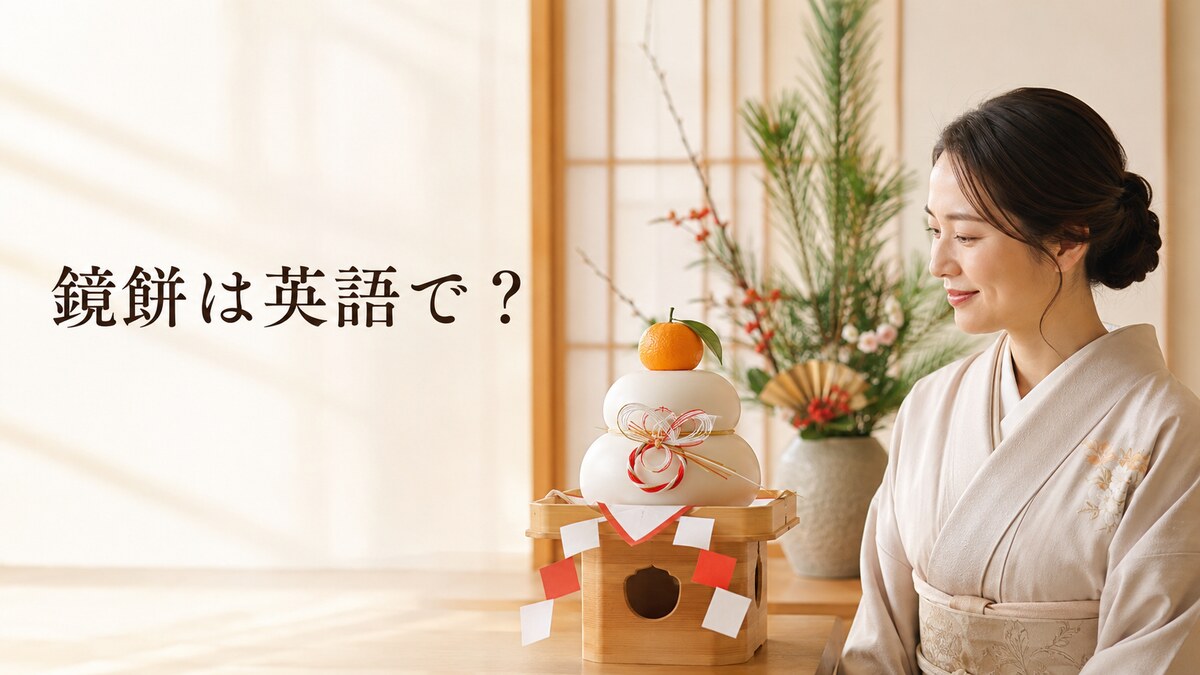
お正月に飾る、丸いお餅が二段に重なった「鏡餅」。外国人に聞かれたとき、mirror rice cake と直訳してよいのか、どう説明すればよいのか迷いますよね。
鏡餅は英語でも、まず日本語名をそのまま使って kagami mochi と言うのが自然です。そのあとに、a traditional Japanese New Year decoration made of two round rice cakes と説明を添えれば、見た目と文化の両方が伝わります。
Contents
鏡餅は英語で何と言う?
まず覚えたいのは、次の表現です。
- kagami mochi:鏡餅
- traditional Japanese New Year rice cakes:日本の伝統的なお正月の餅
- a traditional Japanese New Year decoration made of two round rice cakes:二つの丸い餅でできた、日本の伝統的なお正月飾り
Kagami mochi is a traditional Japanese New Year decoration made of two round rice cakes stacked on top of each other.
鏡餅は、二つの丸い餅を重ねて作る日本の伝統的なお正月飾りです。
mirror rice cake は「鏡+餅」の直訳なので、これだけではどんなものか伝わりません。名前の由来を説明するときには使えますが、料理名・飾り名としては kagami mochi を使いましょう。
なぜ「鏡」という名前なの?
鏡餅の「鏡」は、昔の日本で神聖なものとされた丸い青銅鏡に形が似ていることに由来すると説明されます。英語では、traditional round mirrors や ancient bronze mirrors と表現できます。
The name comes from its resemblance to traditional round mirrors, which were considered sacred in ancient Japan.
その名前は、古代の日本で神聖なものとされた伝統的な丸い鏡に似ていることに由来します。
ただし、由来や飾りの意味には地域・時代によって複数の説明があります。英語で紹介するときも、断定しすぎず It is said that …(~だといわれています) を使うと安心です。
It is said that the round shape represents harmony and a peaceful New Year.
丸い形には、調和や穏やかな新年への願いが込められているといわれています。
鏡餅の見た目と飾りを英語で説明
| 日本語 | 英語 |
|---|---|
| 餅 | mochi / rice cake |
| 丸い餅 | round rice cake |
| 二段に重ねる | stack one on top of the other |
| 橙(だいだい) | daidai orange / a type of bitter orange |
| 三方 | a traditional wooden offering stand called a sanpo |
| 御幣・紙垂 | folded sacred paper decorations |
| 裏白 | urajiro fern leaves |
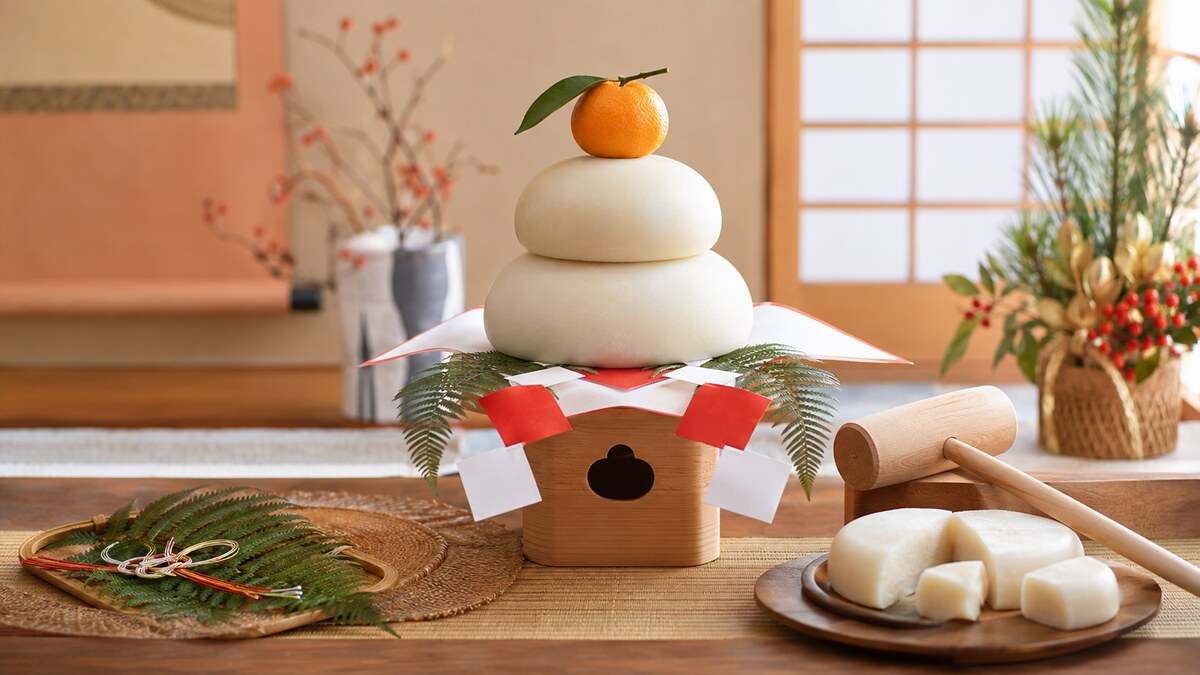
Two round rice cakes are stacked on a traditional wooden stand, with a daidai orange placed on top.
二つの丸い餅を伝統的な木製の台に重ね、その上に橙を置きます。
現代では本物の餅だけでなく、プラスチック容器の中に個包装の餅が入った鏡餅も一般的です。
Today, many families use a packaged version containing individually wrapped pieces of mochi.
現在では、個包装の餅が入った市販の鏡餅を使う家庭も多くあります。
上にのっている「橙」にはどんな意味がある?
鏡餅の上には、みかんによく似た daidai orange を飾ります。「代々」という音に通じることから、家族が代々続くことや繁栄への願いを表すと説明できます。
The orange is called daidai. Its name sounds like a Japanese word meaning “from generation to generation,” so it symbolizes family continuity and prosperity.
この橙は「だいだい」と呼ばれます。その名前が「代々」と同じ音なので、家族が代々続くことや繁栄を象徴します。
英語圏の相手には It looks like a mandarin orange, but it is actually a type of bitter orange.(みかんのように見えますが、実際にはダイダイという種類の柑橘です)と補足してもよいでしょう。
鏡餅はいつ飾る?
鏡餅は一般に年末に飾り、お正月の期間を通して置いておきます。12月28日は末広がりの「八」が入るため、飾るのに縁起がよい日とされます。一方、29日や大晦日の31日を避ける習慣もありますが、地域や家庭によって違います。
Many families put up kagami mochi in late December and display it during the New Year holidays.
多くの家庭では12月下旬に鏡餅を飾り、お正月の期間中置いておきます。
December 28 is traditionally considered a good day to put up New Year decorations.
伝統的に、12月28日はお正月飾りを飾るのによい日とされています。
鏡開きは英語でどう説明する?
お正月が終わったあと、飾っていた鏡餅を下げて食べる行事を「鏡開き」といいます。英語では固有名詞として kagami biraki と言い、次のように説明できます。
Kagami biraki is the custom of breaking open and eating the kagami mochi after the New Year holidays.
鏡開きは、お正月のあとに鏡餅を割って食べる習慣です。
一般には1月11日に行われますが、地域によって日付は異なります。また、縁起を担いで「切る」ではなく「開く」、「割る」ではなく「開く」と表現します。
It is usually held on January 11, although the date varies by region.
通常は1月11日に行われますが、日付は地域によって異なります。
Traditionally, people break the mochi with their hands or a wooden mallet instead of cutting it with a knife.
伝統的には包丁で切らず、手や木槌で餅を割ります。
食べ方は、お汁粉・ぜんざい・お雑煮などさまざまです。餅の入ったお正月の汁物を説明するなら、「お雑煮は英語で?」もあわせてご覧ください。
鏡餅を外国人に30秒で説明する例文
Kagami mochi is a traditional Japanese New Year decoration. It consists of two round rice cakes stacked on top of each other, usually with a daidai orange on top. After the New Year holidays, we break the mochi and eat it in a custom called kagami biraki. It represents wishes for happiness, health and prosperity in the coming year.
鏡餅は日本の伝統的なお正月飾りです。二つの丸い餅を重ね、通常は上に橙を飾ります。お正月が終わると、「鏡開き」という習慣で餅を割って食べます。新しい年の幸せ、健康、繁栄への願いを表しています。
もっと短く説明するなら
This is called kagami mochi. It is a traditional New Year decoration made of two rice cakes.
これは鏡餅といいます。二つの餅でできた伝統的なお正月飾りです。
We display it during the New Year holidays and eat it later.
お正月の間に飾り、あとで食べます。
The orange on top symbolizes the continuation of the family for generations.
上の橙は、家族が代々続くことを象徴します。
英会話で使える会話例
A: What is that New Year decoration?
そのお正月飾りは何?
B: It’s called kagami mochi. It’s made of two round rice cakes with an orange on top.
鏡餅というの。二つの丸い餅を重ねて、その上に橙をのせているんだよ。
A: Do you eat it?
食べるの?
B: Yes. After the New Year holidays, we break it into pieces and eat it. The custom is called kagami biraki.
うん。お正月が終わったら割って食べるよ。その習慣を鏡開きというんだ。
よくある質問
Q. 鏡餅は食べ物?それとも飾り?
両方です。It is both a decoration and food. と答えられます。お正月には飾りとして供え、その後の鏡開きで食べます。
Q. 二段の餅にはどんな意味がある?
年を重ねる、福が重なる、陰と陽、月と太陽など、複数の説明があります。一つだけを唯一の由来として断定せず、There are several interpretations.(いくつかの解釈があります)と伝えるのが正確です。
Q. kagami mochi は大文字にする?
通常は小文字の kagami mochi で構いません。文頭では Kagami mochi と大文字にします。
Q. 鏡開きの餅を「切る」は cut ではない?
物理的には cut も通じますが、伝統的な説明では break the mochi や break it into pieces が自然です。縁起を担いで包丁を使わない習慣も一緒に説明できます。
鏡餅と並ぶ代表的なお正月飾りについては、「門松は英語で?」松・竹を飾る意味と年神様の例文もあわせてどうぞ。
まとめ
鏡餅は英語でも kagami mochi と呼び、a traditional Japanese New Year decoration made of two round rice cakes と説明するのが自然です。二段の丸い餅、上にのせる橙、年末に飾る時期、鏡開きまで説明できれば、日本のお正月文化がぐっと伝わりやすくなります。
初詣・おせち・お年玉なども含めた表現は、親記事の年末年始は英語で?年末・お正月の挨拶、単語、日本文化の表現集にまとめています。