
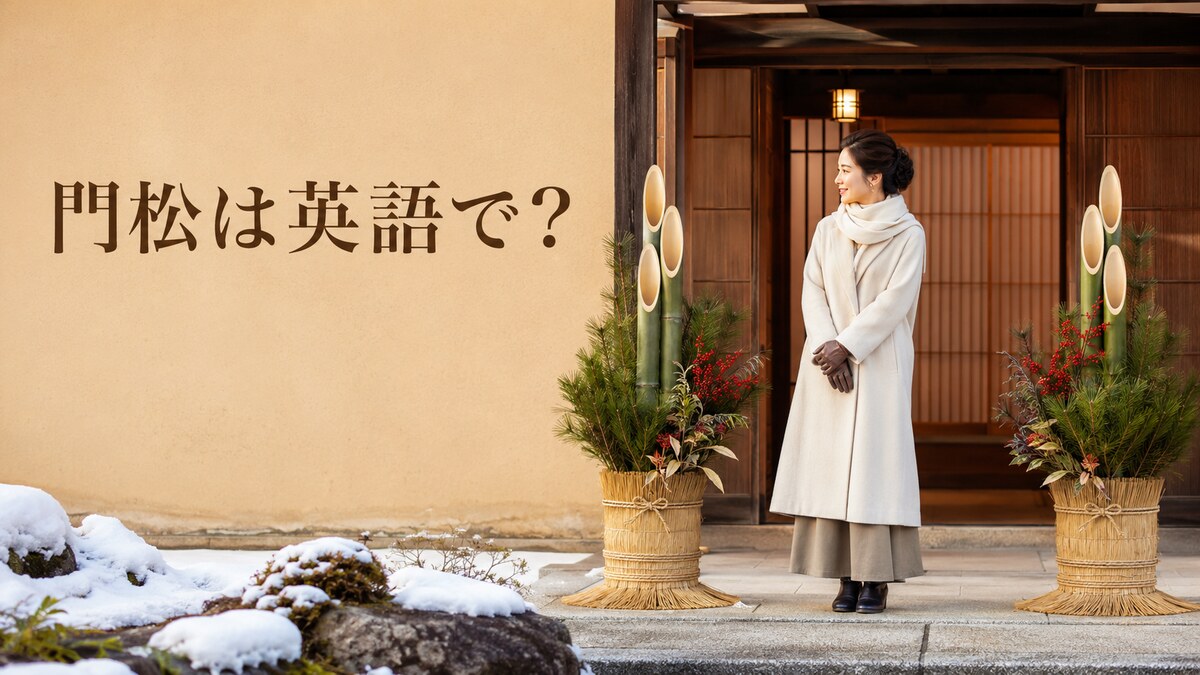
お正月になると、家やお店の入口に飾られる「門松」。外国人に What are these bamboo decorations? と聞かれたら、英語でどう説明すればよいのでしょうか。
門松は英語でも日本語名をそのまま使い、kadomatsu と呼ぶのが自然です。そのあとに traditional Japanese New Year decorations made mainly of pine and bamboo と説明すると、形と役割が伝わります。
Contents
門松は英語で何と言う?
- kadomatsu:門松
- traditional Japanese New Year decorations:日本の伝統的なお正月飾り
- pine and bamboo decorations placed at an entrance:入口に置く松と竹の飾り
Kadomatsu are traditional Japanese New Year decorations made mainly of pine and bamboo.
門松は、主に松と竹で作られる日本の伝統的なお正月飾りです。
pine and bamboo decorations だけでも見た目は説明できますが、初めに kadomatsu と名前を伝えてから補足する方が、日本文化の紹介として自然です。
門松はなぜ玄関や門に飾るの?
門松は、新年の神様である「年神様」を迎えるための目印・依り代とされるお正月飾りです。英語では、難しい宗教用語を直訳せず、welcome the deity of the New Year と説明すると分かりやすくなります。
Kadomatsu are placed by entrances to welcome Toshigami, the deity of the New Year.
門松は、新年の神様である年神様を迎えるために入口に置かれます。
They are believed to guide the New Year deity to the home.
年神様を家へ案内するものと考えられています。
由来や解釈には地域差もあるので、are believed to(~と考えられています)や traditionally(伝統的に)を使うと、断定しすぎず説明できます。
「門松」という名前の意味
kado は「門・入口」、matsu は「松」を意味します。
The word kadomatsu literally means “gate pine.” Kado means “gate,” and matsu means “pine.”
門松は文字どおり「門の松」という意味です。kado は門、matsu は松を表します。
gate pine は語源の説明には使えますが、英語名として単独で使うより、kadomatsu と呼ぶ方が適切です。
松・竹・梅を英語で言うと?
| 日本語 | 英語 | よく説明される意味 |
|---|---|---|
| 松 | pine | longevity / resilience(長寿・生命力) |
| 竹 | bamboo | growth / strength(成長・強さ) |
| 梅 | plum / Japanese plum | hope / perseverance(希望・忍耐) |
| 藁 | straw | 土台や縄に使われる素材 |
Pine stays green throughout winter, so it symbolizes longevity and resilience.
松は冬でも緑を保つため、長寿や生命力を象徴します。
Bamboo grows quickly and straight, so it represents growth and strength.
竹は速くまっすぐ伸びるため、成長と強さを表します。
Plum blossoms appear in the cold season and are associated with hope and perseverance.
梅は寒い時期に花を咲かせるため、希望や忍耐と結びつけられます。
実際の門松の材料や形は、地域・家・作り手によって異なります。すべての門松に松・竹・梅が必ず揃うわけではありません。
門松はなぜ二つ一組で置くの?
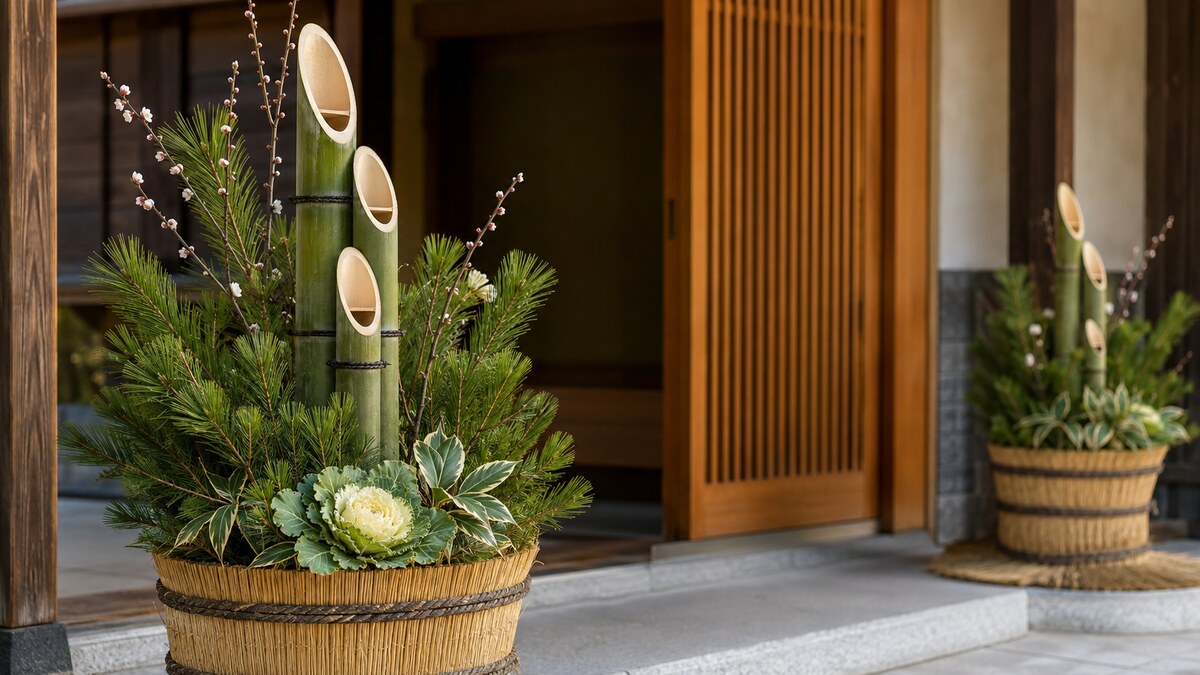
門松は、一般に入口の左右に一対で飾られます。英語では a pair of kadomatsu や one on each side of the entrance が便利です。
A pair of kadomatsu is usually placed on either side of the entrance.
通常、一対の門松を入口の両側に置きます。
There is one on each side of the doorway.
出入口の左右に一つずつあります。
小型の門松を一つだけ飾る家庭や店舗もあるため、「必ず二つ」と断定せず usually を添えると正確です。
斜めに切った竹を英語で説明
門松の竹には、斜めに切ったものと水平に切ったものがあります。斜めの切り口は diagonally cut bamboo、水平なら bamboo cut straight across と表現できます。
The bamboo stalks are cut diagonally at the top.
竹の上部は斜めに切られています。
Kadomatsu designs vary by region, and some bamboo stalks are cut straight across.
門松の形は地域によって異なり、竹を水平に切るものもあります。
門松はいつからいつまで飾る?
門松は一般に12月下旬に飾り、「松の内」が終わるころに片づけます。12月28日は飾り始めるのに縁起がよい日とされる一方、29日や大晦日の31日を避ける習慣もあります。
People usually put up kadomatsu in late December and take them down after the New Year period.
一般に12月下旬に門松を飾り、お正月の期間が終わったら片づけます。
松の内は地域によって1月7日までの場合と15日までの場合などがあります。
The date for taking them down varies by region, commonly around January 7 or January 15.
片づける日は地域によって異なり、一般には1月7日ごろまたは15日ごろです。
鏡餅・しめ飾りとの違い
- kadomatsu:入口の左右などに置く松や竹の飾り
- kagami mochi:二段の丸い餅を重ねた供え物・飾り
- shimekazari:玄関や扉などに掛けるしめ縄の飾り
Kadomatsu are placed outside the entrance, while kagami mochi is usually displayed inside the home.
門松は入口の外に置きますが、鏡餅は一般に家の中に飾ります。
鏡餅の意味や鏡開きについては、「鏡餅は英語で?」で詳しく紹介しています。
門松を30秒で説明する英語例文
Kadomatsu are traditional Japanese New Year decorations made mainly of pine and bamboo. A pair is usually placed on either side of an entrance to welcome Toshigami, the deity of the New Year. Pine symbolizes longevity, while bamboo represents growth and strength. The design and the dates for displaying them vary by region.
門松は、主に松と竹で作られる日本の伝統的なお正月飾りです。通常は入口の両側に一対で置き、新年の神様である年神様を迎えます。松は長寿、竹は成長や強さを象徴します。形や飾る期間は地域によって異なります。
短く説明するなら
These are called kadomatsu. They are traditional New Year decorations made of pine and bamboo.
これは門松といいます。松と竹でできた伝統的なお正月飾りです。
We place them by the entrance to welcome the New Year deity.
新年の神様を迎えるため、入口に置きます。
英会話で使える会話例
A: What are those bamboo decorations by the door?
ドアのそばにある竹の飾りは何?
B: They’re called kadomatsu. They’re traditional Japanese New Year decorations.
門松という、日本の伝統的なお正月飾りだよ。
A: Why do you put them at the entrance?
どうして入口に置くの?
B: They’re meant to welcome the deity of the New Year. Pine and bamboo also symbolize longevity and growth.
新年の神様を迎えるためなんだ。松と竹は長寿や成長も象徴しているよ。
よくある質問
Q. 門松を bamboo decoration と言っても通じる?
見た目は伝わりますが、松も重要な材料です。kadomatsu, a traditional pine and bamboo New Year decoration と紹介する方が正確です。
Q. kadomatsu は複数形にする?
日本語由来の語なので、複数でも kadomatsu とするのが一般的です。a pair of kadomatsu と言えば「一対の門松」を自然に表せます。
Q. 年神様は英語で God でよい?
the New Year deity が説明しやすい表現です。固有名を残すなら Toshigami, the deity of the New Year と言えます。
Q. 門松は日本中で同じ形?
いいえ。竹の切り方、植物、縄の巻き方、大きさなどは地域や作り手によって違います。Kadomatsu designs vary by region. と伝えられます。
門松とともに玄関へ飾る縄飾りについては、「しめ縄は英語で?」しめ飾りとの違いと英語例文もあわせてどうぞ。
門松を飾っておく「松の内」の期間や三が日との違いは、「松の内・三が日は英語で?」で詳しく解説しています。
まとめ
門松は英語でも kadomatsu と呼び、traditional Japanese New Year decorations made mainly of pine and bamboo と説明するのが自然です。「入口に一対で置く」「年神様を迎える」「松は長寿、竹は成長を象徴する」という3点を押さえれば、日本のお正月文化として分かりやすく伝えられます。
年末年始の挨拶や初詣、おせち、お年玉などの表現は、親記事の年末年始は英語で?年末・お正月の挨拶、単語、日本文化の表現集にまとめています。