
日本のお正月を英語で紹介していると、「三が日」と「松の内」はどう違うの?と聞かれることがあります。どちらも新年に関する期間ですが、同じ意味ではありません。
先に結論を言うと、三が日は英語で the first three days of the New Year、松の内は the period when New Year decorations are displayed などと説明すると自然です。この記事では、元日・三が日・松の内・正月の違いと、外国人に伝わる英語例文をまとめます。
- 三が日=the first three days of the New Year
- 松の内=the period when New Year decorations are displayed
- 松の内は地域によって1月7日または15日ごろまで
- 直訳よりも「いつ・何をする期間か」を一言添えると伝わりやすい
Contents
「三が日」は英語で?
三が日の最もわかりやすい英語表現は、the first three days of the New Year です。
Sanganichi refers to the first three days of the New Year, from January 1 to 3.
三が日とは、1月1日から3日までの新年最初の3日間を指します。
Many people spend the first three days of the New Year with their families.
多くの人は三が日を家族と過ごします。
During the first three days of the New Year, people visit shrines, eat special dishes, and relax at home.
三が日には、神社へ参拝したり、特別な料理を食べたり、家でゆっくり過ごしたりします。
the first three days of January でも日付は伝わりますが、お正月文化の話なら of the New Year としたほうが「新年の特別な期間」というニュアンスを出せます。
「三が日の間に」はduringを使う
「三が日に」「三が日の間に」は during the first three days of the New Year と言えます。
Most department stores hold New Year sales during the first three days of the New Year.
多くの百貨店は三が日に初売りを行います。
Our office will be closed for the first three days of the New Year.
当社は三が日の間、休業します。
休業期間を案内するときは、誤解を避けるために from January 1 through January 3 のように具体的な日付を添えるのもおすすめです。
「松の内」は英語で?
松の内には、英語で完全に一致する一語がありません。そのため、日本語名の Matsunouchi を示してから、「正月飾りを飾っておく期間」と説明するのが自然です。
Matsunouchi is the period when Japanese New Year decorations are displayed.
松の内とは、日本のお正月飾りを飾っておく期間です。
Matsunouchi is the traditional New Year period during which the deity of the New Year is welcomed.
松の内は、年神様をお迎えする伝統的なお正月の期間です。
短く言うなら、the New Year decoration period でも大意は伝わります。ただし定着した英語の固有名詞ではないため、会話では説明文を添えると親切です。
松の内はいつまで?地域差も英語で説明しよう
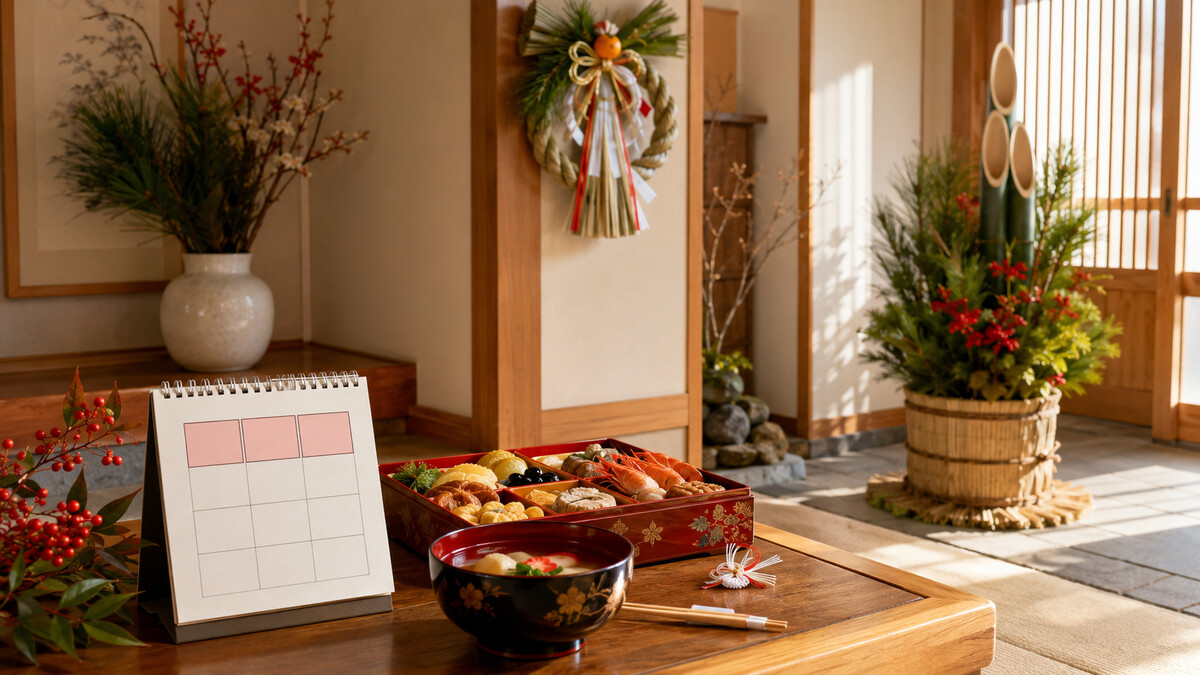
松の内の終わりは地域によって異なります。一般に、関東をはじめ多くの地域では1月7日まで、関西など一部の地域では1月15日までとされます。ただし、同じ地方でも地域や家庭によって違いがあります。
In many parts of Japan, Matsunouchi lasts until January 7, while in some areas it lasts until January 15.
日本の多くの地域では松の内は1月7日までですが、一部の地域では1月15日まで続きます。
The dates vary depending on the region and local tradition.
日付は地域や土地の慣習によって異なります。
People usually take down their kadomatsu and other New Year decorations at the end of Matsunouchi.
一般に、松の内が終わると門松などのお正月飾りを片づけます。
門松やしめ飾りそのものを説明したいときは、「門松は英語で?」、「しめ縄・しめ飾りは英語で?」も参考にしてください。
元日・三が日・松の内・正月の違い
| 日本語 | 期間・意味 | 英語での説明 |
|---|---|---|
| 元日 | 1月1日 | New Year’s Day |
| 三が日 | 1月1日〜3日 | the first three days of the New Year |
| 松の内 | 正月飾りを飾る期間。地域差あり | the period when New Year decorations are displayed |
| 正月 | 新年の祝い、またはその期間。文脈で幅が変わる | the New Year / the New Year holidays |
New Year’s Day は1月1日だけを指します。一方、the New Year holidays は年末年始の休暇を広く表すため、三が日と必ずしも一致しません。
New Year’s だけで使う場合もありますが、文脈によって New Year’s Day、New Year’s Eve、New Year’s holiday などの省略になり得ます。期間を正確に伝えたいときは、具体的な表現を選びましょう。
三が日を英語で30秒説明してみよう
In Japan, the first three days of January are called Sanganichi. Many people spend this time with their families, eat osechi and ozoni, and make their first shrine visit of the year. Some stores also hold their first sales of the year.
日本では、1月最初の3日間を三が日と呼びます。多くの人が家族と過ごし、おせちやお雑煮を食べ、その年最初の神社参拝をします。初売りを行う店もあります。
関連する文化は、おせち、お雑煮、初詣の記事で詳しく紹介しています。
松の内を英語で30秒説明してみよう
Matsunouchi is the traditional period when New Year decorations such as kadomatsu and shimekazari are displayed in Japan. It usually ends on January 7 in many regions, but in some areas it continues until January 15. The exact dates depend on local customs.
松の内は、門松やしめ飾りなどのお正月飾りを飾る日本の伝統的な期間です。多くの地域では1月7日に終わりますが、一部では1月15日まで続きます。正確な日付は地域の習慣によって異なります。
会話で使える例文
How long do the New Year holidays last in Japan?
日本のお正月休みはどのくらい続きますか?
The first three days are especially important, but the holiday length varies by company.
最初の3日間は特に大切ですが、休暇の長さは会社によって異なります。
Why are the New Year decorations still up?
どうしてまだお正月飾りが飾ってあるの?
Because we are still in the Matsunouchi period.
まだ松の内だからです。
When do you take down the decorations?
飾りはいつ片づけますか?
We take them down when Matsunouchi ends.
松の内が終わると片づけます。
よくある質問
三が日と松の内は同じですか?
同じではありません。三が日は1月1日から3日まで。松の内は正月飾りを飾り、年神様をお迎えする期間で、終わる日は地域によって異なります。
「三が日休み」は英語でどう言いますか?
We are closed from January 1 through January 3. が明確です。文化を説明する場面なら We are closed for the first three days of the New Year. も使えます。
「松の内」をMatsunouchiだけで伝えてもよいですか?
相手が日本文化を知らない場合、Matsunouchiだけでは伝わりにくいため、the period when New Year decorations are displayed と説明を添えましょう。
年末年始の挨拶や日本文化の英語表現をまとめて確認したい方は、親記事の「年末年始は英語で?」もどうぞ。
松の内のあとに鏡餅を下げて食べる行事は、「鏡開きは英語で?」で詳しく紹介しています。
まとめ:年末年始の英語は場面に合わせて選ぼう
三が日は the first three days of the New Year、松の内は the period when New Year decorations are displayed と表せます。
日本独自の文化用語は、無理に一語へ直訳するより、期間・習慣・目的を短い英語で補うほうが伝わります。「三が日は1月1日から3日」「松の内は正月飾りを飾る期間」という違いを押さえて、日本のお正月を英語で紹介してみてください。