
make a blunderは、「大きなへまをする」「不注意で目立つ失敗をする」という意味です。
I made a terrible blunder during the presentation.
プレゼン中に、とんでもないへまをしてしまいました。
ただし、blunderは日常の小さなミスすべてに使う言葉ではありません。避けられたはずなのに、不注意や判断の悪さから起こした、目立つ失敗というニュアンスがあります。また、日常会話ではI made a big mistake.やI really messed up.のほうが自然なことも多いため、使い分けが大切です。
 しゅみすけ(大山俊輔)
Contents
make a blunderの意味と基本形
| 形 | 意味 | 例 |
|---|---|---|
| make a blunder | へまをする | I made a blunder. |
| make a big / serious blunder | 大きな・重大なへまをする | They made a serious blunder. |
| make the blunder of doing | 〜するというへまをする | He made the blunder of replying to all. |
| blunder | へまをする(動詞) | The company blundered badly. |
過去形ならmade a blunderです。blunder自体を動詞として使うこともできますが、学習者にはmake a blunderの形が分かりやすいでしょう。
blunderのニュアンスは「目立つ・不注意な・避けられた失敗」
blunderには、主に次の3つの含みがあります。
- 目立つ:周囲が気づくほどの失敗
- 不注意・判断ミス:慎重なら避けられた可能性がある
- 恥ずかしさや悪い結果:本人が「やってしまった」と感じる
たとえば、重要な顧客へ別会社の見積書を送る、全社員へのメールに機密資料を添付する、会議で相手の名前を何度も間違えるなどは、blunderと呼べる場面です。
Sending the confidential file to the wrong client was a major blunder.
機密ファイルを別の顧客に送ったのは、大きな失態でした。
The manager made a blunder by announcing the change before it was approved.
その管理職は、承認前に変更を発表するというへまをしました。
一方、スペルを1文字間違えた、コーヒーを少しこぼした、約束の時間を5分勘違いした程度なら、通常はmistakeのほうが自然です。
make a blunder・make a mistake・make an error・mess upの違い
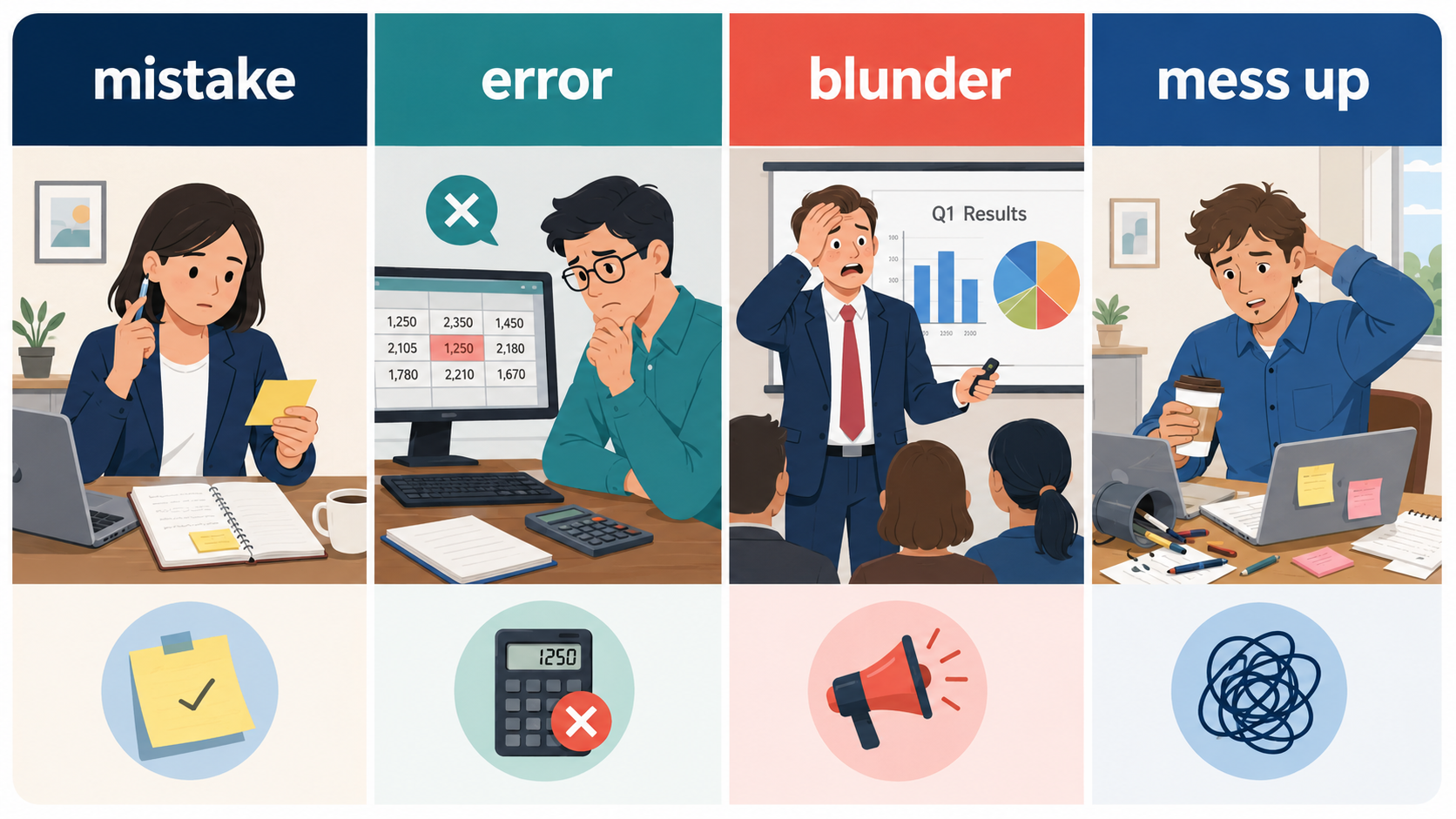
| 表現 | 中心となるニュアンス | 使いやすさ |
|---|---|---|
| make a mistake | 最も一般的な「間違える」 | 日常・仕事どちらでも広く使える |
| make an error | 計算・データ・手順などの誤り | やや客観的・技術的 |
| make a blunder | 不注意による目立つへま・失態 | やや強く、少し硬め |
| mess up | しくじる・やらかす | 非常に会話的 |
make a mistake:最も広く使える「間違える」
I made a mistake in the report.
報告書で間違いをしました。
大小を問わず使えます。迷ったときはmake a mistakeが最も安全です。
make an error:数字・処理・手順などの誤り
We found an error in the calculation.
計算に誤りが見つかりました。
errorは、人の恥ずかしさよりも「正しい状態から外れている箇所」に焦点があります。システムエラー、入力ミス、計算間違いなどにも自然です。
make a blunder:目立つ失態
The company made a huge blunder by ignoring the warning signs.
その会社は警告の兆候を無視するという大失態を犯しました。
後から見れば「なぜそうしたのか」と感じるような、判断の悪さや不注意が意識されます。ニュース、解説、振り返りでも使われやすい言葉です。
mess up:会話で使う「やらかす」
I really messed up. I sent the email to everyone.
本当にやらかしました。そのメールを全員に送ってしまいました。
自分の失敗を口語的に認めるなら、I messed up.が非常に自然です。blunderよりくだけています。
make a blunderが自然に使われる場面
仕事・ビジネス
We made a costly blunder when we ordered the wrong materials.
間違った材料を発注し、費用のかかる失敗をしました。
Calling the client by the wrong name was an embarrassing blunder.
顧客の名前を間違えて呼んだのは、恥ずかしいへまでした。
The hiring decision turned out to be a serious blunder.
その採用判断は、結果的に重大な失敗だったと分かりました。
政治・経営判断・ニュース
Critics called the decision a strategic blunder.
批評家たちは、その決定を戦略上の失策だと評しました。
The rushed announcement was a political blunder.
性急な発表は政治的な失態でした。
strategic blunder、political blunder、diplomatic blunderのような組み合わせは、報道や論評でよく見られます。
日常生活
I made the blunder of mentioning the surprise party in front of her.
彼女の前でサプライズパーティーの話をしてしまうというへまをしました。
He made a blunder and booked the hotel for the wrong weekend.
彼はへまをして、別の週末でホテルを予約してしまいました。
日常でも使えますが、軽い失敗ならmistakeやmess upのほうが会話的です。
よく使うblunderの組み合わせ
| 組み合わせ | 意味 |
|---|---|
| a big / huge blunder | 大きなへま |
| a serious blunder | 重大な失態 |
| a costly blunder | 大きな損失を招く失敗 |
| an embarrassing blunder | 恥ずかしいへま |
| a strategic blunder | 戦略上の失策 |
| a diplomatic blunder | 外交上の失態 |
It was a costly blunder, but we learned from it.
費用のかかる失敗でしたが、そこから学びました。
blunderは動詞としても使える
blunder単独を動詞にすると、「へまをする」「不注意に進む」という意味になります。
The team blundered badly in the final minutes.
チームは最後の数分で大きなミスをしました。
I blundered into the wrong meeting room.
私はうっかり間違った会議室に入ってしまいました。
blunder into…は、よく確認せずに場所・状況へ入り込む感じです。やや描写的な表現なので、日常会話ではI accidentally went into the wrong room.でも十分です。
日本人が間違えやすいポイント
do a blunderではなくmake a blunder
- ○ make a blunder
- × do a blunder
英語ではmistake・error・blunderのような「間違いを生み出す」名詞とmakeがよく組み合わされます。
小さな間違いに多用しない
blunderは強めです。小さな入力ミスならI made a typo.、一般的な間違いならI made a mistake.が自然です。
相手へ直接言うと責める響きがある
You made a blunder.は「あなたは目立つへまをした」と強く評価する言い方です。仕事で改善を促すなら、事実に焦点を当てたほうが穏やかです。
- 強い:You made a serious blunder.
- 中立的:There seems to be a mistake in the report.
- 協力的:Let’s check what went wrong and fix it.
間違いを直す表現は、「修正する」は英語で?correct・fix・reviseの違いも参考になります。
簡単な英語で言い換えるなら
make a blunderが出てこなくても、次の言い方で十分伝わります。
I made a big mistake.
大きな間違いをしました。
I did the wrong thing.
間違ったことをしました。
I wasn’t careful, and it caused a problem.
注意不足で、問題を起こしてしまいました。
I really messed up.
本当にやらかしました。
しゅみすけ(大山俊輔)
make a blunderを定着させるミニ練習
- プレゼンで大きなへまをしました。
- 間違った人にファイルを送ったのは重大な失敗でした。
- 彼をうっかり別の名前で呼んでしまいました。
- 本当にやらかしました。
解答例:
1. I made a big blunder during the presentation.
2. Sending the file to the wrong person was a serious blunder.
3. I made the blunder of calling him by the wrong name.
4. I really messed up.
まとめ:make a blunderは「不注意による目立つへま」
- make a blunder:不注意で目立つへまをする
- make a mistake:大小を問わない一般的な間違い
- make an error:計算・データ・処理などの客観的な誤り
- mess up:会話的な「しくじる・やらかす」
- 小さなミスにblunderを使うと大げさになりやすい
まずは最も使いやすいI made a mistake.を土台にし、目立つ失態ならI made a blunder.、くだけた会話ならI messed up.と使い分けてみてください。
失敗にまつわる自然な英語をさらに学びたい方は、「弘法も筆の誤り」は英語で?Even experts make mistakes.の意味もあわせてご覧ください。