
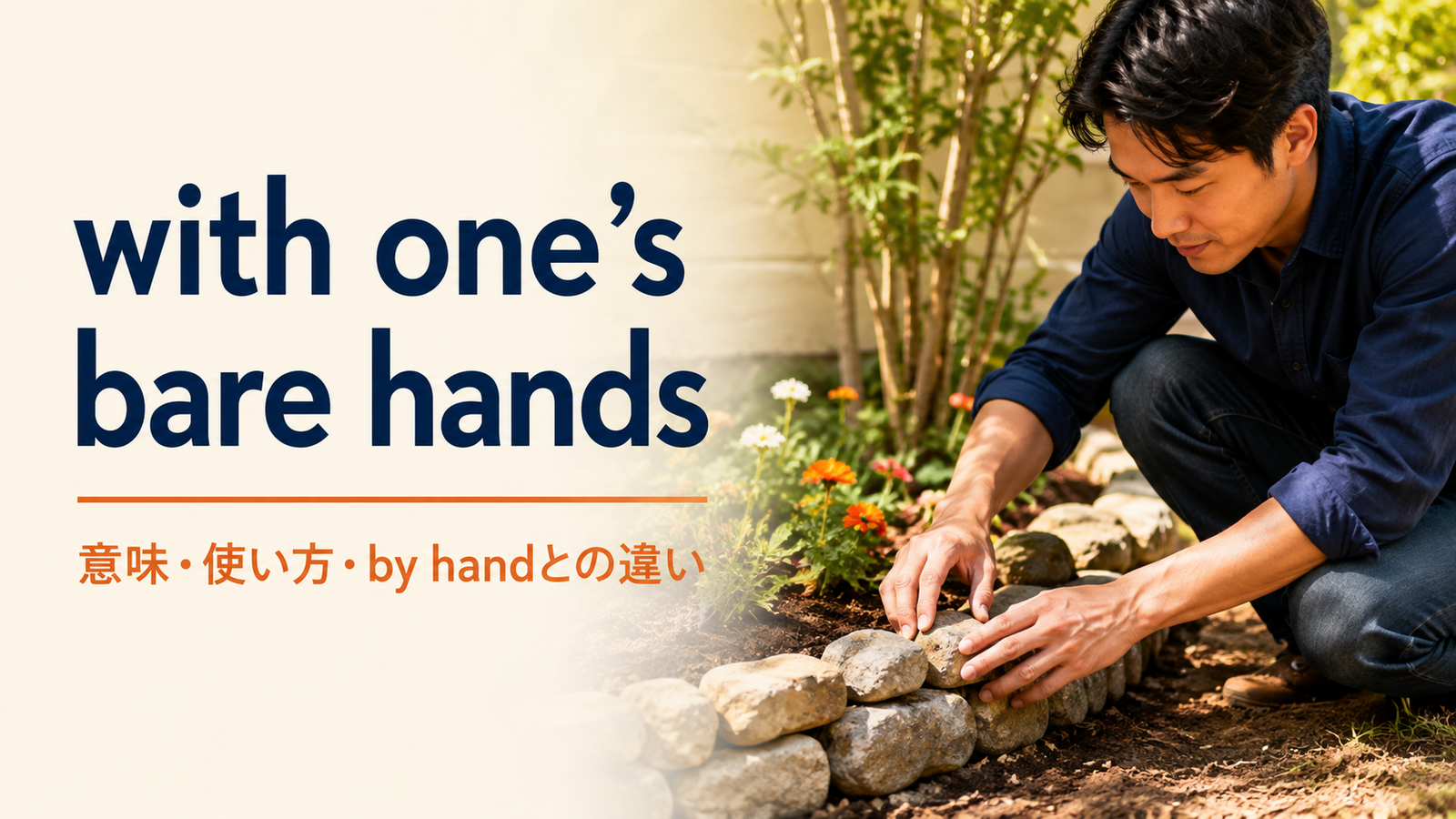
with one’s bare hands は、「素手で」「手袋や道具を使わず、自分の手だけで」という意味です。土を掘る、物をつかむ、何かを壊す・作るといった行動で、手が直接対象に触れていることを強調します。
one’s は固定された単語ではなく、主語に合わせて my / your / his / her / our / their に変わります。
Contents
with one’s bare handsの意味と仕組み
bare は「覆われていない・むき出しの」という意味です。そのため bare hands は、手袋で覆われておらず、道具も持っていない「素手」を表します。
with(〜を使って)+one’s bare hands(〜の素手)
→ 自分の素手を使って
→ 素手で・自分の手だけで
文脈によっては、単に手袋をしていないという事実だけでなく、「機械や特別な道具に頼らずやり遂げた」という驚きや力強さも伝わります。
 しゅみすけ(大山俊輔)
one’sの変化と基本の語順
| 主語 | 使う形 | 例 |
|---|---|---|
| I | with my bare hands | I dug it out with my bare hands. |
| you | with your bare hands | Don’t touch it with your bare hands. |
| he | with his bare hands | He lifted it with his bare hands. |
| she | with her bare hands | She shaped the clay with her bare hands. |
| they | with their bare hands | They cleared the rocks with their bare hands. |
基本的には、動作を表す文の後ろに置きます。
主語+動詞+目的語+with one’s bare hands.
He caught the ball with his bare hands.
彼はそのボールを素手で受け止めました。
She pulled the weeds out with her bare hands.
彼女は雑草を素手で引き抜きました。
自然な例文
日常・家庭
I mixed the dough with my bare hands.
私は生地を素手で混ぜました。
Don’t pick up broken glass with your bare hands.
割れたガラスを素手で拾わないでください。
He removed the hot pan with his bare hands.
彼は熱い鍋を素手で動かしました。
自然・旅行
We built a small shelter with our bare hands.
私たちは自分たちの手だけで小さな避難小屋を作りました。
She dug through the sand with her bare hands.
彼女は素手で砂を掘りました。
The fisherman pulled the rope with his bare hands.
漁師は素手でロープを引きました。
仕事・ものづくり
The workers moved the debris with their bare hands.
作業員たちはがれきを素手で動かしました。
He shaped every piece with his bare hands.
彼はすべての部品を自分の手で形作りました。
危険物、熱い物、鋭利な物を扱う場面では、英文の意味を理解することと実際の安全な行動は別です。必要な手袋や道具を使いましょう。
by handとの違い

by hand は「機械を使わず、手作業で」という意味です。手袋や小さな道具を使っていても構いません。
This bag was made by hand.
このバッグは手作業で作られました。
Please wash this sweater by hand.
このセーターは手洗いしてください。
一方、with one’s bare hands は、手袋や道具なしで対象へ直接触れていることを強調します。
| 表現 | 中心的な意味 | 対比するもの |
|---|---|---|
| with one’s bare hands | 素手で直接 | 手袋・道具 |
| by hand | 手作業で | 機械・自動処理 |
with one’s own handsとの違い
with one’s own hands は、「人任せにせず、自分自身の手で」という意味です。素手かどうかより、本人が行ったことを強調します。
She built the table with her own hands.
彼女は自分自身の手でそのテーブルを作りました。
この場合、のこぎりやハンマーを使っていても自然です。対して with her bare hands なら、道具なしで直接手を使ったという意味になります。
empty-handedとの違い
empty-handed は「手ぶらで」「成果なしで」という意味で、bare handsとは別表現です。
We came home empty-handed.
私たちは何も持たずに帰宅しました。
bare hands は手が覆われていない状態、empty-handed は何も持っていない状態を表します。
日本人が気をつけたいポイント
with bare handsだけにしない
一般論では見かけることもありますが、人の具体的な行動では所有格を入れるのが自然です。
○ He touched it with his bare hands.
△ He touched it with bare hands.
one’sをそのまま使わない
辞書の one’s は「ここに所有格を入れる」という記号のようなものです。
× I made it with one’s bare hands.
○ I made it with my bare hands.
強調が必要か考える
単に「手で持った」と言うだけなら、with my hands や通常の動詞だけで十分です。bareを加えると「手袋も道具もなし」という点が強調されます。
しゅみすけ(大山俊輔)
すぐ出てこないときの簡単な言い換え
- without gloves(手袋なしで)
- without any tools(道具を一切使わず)
- using only my hands(自分の手だけを使って)
- I did it myself.(自分でやりました)
I moved the rocks using only my hands.
私は自分の手だけを使って石を動かしました。
「何を使わなかったのか」をwithoutで直接言えば、定型表現が出てこなくても分かりやすく伝えられます。
まとめ
with one’s bare hands は、「素手で」「手袋や道具を使わず自分の手だけで」という意味です。one’sは主語に合わせてmy、your、his、her、our、theirへ変えます。
by hand は機械を使わない手作業、with one’s own hands は本人が自分で行うことを強調します。まずは I did it with my bare hands. の形から覚えましょう。
ほかの表現もまとめて学びたい方は、英熟語・定型表現の親記事もご覧ください。