

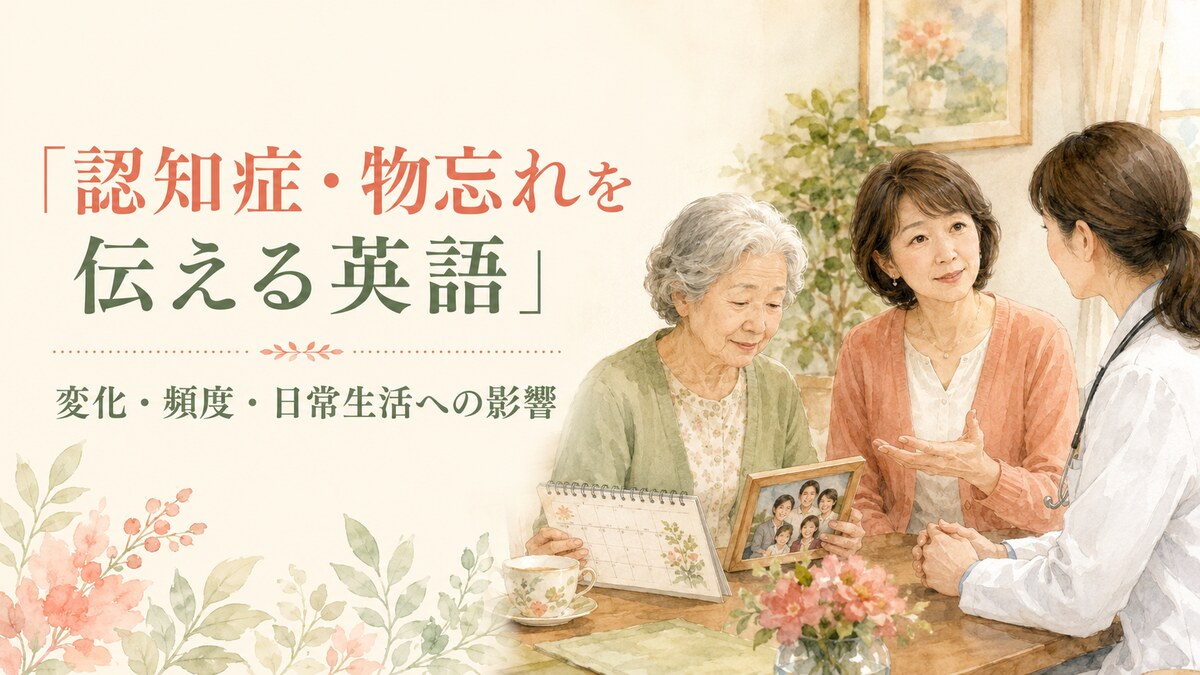
 「最近、母の物忘れが増えました」「同じ質問を何度もします」「日常生活にも影響が出ています」。認知症や記憶の変化について英語で伝えるときは、家族が病名を断定するのではなく、いつから・どのくらい・何が起きたかを具体的に説明することが大切です。
この記事では、物忘れと認知症に関する英語の違い、医師へ伝える例文、本人への尊重ある声かけを初心者向けにまとめます。
「最近、母の物忘れが増えました」「同じ質問を何度もします」「日常生活にも影響が出ています」。認知症や記憶の変化について英語で伝えるときは、家族が病名を断定するのではなく、いつから・どのくらい・何が起きたかを具体的に説明することが大切です。
この記事では、物忘れと認知症に関する英語の違い、医師へ伝える例文、本人への尊重ある声かけを初心者向けにまとめます。
これだけ言えれば乗り切れる3文
- My mother has been having memory problems.(母に記憶の問題が出ています)
- It started about six months ago.(約6か月前に始まりました)
- It is affecting her daily life.(日常生活に影響しています)
Contents
認知症・物忘れの英語|dementia・memory loss・forgetfulの違い
- forgetful:忘れっぽい。日常的な形容詞で、診断名ではない
- forgetfulness:物忘れ
- memory problems:記憶に関する問題。診断前にも使いやすい
- memory loss:記憶喪失・記憶力の低下。程度の幅がある
- cognitive decline:記憶・判断・思考など認知機能の低下
- mild cognitive impairment (MCI):軽度認知障害
- dementia:認知症
- Alzheimer’s disease:アルツハイマー病
- She has become more forgetful lately.(最近、母は以前より忘れっぽくなりました)
- She has been having memory problems.(記憶の問題が出ています)
- She was diagnosed with dementia.(認知症と診断されました)
- She has Alzheimer’s disease.(アルツハイマー病です)
 しゅみすけ(大山俊輔)
人を病名だけで表さない、尊重ある英語
She is demented. のような言い方は、相手を病名や状態だけで決めつける響きがあり、避けたほうがよい表現です。- She has dementia.(彼女は認知症です)
- She is living with dementia.(彼女は認知症とともに暮らしています)
- a person with dementia(認知症のある人)
- a person living with dementia(認知症とともに暮らす人)
いつから変化したかを伝える英語
- It started about six months ago.(約6か月前に始まりました)
- We first noticed it last year.(最初に気づいたのは昨年です)
- It has gradually become more noticeable.(徐々に目立つようになりました)
- Her memory has gotten worse over the past few months.(ここ数か月で記憶力が低下しました)
- This change happened suddenly.(この変化は突然起きました)
急な混乱は「いつもの物忘れ」と決めつけない
突然の強い混乱、会話や動作の急な変化、意識がおかしいなどの場合は、認知症だろうと自己判断せず、現地の救急窓口や医療機関へ速やかに相談してください。
頻度と具体例を伝える英語
- She forgets things more often now.(今は以前より頻繁に忘れます)
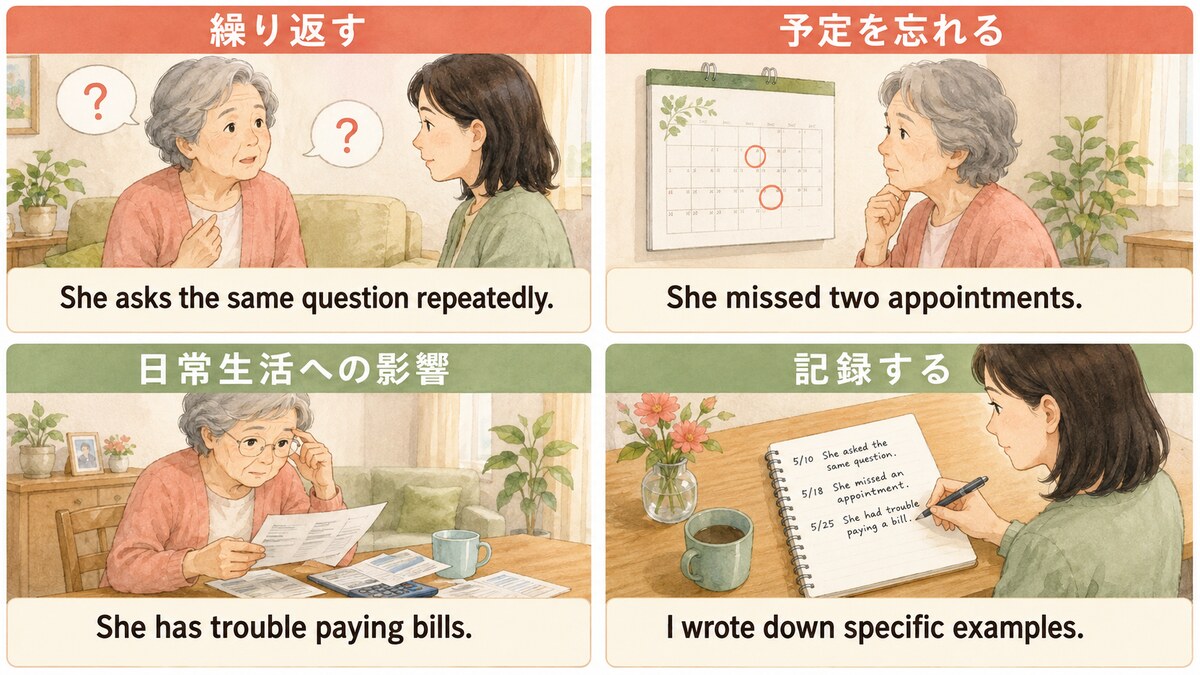
- She asks the same question repeatedly.(同じ質問を繰り返します)
- She misplaced her keys three times this week.(今週、鍵を3回置き忘れました)
- She missed two appointments this month.(今月、予約を2回忘れました)
- She sometimes forgets whether she has taken her medicine.(薬を飲んだかどうか忘れることがあります)
- She has trouble finding the right words.(適切な言葉が出にくいことがあります)
日常生活への影響を説明する英語
- It is affecting her daily life.(日常生活に影響しています)
- She has trouble paying bills.(支払いの管理が難しくなっています)
- She sometimes forgets to turn off the stove.(コンロを消し忘れることがあります)
- She got lost in a familiar neighborhood.(よく知る近所で道に迷いました)
- She needs reminders for appointments.(予定には声かけが必要です)
- She can still cook and dress herself.(料理や着替えは今も自分でできます)
- She is still independent in many ways.(多くの面で今も自立しています)
- She needs help managing her medicine.(薬の管理には手助けが必要です)
記憶以外の変化を伝える英語
認知機能の変化は記憶だけとは限りません。観察したことがあれば、評価を付けず事実として伝えます。- She has trouble following conversations.(会話についていくのが難しいことがあります)
- She seems confused about time and place.(時間や場所が分からなくなる様子があります)
- She takes longer to complete familiar tasks.(慣れた作業に以前より時間がかかります)
- Her mood has changed recently.(最近、気分に変化があります)
- She has become less interested in her usual activities.(普段の活動への関心が薄れました)
- Her balance has become worse.(バランスが悪くなりました)
医師に相談するときの英語
- I’m concerned about my mother’s memory.(母の記憶力が心配です)
- Could this be more than normal forgetfulness?(通常の物忘れ以上の可能性がありますか?)
- What could be causing these changes?(この変化の原因として何が考えられますか?)
- Does she need a memory assessment?(記憶・認知機能の評価が必要ですか?)
- Could any of her medicines be affecting her memory?(薬が記憶に影響している可能性はありますか?)
- Should she see a specialist?(専門医を受診すべきですか?)
医師に見せる記録を英語で作る
短いメモでも、日付・出来事・頻度・影響を入れると役立ちます。- May 10: She asked the same question five times.(5月10日:同じ質問を5回した)
- May 18: She missed a doctor’s appointment.(5月18日:診察予約を忘れた)
- May 25: She had trouble paying a familiar bill.(5月25日:いつもの支払いが難しかった)
- I wrote down specific examples.(具体例を書き留めました)
- Here is a record of what we noticed.(気づいたことの記録です)
- This happens about three times a week.(週3回ほど起きます)
本人に安心してもらう声かけ英語
- It’s okay. Take your time.(大丈夫。ゆっくりでいいよ)
- You’re safe. I’m here with you.(大丈夫。私がここにいるよ)
- Let’s look at the calendar together.(一緒にカレンダーを見よう)
- Would you like me to write it down?(書いておこうか?)
- We can do this one step at a time.(一つずつやろう)
- How can I help?(どう手伝えばいい?)
避けたい言い方と、やさしい言い換え
- I already told you!(もう言ったでしょ!)
→ Let me tell you again.(もう一度伝えるね) - Don’t you remember?(覚えてないの?)
→ That’s okay. Here’s the note.(大丈夫。ここにメモがあるよ) - You’re wrong.(間違ってるよ)
→ Let’s check it together.(一緒に確認しよう)
しゅみすけ(大山俊輔)
診断を受けている場合の説明
- My mother was diagnosed with dementia last year.(母は昨年、認知症と診断されました)
- She has mild cognitive impairment.(母には軽度認知障害があります)
- She is in the early stages of Alzheimer’s disease.(アルツハイマー病の初期段階です)
- Her symptoms vary from day to day.(症状は日によって変わります)
- Please speak slowly and give her time to answer.(ゆっくり話し、答える時間をください)
- Please include her in the conversation.(本人も会話に加えてください)
会話例:医師に母の物忘れを相談する
Doctor: What changes have you noticed?
どのような変化に気づきましたか?
Daughter: My mother has become more forgetful over the past six months.
この6か月で母の物忘れが増えました。
Doctor: Can you give me an example?
具体例を教えてください。
Daughter: She asks the same question repeatedly and missed two appointments this month.
同じ質問を繰り返し、今月は予約を2回忘れました。
Doctor: Is it affecting her daily life?
日常生活に影響していますか?
Daughter: Yes. She has trouble managing bills, but she can still cook and dress herself.
はい。支払いの管理が難しくなりましたが、料理や着替えは今も自分でできます。
まとめ|診断名ではなく、変化・頻度・影響を伝える
- My mother has been having memory problems.(記憶の問題が出ています)
- It started about six months ago.(約6か月前に始まりました)
- She asks the same question repeatedly.(同じ質問を繰り返します)
- It is affecting her daily life.(日常生活に影響しています)
- I wrote down specific examples.(具体例を書き留めました)
参考:米国National Institute on Aging「Memory loss and forgetfulness」「Memory Problems, Forgetfulness, and Aging」。この記事は英語表現の解説であり、診断を目的とするものではありません。
物忘れが服薬管理へ影響している場合の、薬の一覧・飲み忘れ・二重服用を伝える表現は、「高齢の親の服薬管理を伝える英語」も参考にしてください。
高齢の親の暮らし・介護サービス・通院・認知症・歩行・服薬の記事を場面別に探す方は、「親・介護・シニアライフで使う英語」をご覧ください。