


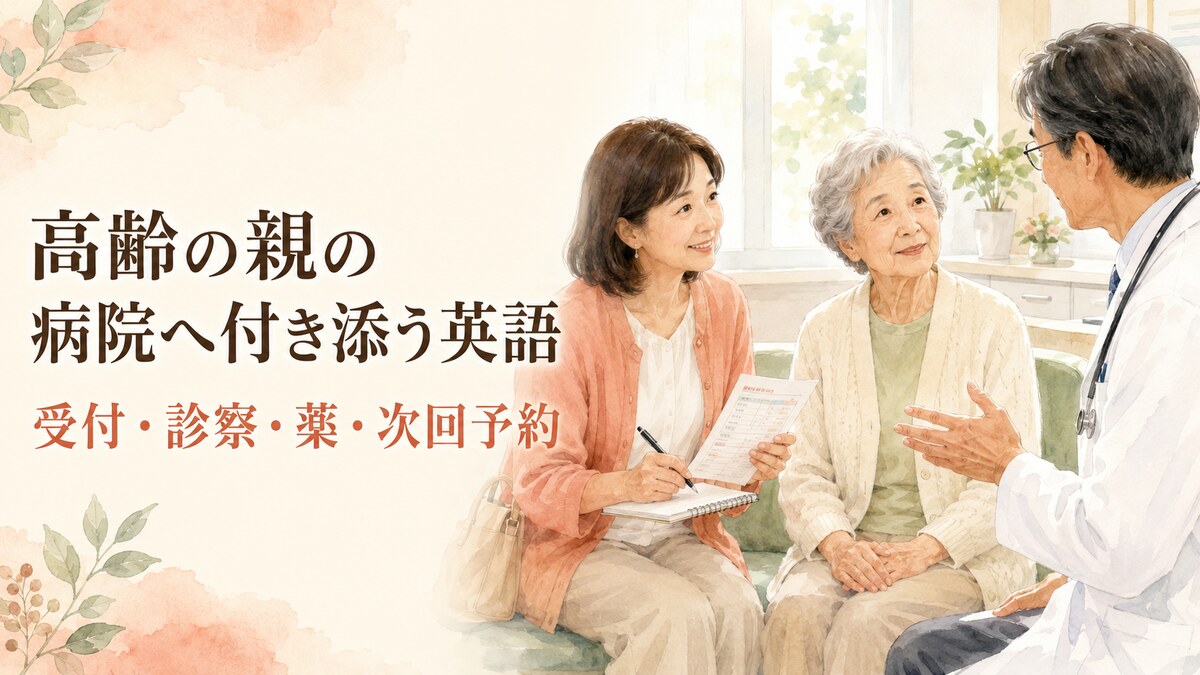
 「母の診察に付き添っています」「薬の説明を書いていただけますか?」。高齢の親の病院へ付き添うとき、家族には受付の補助、症状や薬の情報整理、診察内容のメモ、次回予約の確認など、さまざまな役割があります。
この記事では、本人の意思とプライバシーを尊重しながら、家族が病院で使える短く簡単な英語を、受付から帰宅前までの順番で紹介します。
「母の診察に付き添っています」「薬の説明を書いていただけますか?」。高齢の親の病院へ付き添うとき、家族には受付の補助、症状や薬の情報整理、診察内容のメモ、次回予約の確認など、さまざまな役割があります。
この記事では、本人の意思とプライバシーを尊重しながら、家族が病院で使える短く簡単な英語を、受付から帰宅前までの順番で紹介します。
これだけ言えれば乗り切れる3文
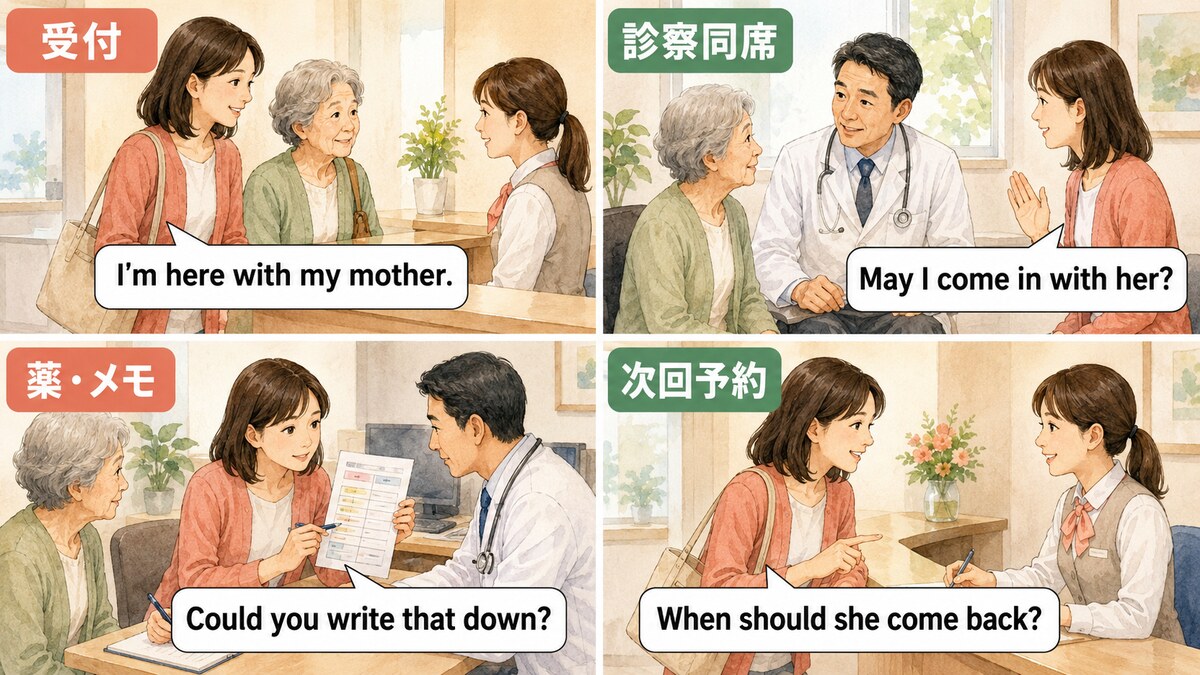
- I’m here with my mother.(母に付き添って来ました)
- May I come in with her?(母と一緒に診察室へ入ってもよいですか?)
- Could you write that down?(それを書いていただけますか?)
Contents
「病院へ付き添う」は英語で?accompany・go with・take
- accompany someone to the hospital:人に病院まで付き添う。やや改まった表現
- go with someone to the doctor:人と一緒に診察へ行く。日常会話で自然
- take someone to the hospital:人を病院へ連れて行く。移動・送迎を含む
- come with someone:人と一緒に来る
- I accompanied my mother to her appointment.(母の診察に付き添いました)
- I’m going with my father to the doctor.(父の診察に一緒に行きます)
- I took my mother to the hospital.(母を病院へ連れて行きました)
 しゅみすけ(大山俊輔)
受診前に用意しておきたい情報
付き添う前に、本人と相談して次の情報を整理しておくと英語でも伝えやすくなります。- 現在の症状と始まった時期
- 服用中の薬・量・飲む時間
- アレルギー
- 過去の病気・手術
- 聞きたい質問
- 保険証や医療記録など、現地で必要な書類
- Here is her medication list.(こちらが母の薬の一覧です)
- She is allergic to penicillin.(母はペニシリンにアレルギーがあります)
- We wrote down her symptoms.(症状を書き留めてきました)
- We have three questions for the doctor.(医師に3つ質問があります)
受付で「付き添いです」と伝える英語
- I’m here with my mother.(母に付き添って来ました)
- She has an appointment at ten.(母は10時に予約しています)
- Her name is Miho Oyama.(母の名前は大山美保です)
- This is her first visit.(初診です)
- Where should we check in?(どこで受付をすればよいですか?)
- Could you help us with this form?(この用紙の記入を手伝っていただけますか?)
診察室へ同席してよいか確認する
- May I come in with her?(母と一緒に入ってもよいですか?)
- She would like me to stay with her.(母は私の同席を希望しています)
- Is it okay if I take notes?(メモを取ってもよいですか?)
- I’m her daughter and caregiver.(私は娘で、介護もしています)
- She has given permission for you to speak with me.(母は私と話すことを許可しています)
医師にはまず本人へ話してもらう
付き添い者は情報を補足できますが、本人が答えられるときは本人を会話の中心に置きましょう。- Please speak directly to my mother.(母本人に直接話してください)
- She can answer for herself.(本人が自分で答えられます)
- Please give her a little more time to answer.(答えるまで少し時間をください)
- She has trouble hearing. Please speak slowly and face her.(耳が聞こえにくいので、ゆっくり正面から話してください)
- I can add some information if needed.(必要なら私が情報を補足できます)
症状を補足する英語
- The pain started three days ago.(痛みは3日前に始まりました)
- She has been feeling dizzy since yesterday.(昨日からめまいを感じています)
- She fell at home last week.(先週、自宅で転びました)
- She gets tired more easily than before.(以前より疲れやすくなりました)
- Her appetite has decreased.(食欲が落ちています)
- This is different from her usual condition.(普段の状態とは違います)
病名・検査・治療を確認する英語
- What could be causing these symptoms?(この症状の原因として何が考えられますか?)
- Does she need any tests?(検査は必要ですか?)
- What are the treatment options?(治療の選択肢は何ですか?)
- What are the benefits and risks?(利点とリスクは何ですか?)
- What should we watch for at home?(自宅では何に注意すればよいですか?)
- When should we seek urgent help?(どのような場合に緊急受診すべきですか?)
- Could you explain that in simpler words?(もっと簡単な言葉で説明していただけますか?)
- Could you say that again more slowly?(もう一度ゆっくり言っていただけますか?)
- Could you write down the diagnosis?(診断名を書いていただけますか?)
薬について確認する英語
- What is this medicine for?(この薬は何のためですか?)
- How often should she take it?(どのくらいの頻度で飲みますか?)
- Should she take it with food?(食事と一緒に飲みますか?)
- Are there any side effects?(副作用はありますか?)
- Can she take it with her other medicines?(ほかの薬と一緒に飲めますか?)
- What should we do if she misses a dose?(飲み忘れたらどうすればよいですか?)
診察内容をメモ・確認する英語
- Could you write that down?(それを書いていただけますか?)
- May I take notes?(メモを取ってもよいですか?)
- Let me make sure I understood.(理解できたか確認させてください)
- So, she should take this once a day. Is that right?(つまり1日1回飲むのですね?)
- Could we have written instructions?(書面の指示をいただけますか?)
しゅみすけ(大山俊輔)
次回予約・帰宅後の連絡先を確認する
- When should she come back?(次はいつ受診すればよいですか?)
- Could we make the next appointment now?(今、次回予約を取れますか?)
- Does she need a follow-up appointment?(再診が必要ですか?)
- When will the test results be ready?(検査結果はいつ分かりますか?)
- Who should we call if her symptoms get worse?(症状が悪化したら誰に電話すればよいですか?)
- Could I have the clinic’s phone number?(クリニックの電話番号をいただけますか?)
医療通訳を依頼する英語
重要な診断・治療・同意の場面では、家族だけで訳そうとせず、利用できる場合は医療通訳を依頼しましょう。- We need a Japanese interpreter.(日本語通訳が必要です)
- Could you arrange a medical interpreter?(医療通訳を手配していただけますか?)
- Will an interpreter be available at the appointment?(診察時に通訳を利用できますか?)
- She would feel more comfortable speaking Japanese.(本人は日本語で話すほうが安心できます)
会話例:母の診察へ付き添う
Doctor: What brings you in today?
今日はどうされましたか?
Mother: I’ve been feeling dizzy since yesterday.
昨日からめまいがします。
Daughter: May I add something? She also fell at home last week.
少し補足してもよいですか?先週、自宅で転びました。
Doctor: Thank you. I’d like to do a few tests.
ありがとうございます。いくつか検査をしたいと思います。
Daughter: Could you explain what the tests are for?
何のための検査か説明していただけますか?
Doctor: Of course. I’ll also write it down for you.
もちろんです。書面にも記載します。
まとめ|本人を中心に、家族は補足と確認をする
- I’m here with my mother.(母に付き添って来ました)
- May I come in with her?(一緒に入ってもよいですか?)
- May I add something?(少し補足してもよいですか?)
- Could you write that down?(書いていただけますか?)
- When should she come back?(次はいつ受診すればよいですか?)
参考:米国National Institute on Aging「Taking Someone to a Doctor’s Appointment」、MedlinePlus「Talking With Your Doctor」。医療制度や同意・情報共有の規則は国・地域・施設によって異なります。
付き添い受診で、物忘れの始まり方・頻度・具体例・日常生活への影響を医師へ伝えたい方は、「認知症・物忘れを伝える英語」もあわせて確認しておきましょう。
診察で薬の一覧・飲み忘れ・副作用を具体的に相談する表現は、「高齢の親の服薬管理を伝える英語」にまとめています。
高齢の親の暮らし・介護サービス・通院・認知症・歩行・服薬の記事を場面別に探す方は、「親・介護・シニアライフで使う英語」をご覧ください。