

I don’t think that’s quite right. は、「それは少し違うと思います」「それは完全には正しくないと思います」と、相手の説明や認識をやわらかく訂正する表現です。
You’re wrong. と直接言うよりも、判断を I think の枠に入れ、quite で断定を弱めるため、仕事の会議や日常の会話で角が立ちにくくなります。
 しゅみすけ(大山俊輔)

Contents
I don’t think that’s quite right. の意味
自然な日本語訳は次のとおりです。
- それは少し違うと思います。
- それは完全には正しくないと思います。
- その認識は少し違うのではないでしょうか。
- それは正確ではないと思います。
A: The meeting starts at two, right?
(会議は2時に始まるんですよね。)B: I don’t think that’s quite right. It starts at two thirty.
(それは少し違うと思います。開始は2時半です。)
人を否定するのではなく、直前に出た情報を指す that について「完全には正しくない」と述べています。
3つの部分に分けるとニュアンスがわかる
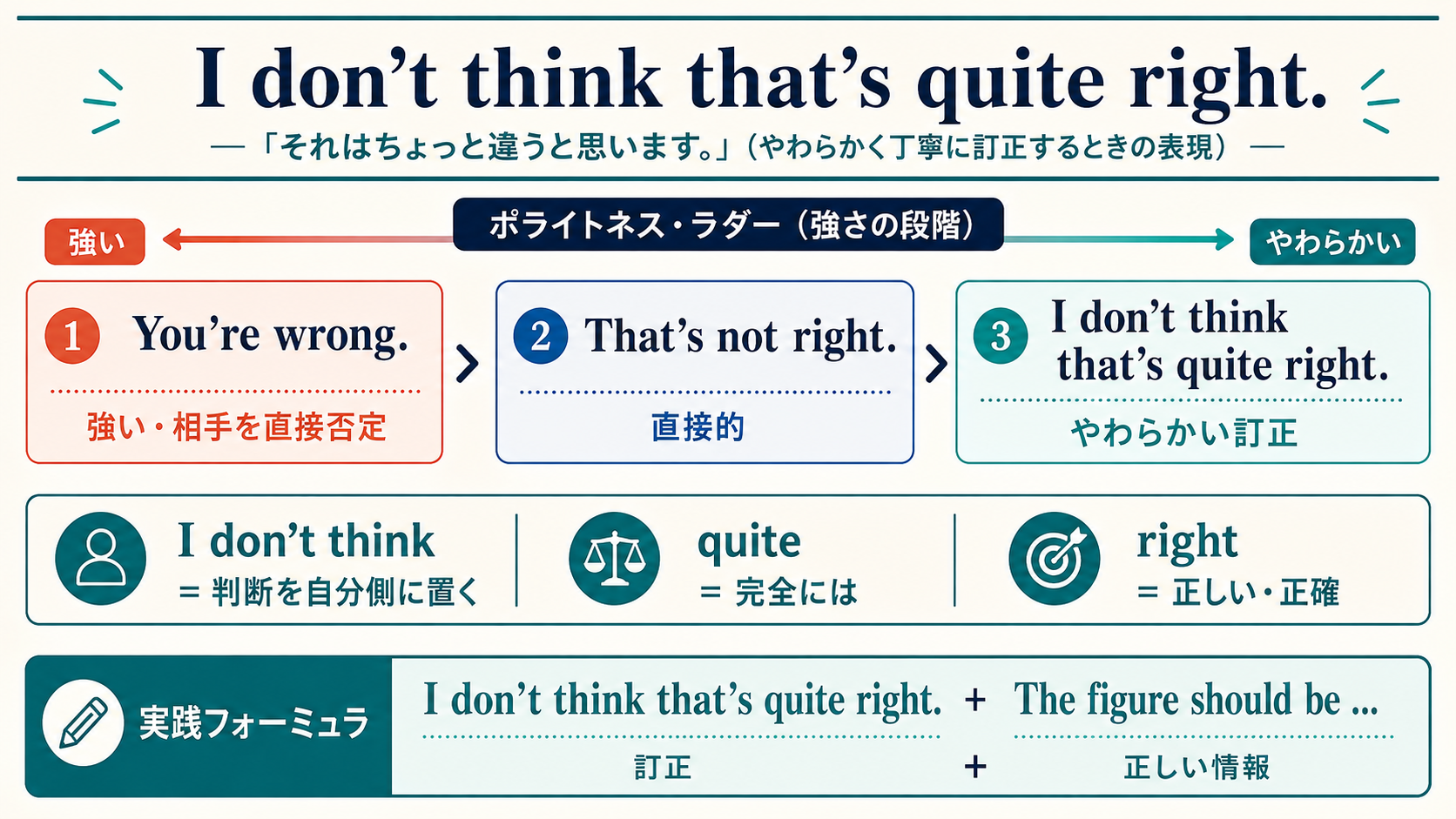
I don’t think:判断を自分側に置く
That’s not right. は「それは正しくありません」と対象を直接否定します。I don’t think … を使うと、「私はそうは考えていません」と自分の判断として提示できます。
quite:完全には
否定文の not quite は「完全には〜でない」「少し〜でない」という意味です。
- That’s not quite right.(それは完全には正しくありません。)
- That’s not quite what I meant.(それは私が言いたかったこととは少し違います。)
- The result isn’t quite accurate.(その結果は完全には正確ではありません。)
「ほぼ合っているが、一部に修正が必要」という含みを持たせられます。ただし、実際には大きく間違っている場合でも、礼儀上やわらげるために使われることがあります。
right:正しい・正確
ここでの right は「右」ではなく、「事実・計算・理解などが正しい」という意味です。
You’re wrong. との違い
| 表現 | 聞こえ方 | 向いている場面 |
|---|---|---|
| You’re wrong. | 相手を直接否定する。強い | 明確に反論する場面、親しい間柄 |
| That’s not right. | 情報を直接否定する | 明白な誤りを簡潔に訂正 |
| That’s not quite right. | 「完全には正しくない」と緩和 | 授業、仕事、共同作業 |
| I don’t think that’s quite right. | 判断を自分側に置く。最もやわらかい | 会議、顧客対応、慎重な訂正 |
You’re wrong. は文法的には正しくても、「あなたが間違っている」と人を主語にするため対立的に響きやすい表現です。仕事では、できるだけ情報や論点を主語にすると建設的です。
どんな場面で使う?
数字や日付を訂正する
I don’t think that’s quite right. The total should be 2,875, not 2,785.
(それは少し違うと思います。合計は2,785ではなく2,875のはずです。)
相手の理解を訂正する
I don’t think that’s quite right. We agreed to review the plan, not approve it today.
(その認識は少し違うと思います。今日は承認するのではなく、計画を確認することで合意しました。)
自分の意図を言い直す
That’s not quite what I meant. I’m suggesting a delay, not a cancellation.
(私が言いたかったこととは少し違います。中止ではなく延期を提案しています。)
自分の発言を誤解された場合は、That’s not quite what I meant. が特に自然です。
会議で提案の前提を問い直す
I don’t think that assumption is quite right. Our newer customers behave differently.
(その前提は少し違うと思います。新しい顧客層は異なる行動をしています。)
that の代わりに、that figure、that assumption、that interpretation など、何が違うのかを具体的にできます。
「訂正+正しい情報」が基本
やわらかく否定するだけでは、相手は「では何が正しいのか」がわかりません。可能なら根拠や正しい情報を続けます。
I don’t think that’s quite right. According to the latest email, the deadline is Friday.
(それは少し違うと思います。最新のメールによると、締め切りは金曜日です。)
I don’t think that’s quite right. Could we check the original contract?
(それは少し違うと思います。元の契約書を確認してもよいでしょうか。)
確信がない場合は、断定せず確認を提案するのが安全です。
しゅみすけ(大山俊輔)
I’m not sure that’s right. との違い
I’m not sure that’s right. は「それが正しいか確信がありません」。自分の確信のなさを前面に出します。
I don’t think that’s quite right. は「私はそれが完全に正しいとは思いません」。よりはっきり訂正する意思があります。
- I’m not sure that’s right. Let me check.(正しいか確信がありません。確認します。)
- I don’t think that’s quite right. The date is May 12.(少し違うと思います。日付は5月12日です。)
I don’t agree. との違い
I don’t agree. は意見・方針・評価への不同意です。一方、I don’t think that’s quite right. は、事実、数字、理解、言い換えなどの正確さを訂正するときに向いています。
意見への反対をやわらげる既存表現には、I’m not sure I agree. や、相手への理解を先に示す I see your point, but … があります。
さらに丁寧にする言い方
- I’m sorry, but I don’t think that’s quite right.
- I may be mistaken, but I don’t think that’s quite right.
- Unless I’m missing something, I don’t think that’s quite right.
- Could we double-check that? I’m not sure the figure is right.
ただし、クッション言葉を重ねすぎると回りくどくなります。明確な誤りであれば、一つ添えるだけで十分です。
会話例
職場の数字
A: Sales increased by 18 percent.
B: I don’t think that’s quite right. This chart shows an 8 percent increase.
約束の内容
A: You said you would finish everything today.
B: That’s not quite what I said. I said I’d finish the first part.
顧客への説明
A: The service includes unlimited support.
B: I don’t think that’s quite right. The standard plan includes five sessions.
確信がないとき
A: The deadline is tomorrow.
B: I’m not sure that’s right. Shall we check the email?
よくある間違い
- × I don’t think that’s quite rightly.
be動詞 + 形容詞 なので right を使います。 - × I think that’s not quite right.
文法的には可能ですが、英語では否定を前に移した I don’t think that’s quite right. が自然です。 - × I don’t think you’re quite right.
人を主語にすると「あなた自身が正しくない」と響きやすいため、情報を指す that が無難です。
まとめ
I don’t think that’s quite right. は、「それは少し違うと思います」と、情報や認識をやわらかく訂正する表現です。
- I don’t think で判断を自分側に置く
- not quite は「完全には〜でない」
- You’re wrong. より相手を直接否定しない
- 意見への反対より、事実・数字・認識の訂正に向く
- 正しい情報や確認方法を続けると建設的になる
まずは I don’t think that’s quite right. The figure should be … の型で、訂正と正しい情報をセットにして覚えましょう。