

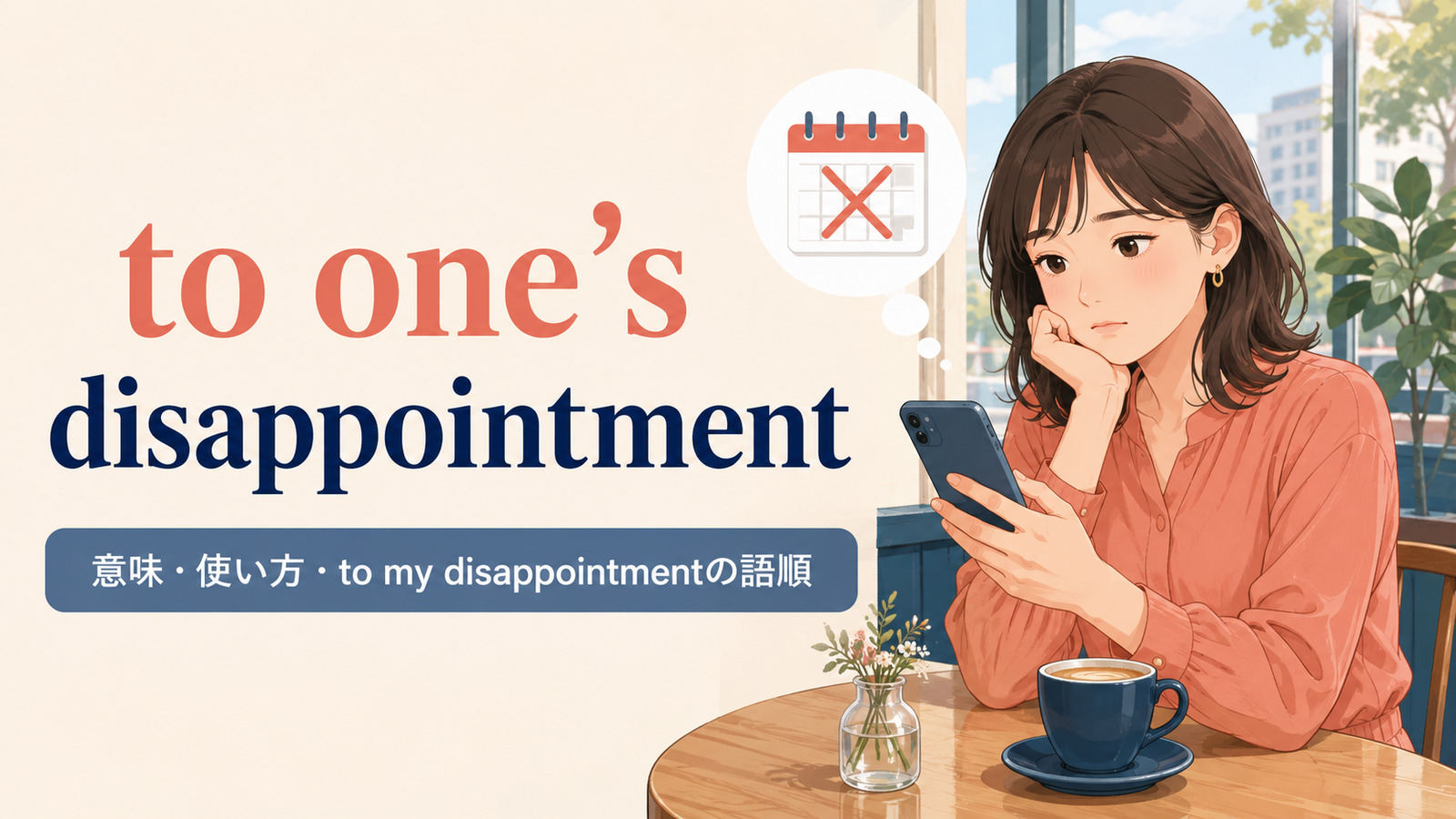
to one’s disappointment は「〜ががっかりしたことに」「〜にとって残念なことに」という意味です。期待していた結果にならなかったとき、誰が失望したのかを文全体に添える定型表現です。
この記事では、to my disappointment の語順、文頭・文末での使い方、muchを使った強調、to one’s regret・unfortunatelyとの違いまで、自然な例文とともに解説します。
Contents
to one’s disappointmentの意味とニュアンス
disappointment は「失望」「期待外れ」という名詞です。期待していた未来と実際の結果に差があり、その結果にがっかりした感覚を表します。
To my disappointment, the concert was canceled.
がっかりしたことに、コンサートは中止になりました。
単に悪い出来事を伝えるだけではありません。「私は楽しみにしていたのに」という、期待が外れた人の視点が含まれます。
 しゅみすけ(大山俊輔)
語順は「to+所有格+disappointment」
ここでの to は不定詞ではなく前置詞です。one’s は、実際の文では「誰ががっかりしたか」に合わせて変えます。
- to my disappointment:私ががっかりしたことに
- to her disappointment:彼女ががっかりしたことに
- to our disappointment:私たちががっかりしたことに
- to everyone’s disappointment:みんなががっかりしたことに
To her disappointment, the position had already been filled.
彼女ががっかりしたことに、その職はすでに採用者が決まっていました。
To everyone’s disappointment, the fireworks were called off.
みんなががっかりしたことに、花火大会は中止になりました。
文頭と文末での使い方
文頭:残念な結果を先に予告する
文頭に置く形が基本です。通常は後ろにコンマを置きます。
To my disappointment, the café was closed for the day.
がっかりしたことに、そのカフェは臨時休業でした。
To our disappointment, we couldn’t see the mountain through the clouds.
残念なことに、雲で山を見ることができませんでした。
文末:結果を述べてから感情を付け加える
文末では、出来事を先に伝え、「それで私はがっかりした」と後から評価を加えます。
They sold the last ticket just before I arrived, to my disappointment.
私が着く直前に最後のチケットが売れてしまい、がっかりしました。
The hotel pool was under repair, much to the children’s disappointment.
ホテルのプールは修理中で、子どもたちはとてもがっかりしました。
much to one’s disappointmentで強調する
much to one’s disappointment は「〜が大いにがっかりしたことに」。much は感情の強さを表し、語順は much to my disappointment です。
Much to my disappointment, I didn’t make the final team.
とても残念なことに、私は最終メンバーに選ばれませんでした。
The trip was postponed again, much to our disappointment.
旅行がまた延期になり、私たちは大いにがっかりしました。
日常会話・仕事で使える例文
日常・買い物
To my disappointment, they didn’t have the jacket in my size.
がっかりしたことに、そのジャケットには私のサイズがありませんでした。
To his disappointment, there was no cake left.
彼ががっかりしたことに、ケーキは残っていませんでした。
仕事
To our disappointment, the client rejected the proposal.
残念なことに、クライアントは提案を却下しました。
Much to Emi’s disappointment, the meeting was moved to her day off.
エミが大いにがっかりしたことに、会議は彼女の休日へ変更されました。
恋愛・人間関係
To my disappointment, he never replied to my message.
がっかりしたことに、彼は私のメッセージに返事をくれませんでした。
She couldn’t come to the reunion, much to her friends’ disappointment.
彼女は同窓会に来られず、友人たちはとても残念がりました。
旅行・学校
To our disappointment, the museum was closed on Mondays.
残念なことに、その博物館は月曜日が休館日でした。
To his disappointment, he missed the passing score by one point.
彼ががっかりしたことに、合格点に1点届きませんでした。
to one’s regret・unfortunatelyとの違い
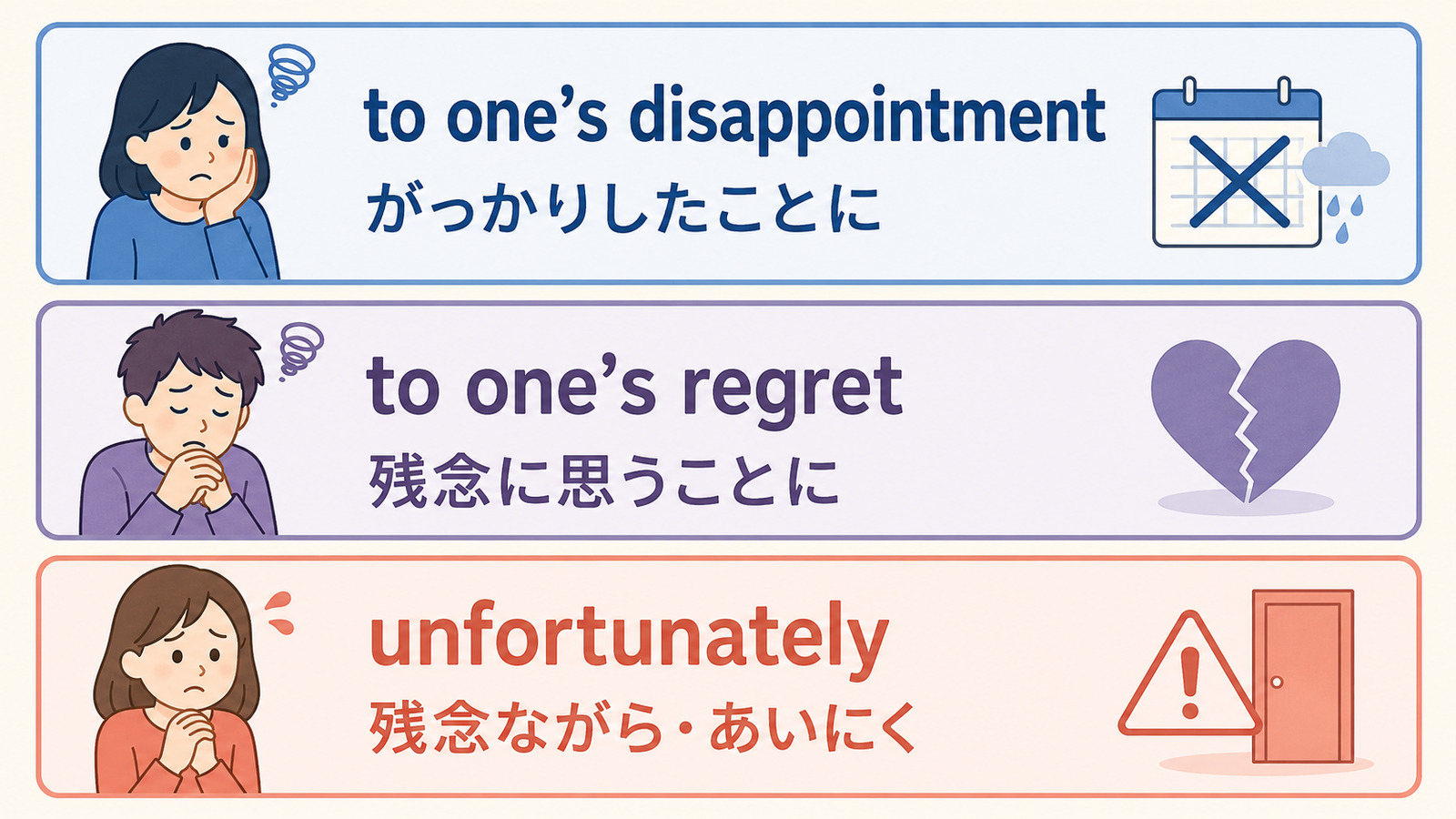
- to one’s disappointment:期待が外れて、がっかりする
- to one’s regret:ある事実や行動を残念に思う
- unfortunately:悪い・都合の悪い事実を客観的に述べる
To my disappointment, the restaurant had changed its menu.
がっかりしたことに、そのレストランはメニューを変えていました。
To my regret, I never thanked her properly.
残念に思うことに、私は彼女にきちんとお礼を言えませんでした。
Unfortunately, the restaurant is fully booked tonight.
あいにく、そのレストランは今夜満席です。
disappointment は期待外れ、regret は後悔や残念に思う気持ちが中心です。unfortunately は「誰がどう感じたか」を明示せず、悪い事実を導入できます。「あいにく」の詳しい使い分けは、Unfortunately・I’m afraid・Sadlyの違いも参考にしてください。
to one’s delightとの対比
to one’s delight は、期待どおり、または期待以上の結果を「うれしい」と感じる表現です。
To my delight, my flight was upgraded.
うれしいことに、飛行機の座席がアップグレードされました。
To my disappointment, my flight was delayed.
がっかりしたことに、飛行機が遅延しました。
感情が「喜び」なら delight、「期待外れ」なら disappointment と対にして覚えると分かりやすくなります。驚きそのものを示す場合は、to one’s surprise を使います。
日本人が間違えやすいポイント
- one’sをそのまま使わない:my、your、his、her、our、theirなどに変えます。
- I disappointmentとは言わない:disappointmentは名詞なので、I was disappointed. とします。
- muchの位置に注意:much to my disappointment が正しい語順です。
- 軽い予定変更すべてに使わない:期待外れの気持ちをあえて示す、少し文章的な表現です。
しゅみすけ(大山俊輔)
簡単な英語で言い換えるなら
To my disappointment, the shop was closed.
→ I was disappointed because the shop was closed.
店が閉まっていたので、私はがっかりしました。
To her disappointment, she didn’t get the job.
→ She was sad because she didn’t get the job.
その仕事に就けなかったので、彼女は悲しく思いました。
disappointed が出てこなければ、I was sad because … や I wanted …, but … でも状況を説明できます。
まとめ
to one’s disappointment は「〜ががっかりしたことに」「〜にとって残念なことに」。to my disappointment / to her disappointment / to everyone’s disappointment のように、誰の感情かに合わせて所有格を変えます。
期待外れを強く伝えるなら much to one’s disappointment。後悔なら to one’s regret、悪い事実を客観的に伝えるなら unfortunately と使い分けましょう。
ほかの熟語や定型表現は、英熟語・定型表現の一覧から確認できます。