
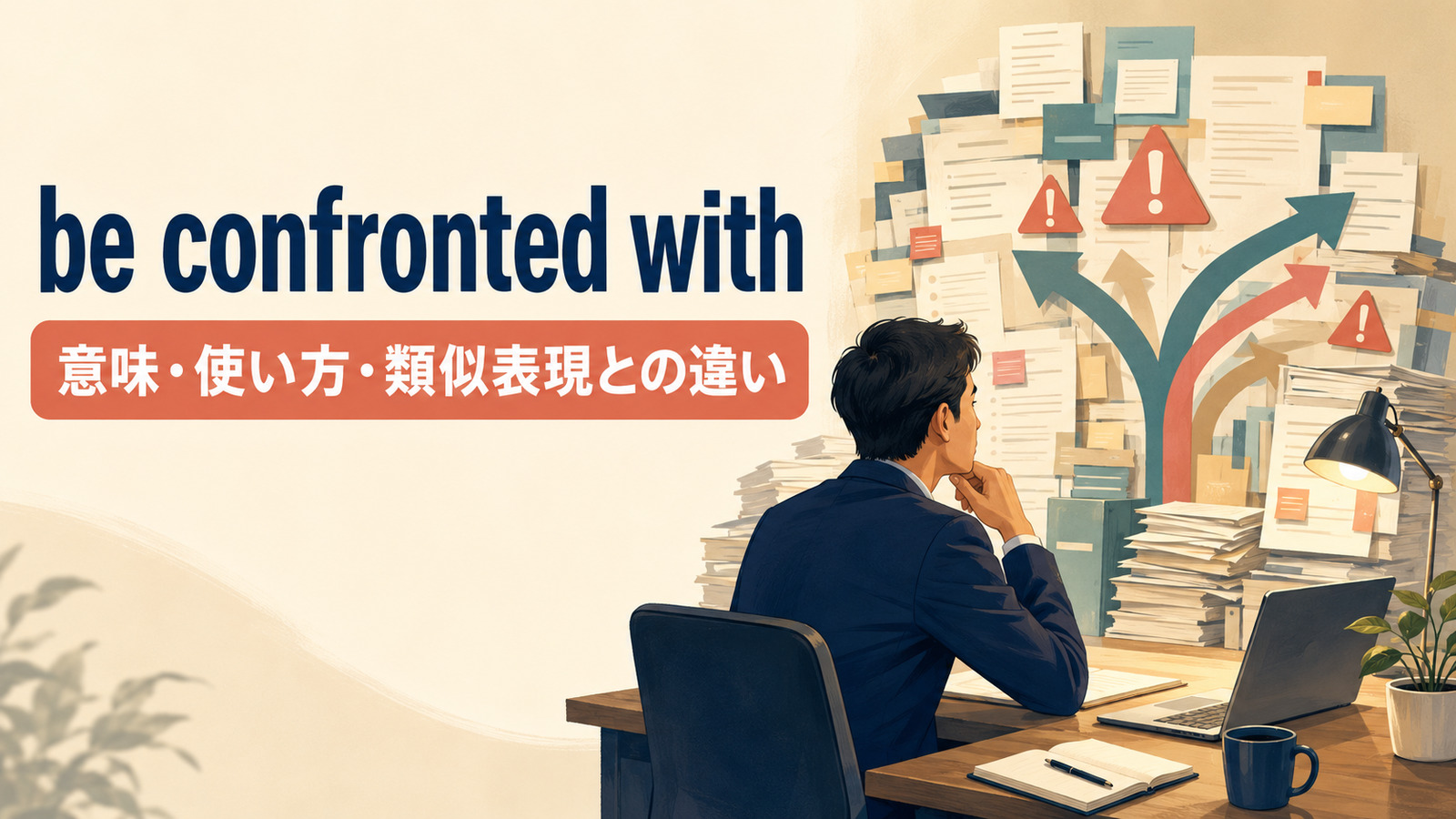
be confronted with は、「問題・事実・難しい選択などに直面する」「〜を突きつけられる」という意味です。
日本語では単に「直面する」と訳されますが、英語では、何かがこちらの目の前に現れ、無視できず対応を迫られる感覚があります。仕事上の問題、予想外の出費、厳しい現実、複数の選択肢など、簡単には避けられないものに使われます。
We were confronted with a difficult choice.
私たちは難しい選択を突きつけられました。
この記事では、基本の意味、なぜこの形になるのか、語順、自然な例文、そして face・be faced with・come up against との違いまで詳しく解説します。
Contents
be confronted withの基本的な意味
be confronted with + 名詞 = 〜に直面する/〜を突きつけられるです。後ろには、直面する対象を置きます。
- be confronted with a problem:問題に直面する
- be confronted with the truth:真実を突きつけられる
- be confronted with a difficult decision:難しい決断を迫られる
- be confronted with unexpected costs:予想外の費用に直面する
The team was confronted with a serious technical problem.
チームは深刻な技術上の問題に直面しました。
When I checked my bank account, I was confronted with the reality of my spending.
銀行口座を確認したとき、自分の支出の現実を突きつけられました。
どちらも、単に問題や事実を知っただけではありません。「目の前に示され、何らかの反応や対応が必要になった」というニュアンスがあります。
 しゅみすけ(大山俊輔)
なぜ受け身の形になるの?
confront は他動詞で、「人を〜に直面させる」「人の前に問題などを突きつける」という意味があります。
The sudden shortage confronted the company with a difficult decision.
突然の品不足によって、会社は難しい決断を迫られました。
この文を会社側から表すと、受け身になります。
The company was confronted with a difficult decision.
会社は難しい決断を迫られました。
つまり、基本構造は次のとおりです。
A confronts B with C.
AがBにCを突きつける
B is confronted with C.
BがCを突きつけられる/Cに直面する
実際には、誰が問題を突きつけたかを言う必要がないことが多いため、be confronted with の受け身がよく使われます。
withが表す感覚
with の後ろには、目の前に示された問題・事実・状況を置きます。日本語の「〜と一緒に」だけで考えると分かりにくいですが、ここでは「その問題を伴った状態に置かれる」と考えましょう。
She was confronted with evidence that contradicted her story.
彼女は、自分の話と矛盾する証拠を突きつけられました。
Travelers were confronted with long delays at the airport.
旅行者たちは空港で長時間の遅延に直面しました。
よく使われる形と語順
be confronted with + 名詞
最も基本的な形です。
I was confronted with a question I couldn’t answer.
私は答えられない質問を突きつけられました。
Small businesses are often confronted with rising costs.
小規模事業者は、しばしばコスト上昇に直面します。
when confronted with + 名詞
「〜に直面したとき」を簡潔に表す形です。主節の主語と、直面する人・組織が同じときに使えます。
When confronted with criticism, he stayed calm.
批判に直面しても、彼は冷静さを保ちました。
When confronted with too many options, customers may buy nothing.
選択肢が多すぎると、顧客は何も買わないことがあります。
find oneself confronted with + 名詞
「気づけば〜に直面している」「思いがけず〜という状況になる」という、やや文章的な形です。
After moving abroad, I found myself confronted with unfamiliar rules.
海外へ移住してから、私は慣れない規則に直面することになりました。
どのようなものに使う?
問題・困難
We were confronted with a shortage of staff during the holiday season.
繁忙期に、私たちは人手不足に直面しました。
The repair crew was confronted with damage worse than expected.
修理班は予想以上にひどい損傷に直面しました。
事実・証拠・現実
He was confronted with clear evidence of the mistake.
彼は、その間違いを示す明白な証拠を突きつけられました。
For the first time, she was confronted with the reality of living alone.
彼女は初めて、一人暮らしの現実に直面しました。
選択・決断
We were confronted with two equally risky options.
私たちは、同じくらい危険な二つの選択肢を突きつけられました。
Parents are often confronted with difficult decisions about work and childcare.
親は仕事と育児をめぐる難しい決断を迫られることがよくあります。
人・光景
問題だけでなく、予想外の人物や光景が突然目の前に現れた場合にも使えます。
When I opened the door, I was confronted with a room full of reporters.
ドアを開けると、部屋いっぱいの記者たちが目の前にいました。
この用法では「対決した」という意味ではなく、「予想外の光景が目の前に現れた」という意味です。
日常会話や仕事で使える例文
仕事
We were confronted with several complaints after the update.
アップデート後、私たちは複数の苦情に直面しました。
The manager was confronted with the need to cut costs without reducing quality.
マネージャーは、品質を落とさずにコストを削減する必要に迫られました。
How would you respond if you were confronted with this situation?
この状況に直面したら、あなたはどう対応しますか。
家庭・暮らし
After opening the bill, we were confronted with an unexpected charge.
請求書を開くと、予想外の料金が記載されていました。
I was confronted with a mountain of laundry when I got home.
帰宅すると、山のような洗濯物が待っていました。
後者は少し大げさでユーモラスな言い方です。深刻な問題だけに限定されるわけではありません。
旅行・学校
At the station, we were confronted with signs we couldn’t read.
駅で、私たちは読めない標識に直面しました。
Students may feel overwhelmed when confronted with a long reading list.
長い読書リストを目にすると、学生は圧倒されることがあります。
類似表現との違い
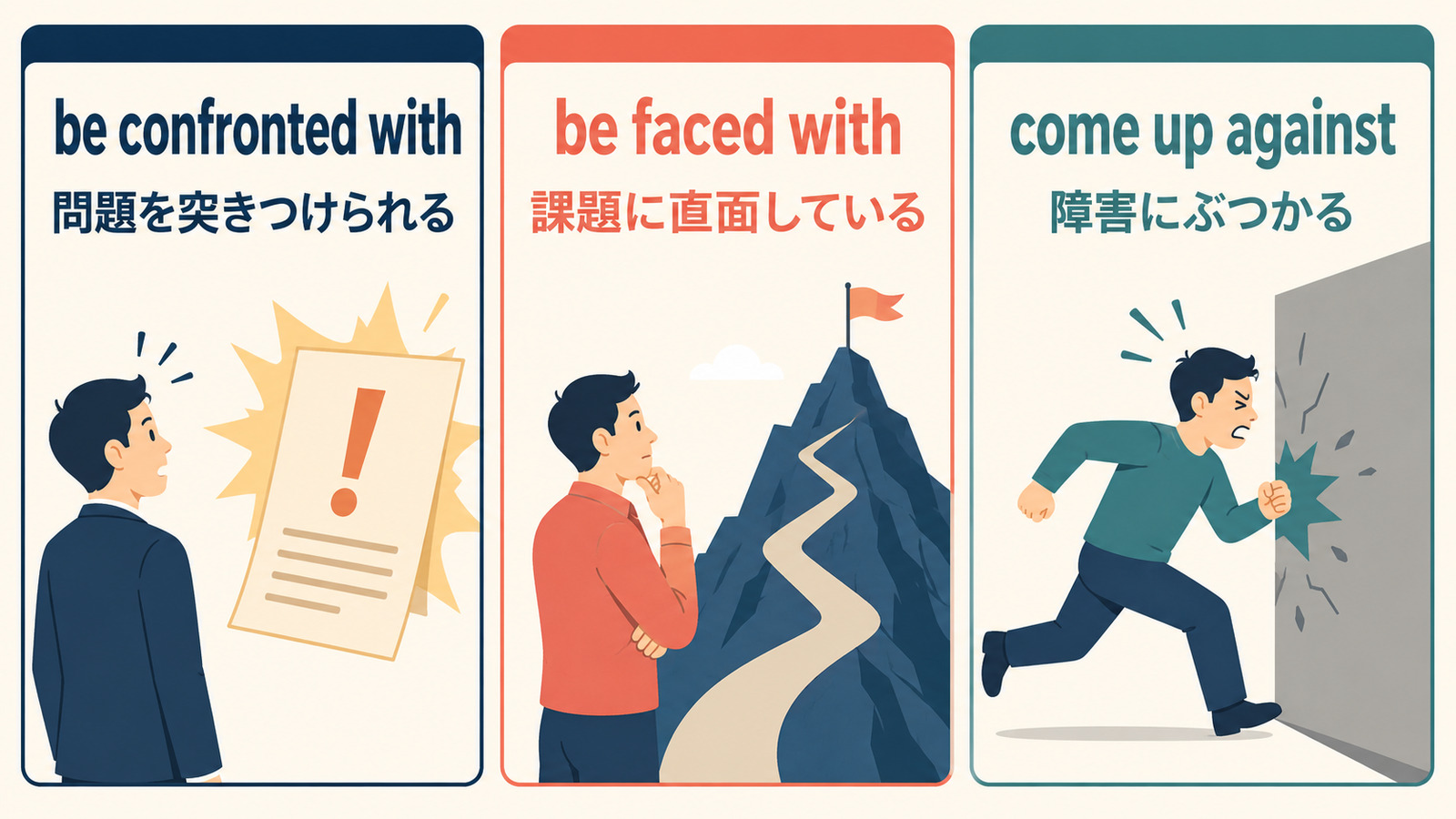
be confronted withとface
face は能動形で「〜に向き合う」「〜に直面している」という、最も簡潔で幅広い表現です。
We face a serious problem.
私たちは深刻な問題に直面しています。
We were confronted with a serious problem.
私たちは深刻な問題を突きつけられました。
face は問題が存在する事実を直接述べます。be confronted with は、問題が目の前に現れて対応を迫った感じを強くします。
be confronted withとbe faced with
この二つは非常に近く、多くの文脈で置き換えられます。
- be faced with:課題・選択・状況に直面していることを比較的中立に述べる
- be confronted with:問題・証拠・現実などを突きつけられ、無視できない感覚がやや強い
We are faced with a difficult decision.
私たちは難しい決断に直面しています。
We were confronted with evidence that our plan had failed.
私たちは、計画が失敗したことを示す証拠を突きつけられました。
be confronted withとcome up against
come up against は、進んでいる途中で「障害・反対・限界にぶつかる」という動きのある表現です。
The project came up against strong opposition.
そのプロジェクトは強い反対にぶつかりました。
The project team was confronted with evidence of a design flaw.
プロジェクトチームは、設計上の欠陥を示す証拠を突きつけられました。
詳しくはcome up againstの意味・使い方も参考にしてください。
in the face ofとの違い
in the face of は「困難・危険・反対などに直面しても」という、譲歩の意味でよく使われます。
She remained calm in the face of criticism.
彼女は批判に直面しても冷静でした。
She was confronted with harsh criticism.
彼女は厳しい批判を突きつけられました。
前者は「それにもかかわらずどうしたか」、後者は「何を目の前に突きつけられたか」が中心です。詳しくはin the face ofの意味・使い方で解説しています。
日本人が間違えやすいポイント
withを落とさない
受け身で対象を続ける場合は、通常 with が必要です。
× We were confronted a difficult problem.
○ We were confronted with a difficult problem.
人に抗議するconfrontと混同しない
confront + 人 には、「人に直接問いただす」「本人と対決する」という意味もあります。
I confronted him about the missing money.
私は、なくなったお金について彼を問いただしました。
一方、I was confronted with a problem. は「問題に直面した」です。形と意味をセットで区別しましょう。
日常会話で無理に硬くしない
be confronted with は、ニュース・報告書・説明文・改まった会話で特に自然です。日常の小さな問題なら、have a problem や need to deal with のほうが言いやすい場合があります。
しゅみすけ(大山俊輔)
簡単な英語で言い換えるなら
- face:〜に直面する
- have a problem:問題を抱えている
- have to deal with:〜に対応しなければならない
- see / discover:事実・問題を目にする/発見する
We were confronted with an unexpected problem.
→ We had an unexpected problem.
予想外の問題がありました。
She was confronted with a difficult choice.
→ She had to make a difficult choice.
彼女は難しい選択をしなければなりませんでした。
They were confronted with complaints from customers.
→ They had to deal with customer complaints.
彼らは顧客からの苦情に対応しなければなりませんでした。
難しい熟語を思い出そうと止まるより、「何が起きたか」「何をする必要があったか」を中学英語で説明するほうが実際の会話では役立ちます。
まとめ
be confronted with は、「問題・事実・難しい選択などに直面する」「〜を突きつけられる」という意味です。単に目の前に課題があるだけでなく、無視できない形で示され、対応を迫られるニュアンスがあります。
- 形は be confronted with + 名詞
- when confronted with で「〜に直面したとき」
- face は最も簡潔で中立的
- be faced with は状況への直面を比較的中立に表す
- come up against は進行中に障害へぶつかる感覚
- 簡単に言うなら have a problem や have to deal with
ほかの表現も体系的に学びたい方は、英熟語・定型表現のまとめもご覧ください。