


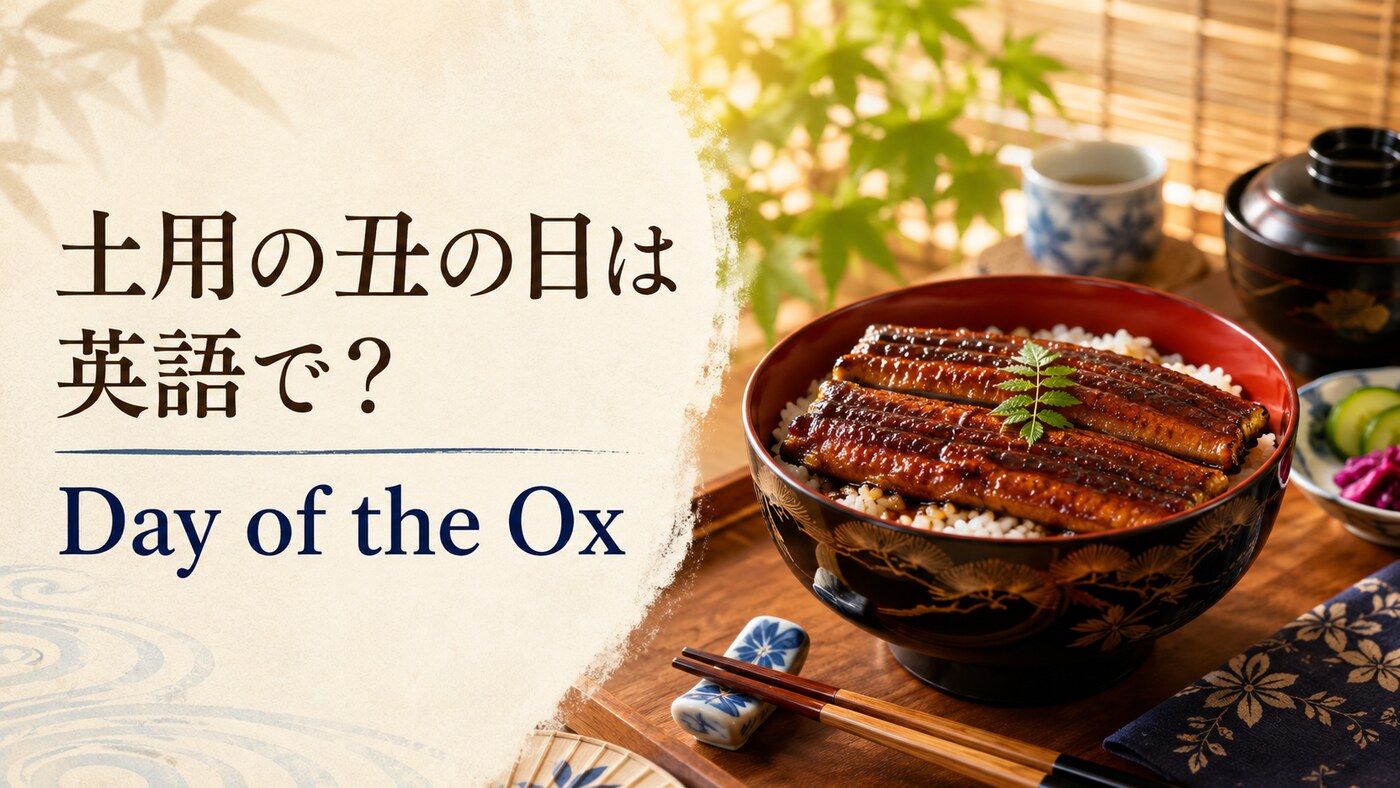
土用の丑の日は英語で、説明的に the Day of the Ox during the doyo period と表現できます。短く Midsummer Day of the Ox と訳す場合もありますが、日本独自の暦と食文化なので、Doyo no Ushi no Hi と日本語名を使って説明を添えるのが正確です。
この記事では、土用・丑の日の意味、うなぎや蒲焼きの英語、日本文化を外国人へ説明する例文を初心者向けに紹介します。
先に結論
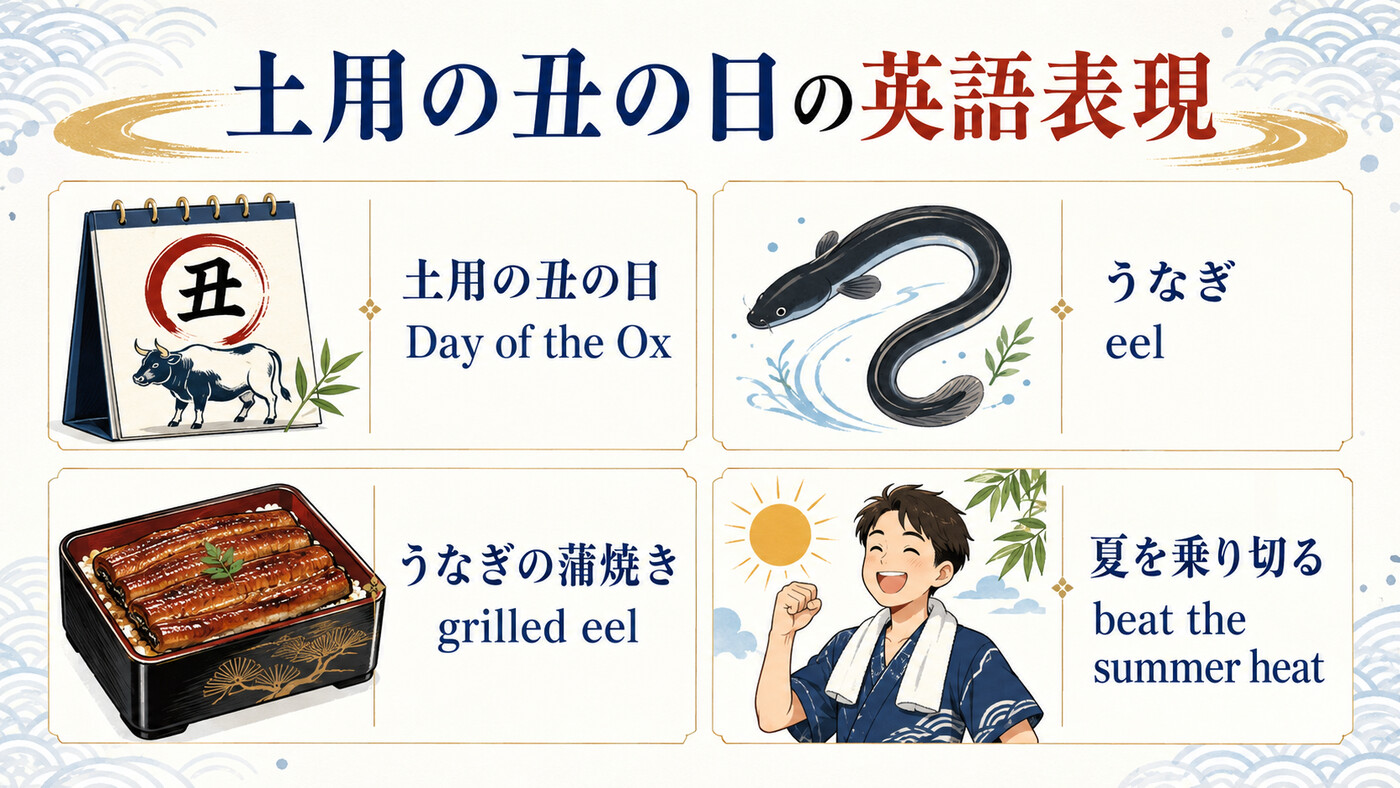
土用の丑の日=Doyo no Ushi no Hi / the Day of the Ox during the doyo period
うなぎ=eel
うなぎの蒲焼き=grilled eel glazed with a sweet soy-based sauce
夏を乗り切る=beat the summer heat
Contents
土用の丑の日は英語で何と言う?
「丑」は十二支の牛なので、英語では Ox を使います。cow は一般的な雌牛を指すため、暦の名称には通常使いません。
- the Day of the Ox:丑の日
- the doyo period:土用の期間
- the Day of the Ox during the midsummer doyo period:夏の土用期間にある丑の日
Today is Doyo no Ushi no Hi, the Day of the Ox during the midsummer doyo period.
今日は、夏の土用期間にある丑の日、土用の丑の日です。
土用と丑の日を英語で説明する
土用は夏だけではなく、伝統的な暦で立春・立夏・立秋・立冬の直前にある約18日間を指します。一般に「土用の丑の日」と言うと、夏の土用がよく知られています。
Doyo is an approximately 18-day period before the beginning of each season in the traditional Japanese calendar. Doyo no Ushi no Hi is a Day of the Ox that falls during this period.
土用とは、日本の伝統的な暦で各季節の始まりの前にある約18日間です。土用の丑の日は、その期間中に巡ってくる丑の日です。
十二支は12日ごとに繰り返されるため、夏の土用期間に丑の日が2回来る年もあります。1回目を「一の丑」、2回目を「二の丑」と呼びます。
Some years have two Days of the Ox during the midsummer doyo period.
年によっては、夏の土用期間に丑の日が2回あります。
土用の丑の日にうなぎを食べる文化を英語で説明
うなぎは英語で eel です。食材として話す場合も、基本的にeelを使えます。
- Many people in Japan eat eel on Doyo no Ushi no Hi.
日本では、土用の丑の日に多くの人がうなぎを食べます。 - People eat eel to maintain their strength during the summer heat.
夏の暑さの中で体力を保つために、うなぎを食べます。 - It is a well-known summer tradition in Japan.
日本でよく知られた夏の風習です。
うなぎの蒲焼きは英語で?
簡単には grilled eel で伝わります。甘辛いタレまで説明するなら、次の表現が分かりやすいです。
grilled eel glazed with a sweet soy-based sauce
甘辛いしょうゆベースのタレをつけて焼いたうなぎ
- Kabayaki is grilled eel coated with a sweet and savory soy-based sauce.
蒲焼きは、甘辛いしょうゆベースのタレをつけて焼いたうなぎです。 - Unadon is grilled eel served over rice in a bowl.
うな丼は、丼のご飯にうなぎの蒲焼きをのせた料理です。 - Unaju is grilled eel served over rice in a lacquered box.
うな重は、重箱のご飯にうなぎの蒲焼きをのせた料理です。
なぜうなぎを食べるの?英語で30秒説明
Doyo no Ushi no Hi is a traditional day in the Japanese calendar. Many people eat grilled eel on this day because it is considered nutritious and is believed to help them maintain their strength during the hottest part of summer.
土用の丑の日は、日本の暦にある伝統的な日です。うなぎは栄養があり、夏の最も暑い時期に体力を保つのに役立つと考えられているため、この日に多くの人がうなぎの蒲焼きを食べます。
初心者向けに短くするなら、次の2文で十分です。
Many Japanese people eat grilled eel on Doyo no Ushi no Hi. It is a tradition for beating the summer heat.
多くの日本人が土用の丑の日にうなぎの蒲焼きを食べます。夏の暑さを乗り切るための伝統です。
うなぎにまつわる英単語
| 日本語 | 英語 |
|---|---|
| うなぎ | eel |
| うなぎの蒲焼き | grilled eel / kabayaki |
| うな丼 | grilled eel over rice in a bowl |
| うな重 | grilled eel over rice in a lacquered box |
| 甘辛いタレ | a sweet and savory sauce |
| 夏の暑さ | the summer heat |
| 体力を保つ | maintain one’s strength |
土用の丑の日について話すミニ英会話
A: Why are so many stores selling eel today?
どうして今日は、たくさんのお店でうなぎを売っているの?
B: Today is Doyo no Ushi no Hi, a traditional summer day in Japan.
今日は、日本の伝統的な夏の日である土用の丑の日なんです。
A: Why do people eat eel?
なぜうなぎを食べるの?
B: People believe it helps them maintain their strength and beat the summer heat.
体力を保ち、夏の暑さを乗り切るのに役立つと考えられているからです。
まとめ|直訳だけでなく文化を一言添えよう
土用の丑の日は Doyo no Ushi no Hi、または the Day of the Ox during the doyo period と表現できます。うなぎは eel、蒲焼きは grilled eel glazed with a sweet soy-based sauce です。
夏の暑さでぐったりした状態を伝える英語は、「夏バテは英語で?」で詳しく紹介しています。7月の行事全体は、「7月は英語でJuly」もあわせてご覧ください。
日本文化を、自分の英語で説明してみよう
身近な行事を英語で説明する練習は、初心者の会話力を育てます。初心者専門のマンツーマン英会話スクール「b わたしの英会話」で、知っている言葉を使って話す練習を始めてみませんか。