



reluctantly(リラクタントリー)は、「しぶしぶ・気が進まないまま・不本意ながら」という意味の副詞です。
たとえば He reluctantly agreed. は、「彼はしぶしぶ同意した」という意味。最終的には行動したものの、本心ではやりたくなかった、という気持ちを表します。
 しゅみすけ(大山俊輔)

Contents
reluctantlyの基本的な意味
reluctantly は、何かを進んでやる気はないものの、事情・説得・必要性などから行動する様子を表します。
- She reluctantly accepted the offer.
彼女はしぶしぶその申し出を受け入れました。 - I reluctantly agreed to help.
私は気が進まないまま手伝うことに同意しました。 - They reluctantly changed the plan.
彼らは不本意ながら計画を変更しました。
日本語の「嫌々」「渋々」「仕方なく」に近い表現ですが、reluctantly自体は「選択肢が一つしかない」とまでは限りません。本人の抵抗感やためらいに焦点があります。
仕事で使うreluctantlyのニュアンス
職場では、提案への同意、方針変更、予算削減、担当の引き受けなど、納得しきれないまま決定を受け入れる場面で使えます。
- The manager reluctantly approved the request.
上司はしぶしぶその申請を承認しました。 - We reluctantly postponed the launch.
私たちは不本意ながら発売を延期しました。
ただし、本人に直接 You reluctantly agreed. と言うと、「本当は嫌だったのでしょう」と気持ちを決めつける響きが出ます。正式な記録では、必要に応じて agreed after some discussion(話し合いの末に合意した)のように中立的に書くほうが安全です。
reluctantlyの文法と位置
reluctantly+動詞
主語と動詞の間に置く形が分かりやすく、よく使われます。
- He reluctantly agreed.(彼はしぶしぶ同意した)
- She reluctantly signed the document.(彼女は不本意ながら書類に署名した)
動詞+目的語+reluctantly
文末に置いて、行動の仕方をあとから説明することもできます。
- He accepted the decision reluctantly.
彼はその決定をしぶしぶ受け入れました。
どちらも意味はほぼ同じですが、動詞の前に置くほうが自然で簡潔なことが多いです。
文頭のReluctantly, …
文頭に置くと、「気は進まなかったが」という状況を強調できます。
- Reluctantly, I agreed to take on the task.
気は進みませんでしたが、その仕事を引き受けることにしました。
reluctantとreluctantlyの違い
reluctant は形容詞、reluctantly は副詞です。
| 形 | 語順 | 例 |
|---|---|---|
| reluctant | be reluctant to+動詞 | I was reluctant to agree. |
| reluctantly | reluctantly+動詞 | I reluctantly agreed. |
- I was reluctant to agree.
私は同意することに気が進みませんでした。 - I reluctantly agreed.
私はしぶしぶ同意しました。
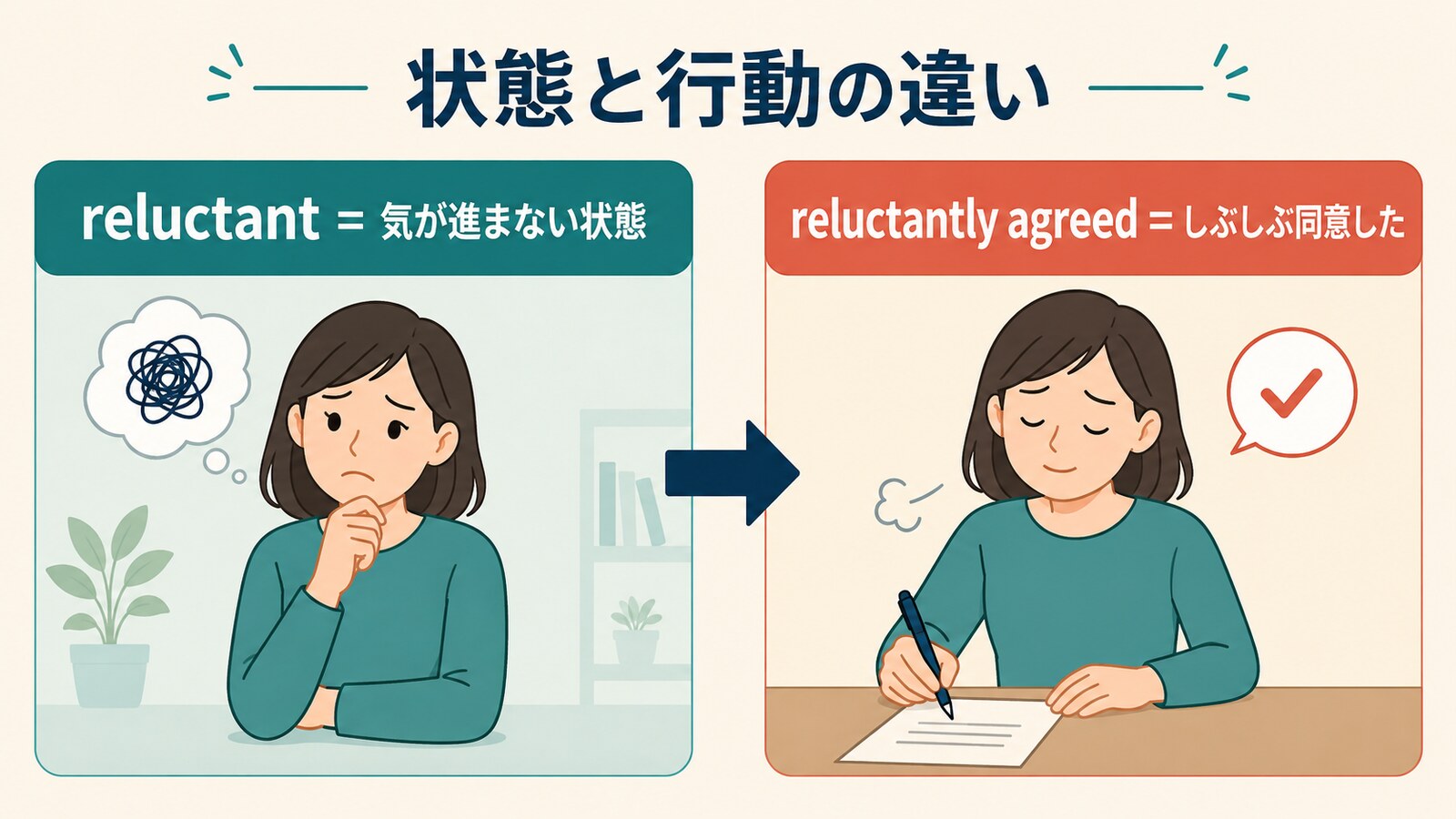
前者は「気が進まない状態」、後者は「気が進まない様子で実際に同意した行動」に焦点があります。
reluctantlyを使った自然な例文
- He reluctantly agreed to the new schedule.
彼はしぶしぶ新しい日程に同意しました。 - She reluctantly took on the extra work.
彼女は気が進まないまま追加の仕事を引き受けました。 - We reluctantly raised our prices.
私たちは不本意ながら値上げしました。 - The client reluctantly accepted the delay.
顧客はしぶしぶ遅延を受け入れました。 - I reluctantly canceled my trip.
私は残念ながらも旅行を取りやめました。 - He reluctantly admitted his mistake.
彼はしぶしぶ自分の間違いを認めました。 - They reluctantly let her go.
彼らは不本意ながら彼女を手放しました。
よくある間違い
× I am reluctantly to agree.
reluctantlyは副詞なので、be動詞+to doの形にはしません。
- ○ I reluctantly agreed.
- ○ I was reluctant to agree.
× He reluctant agreed.
動詞agreedを修飾するには副詞のreluctantlyが必要です。
○ He reluctantly agreed.
「仕方なく」と完全に同じ?
reluctantlyは「気が進まない」という心情が中心です。「ほかに選択肢がなかった」を明確にするなら、had no choice but to が自然です。
- I reluctantly agreed.(気が進まなかったが同意した)
- I had no choice but to agree.(同意するしかなかった)
reluctantly・hesitantly・unwillinglyの違い
| 表現 | 中心の意味 | 例 |
|---|---|---|
| reluctantly | 気が進まないが行動する | She reluctantly agreed. |
| hesitantly | 迷い・不安でためらいながら | She answered hesitantly. |
| unwillingly | 自分の意思に反して・進んではやらず | He unwillingly took part. |
| with a heavy heart | 悲しい気持ちでつらい決断をする | She left with a heavy heart. |
reluctantlyは日常会話で幅広く使えます。hesitantlyは「どうしよう」と迷う様子、with a heavy heartは悲しさを伴う別れや決断に向いています。
reluctantly agreedでよく続く形
- reluctantly agreed to the plan(しぶしぶ計画に同意した)
- reluctantly agreed to help(しぶしぶ手伝うことにした)
- reluctantly agreed that a change was needed(変更が必要だとしぶしぶ認めた)
agree to+名詞・動詞 と agree that+文 の形を区別すると、言いたい内容を続けやすくなります。
この表現を知らなかったら?
reluctantlyが出てこなくても、簡単な文を組み合わせれば伝えられます。
- I didn’t want to, but I agreed.
やりたくはなかったけれど、同意しました。 - I wasn’t happy about it, but I said yes.
うれしくはなかったけれど、承諾しました。 - I agreed, but I had some doubts.
同意しましたが、少し疑問がありました。 - I had no choice but to accept it.
受け入れるしかありませんでした。
I didn’t want to, but… は、基本語だけで「気が進まなかったが行動した」という流れを正確に表せます。
しゅみすけ(大山俊輔)
まとめ
reluctantly は、「しぶしぶ・気が進まないまま」という意味の副詞です。
- He reluctantly agreed.(彼はしぶしぶ同意した)
- 形容詞は reluctant
- be reluctant to do と reluctantly+動詞 を使い分ける
関連記事
- with a heavy heartの意味・使い方|reluctantlyとの違い
- have no choice but toの意味・使い方
- 「躊躇する」は英語で?hesitate・be reluctantの違い