



夜空に浮かぶ「月」は、英語で the Moon といいます。ただし、ほかの惑星を回る「衛星」も英語では moon です。
この記事では、Moonの発音、冠詞theと大文字・小文字、moonとlunarの違い、月の満ち欠け、moonlightなどの関連表現まで、例文付きで分かりやすく解説します。
まず結論
地球の月は英語で the Moon。地球にとって一つの特定の天体なのでtheを付けます。ほかの惑星の衛星を一般的にいうときは a moon / moons と小文字で表します。
Contents
月は英語でthe Moon
地球の周りを回る月は the Moon です。天文学的な固有名として書く場合はMを大文字にし、通常は冠詞theを付けます。日常文では the moon と小文字で書かれることも一般的です。
- The Moon orbits the Earth.
月は地球の周りを公転しています。 - The Moon reflects light from the Sun.
月は太陽の光を反射しています。 - We can see the Moon tonight.
今夜は月が見えます。
MercuryやMarsなどの惑星名には通常theを付けませんが、太陽と月は基本的に the Sun / the Moon と表します。
 しゅみすけ(大山俊輔)
Moonの発音は?
moonの発音記号は /muːn/。「ムーン」に近い音ですが、母音の /uː/ を少し長く伸ばします。唇を丸めて「ムー」と発音し、最後にnを添えるイメージです。
- moon /muːn/:月・衛星
- noon /nuːn/:正午
- soon /suːn/:すぐに
moon・noon・soonは同じ /uːn/ の音で終わるため、まとめて練習すると発音をつかみやすくなります。
the Moon・moon・lunar・moonlightの違い
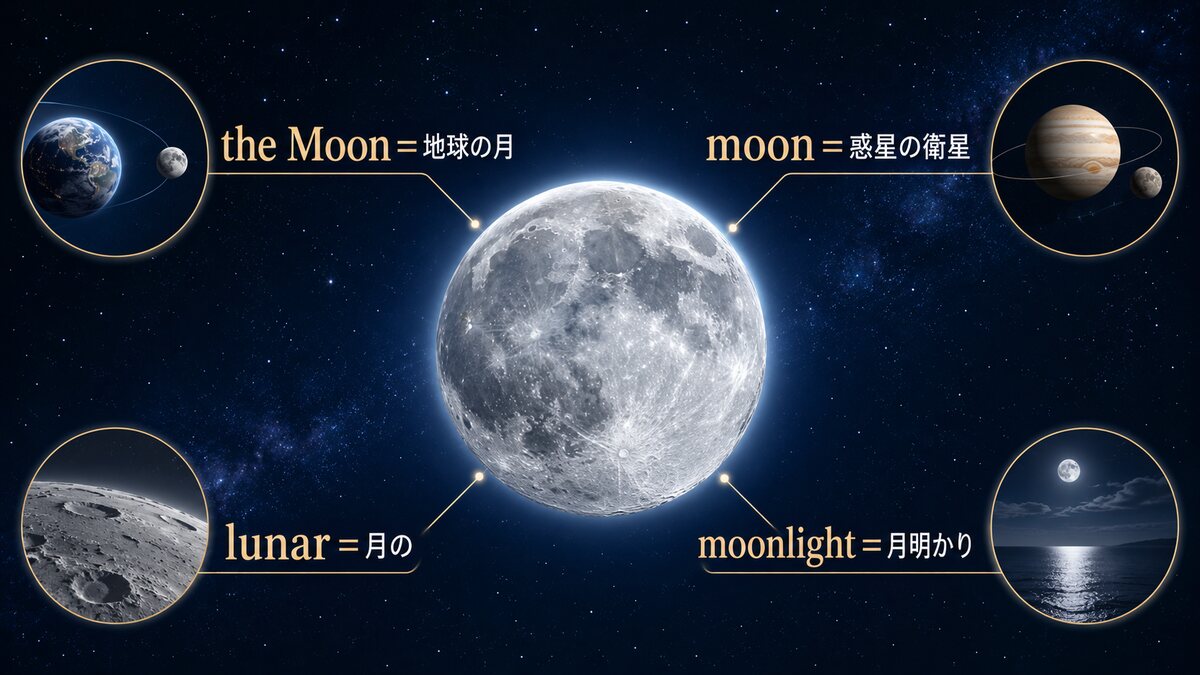
日本語ではすべて「月」に関係しますが、英語では天体名・普通名詞・形容詞・月明かりで使い分けます。
| 英語 | 意味・使い方 | 例 |
|---|---|---|
| the Moon | 地球の月 | the surface of the Moon |
| a moon / moons | 惑星を回る衛星 | Jupiter’s moons |
| lunar | 月の・月に関する | a lunar eclipse |
| moonlight | 月明かり | under the moonlight |
moonは「衛星」という意味でも使う
英語の moon は、地球の月だけでなく、惑星や準惑星の周りを回る自然衛星全般を表せます。より専門的には natural satellite といいます。
- The Earth has one moon.
地球には衛星が一つあります。 - Jupiter has many moons.
木星には多くの衛星があります。 - Triton is the largest moon of Neptune.
トリトンは海王星最大の衛星です。 - A moon is a natural satellite.
moonとは自然衛星のことです。
この意味では固有名詞ではないため、小文字で書き、数えられる名詞として a moon / two moons のように使えます。
lunarは「月の」「月に関する」
lunar は「月の」「月に関する」を表す形容詞です。moonをそのまま前に置く表現もありますが、科学・暦・宇宙開発の文脈ではlunarがよく使われます。
- lunar surface:月面
- lunar gravity:月の重力
- lunar mission:月探査ミッション
- lunar calendar:太陰暦
- lunar eclipse:月食
- A lunar eclipse occurs when the Earth blocks sunlight from reaching the Moon.
月食は、地球が月へ届く太陽光を遮るときに起こります。 - The astronauts explored the lunar surface.
宇宙飛行士たちは月面を探査しました。
月の満ち欠けを英語で言うと?
月の形は英語で phases of the Moon または lunar phases といいます。
| 日本語 | 英語 |
|---|---|
| 新月 | new moon |
| 三日月 | crescent moon |
| 上弦の月 | first-quarter moon |
| 満月 | full moon |
| 下弦の月 | last-quarter moon / third-quarter moon |
| 欠けていく月 | waning moon |
| 満ちていく月 | waxing moon |
wax は月が「満ちる」、wane は「欠ける」という動詞です。
- There will be a full moon tonight.
今夜は満月です。 - The Moon is waxing.
月が満ちてきています。 - I saw a thin crescent moon.
細い三日月を見ました。
しゅみすけ(大山俊輔)
moonlightは月明かり
moonlight は「月明かり」「月光」を表す不可算名詞です。数えないため、通常は a moonlight とはいいません。
- The garden looked beautiful in the moonlight.
庭は月明かりの中で美しく見えました。 - We walked along the beach under the moonlight.
私たちは月明かりの下で海辺を歩きました。
なお、moonlightには動詞で「本業とは別に副業をする」という意味もあります。
- He moonlights as a musician.
彼は副業でミュージシャンをしています。
月面・月のクレーターを表す英語
月について説明するときに便利な天文英語をまとめます。
| 日本語 | 英語 |
|---|---|
| 月面 | the lunar surface / the surface of the Moon |
| クレーター | a crater |
| 月の重力 | lunar gravity / the Moon’s gravity |
| 月の裏側 | the far side of the Moon |
| 月の表側 | the near side of the Moon |
| 月の軌道 | the Moon’s orbit |
| 月探査 | lunar exploration |
「月の裏側」は the dark side of the Moon と呼ばれることもありますが、実際には太陽光が当たらない側という意味ではありません。地球から見えない側を正確に表すなら the far side of the Moon です。
月に関する身近な英語表現
- once in a blue moon:めったにない
- over the moon:大喜びして
- ask for the moon:無理なものを求める
- promise the moon:実現困難な大きな約束をする
- I eat fast food once in a blue moon.
ファストフードはめったに食べません。 - She was over the moon about the news.
彼女はその知らせに大喜びでした。
ここではmoonは慣用表現の一部なので、通常は小文字で書きます。
Mondayとmoonの関係
Monday はもともと「月の日」を意味する言葉に由来します。英語のmoonとMondayは、語源的にもつながっています。
- moon:月
- Monday:月曜日(Moon’s dayに由来)
日本語の「月曜日」にも「月」が入っており、英語と日本語で同じ天体が曜日名に使われているのが面白いところです。
まとめ:地球の月はthe Moon、衛星はmoon
地球の月は英語で the Moon。発音は /muːn/ で、天体名としてはMを大文字にし、冠詞theを付けます。
一方、ほかの惑星を回る衛星は小文字の moon で、a moonやmoonsと数えられます。「月の」はlunar、「月明かり」はmoonlightです。full moon、crescent moon、lunar eclipseなども一緒に覚えておくと、日常会話から宇宙ニュースまで幅広く使えます。
太陽もセットで確認
日本文化としての月はこちら
太陽系の英語一覧へ