



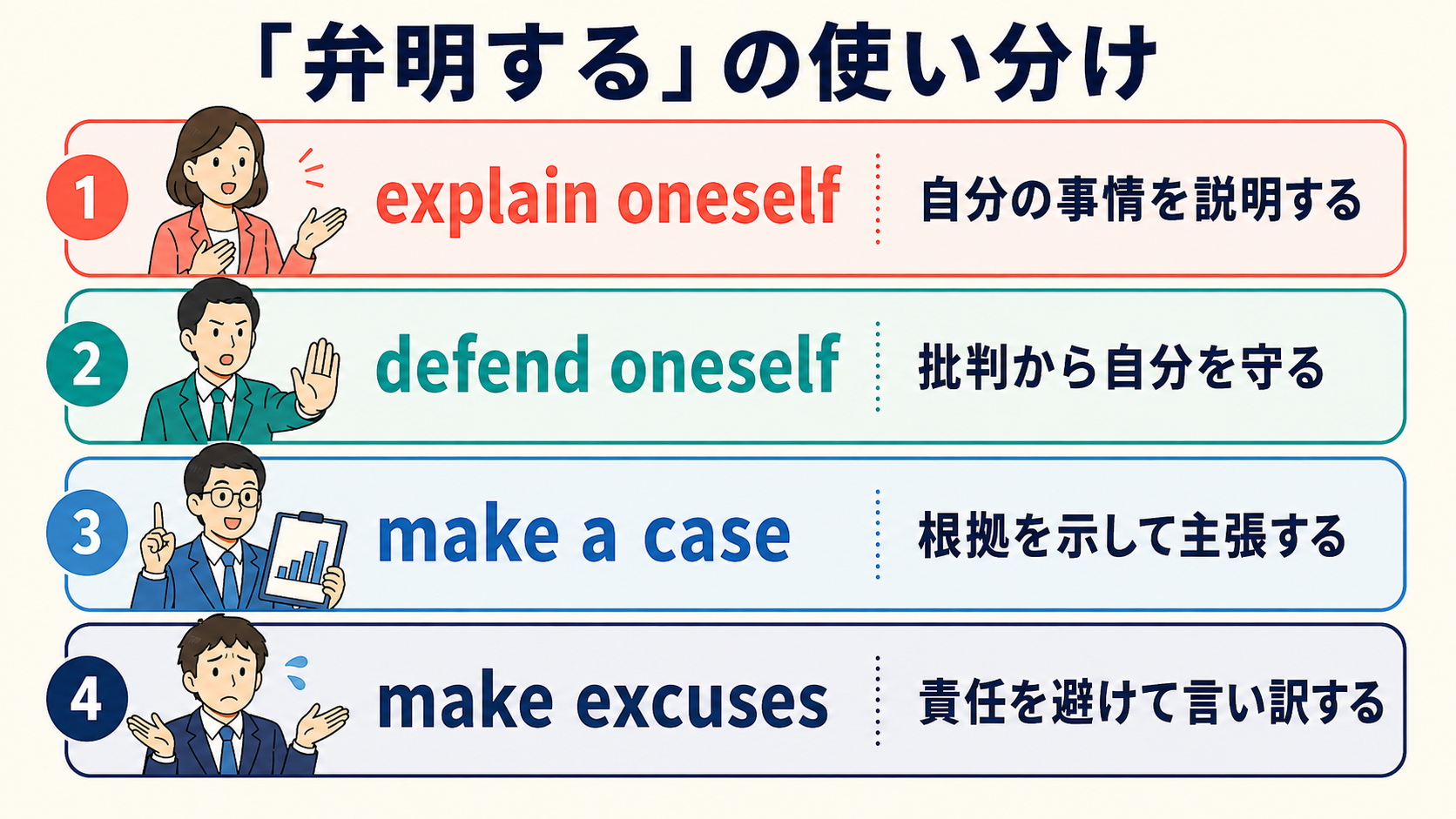
「事情を弁明する」「批判に対して弁明する」「自分の立場を弁明する」——英語では、単に事情を説明するのか、批判から自分を守るのか、根拠を示して主張するのかで表現が変わります。
日常会話で最も使いやすいのは explain oneself。自分を守る意味が強ければ defend oneself、根拠を並べて主張するなら make a case が自然です。
Contents
結論:「弁明する」は英語でどう言う?
| 表現 | 意味・ニュアンス | 例 |
|---|---|---|
| explain oneself | 自分の事情や行動を説明する | give me a chance to explain myself |
| defend oneself | 批判や非難から自分を守る | defend herself against criticism |
| make a case | 根拠を示して自分の立場を主張する | make a case for the decision |
| give an explanation | 説明・釈明をする | give a clear explanation |
| make excuses | 責任を避けて言い訳する | stop making excuses |
explain oneself:自分の事情を弁明する
explain oneself は、自分がなぜそうしたのか、誤解や疑いを解くために説明する表現です。
Please give me a chance to explain myself.
弁明する機会をください。
She was asked to explain herself.
彼女は事情を説明するよう求められました。
I don’t need to explain myself to you.
あなたに弁明する必要はありません。
Let me explain what really happened.
本当は何が起きたのか説明させてください。
反射代名詞は主語に合わせ、myself / yourself / himself / herself / ourselves / themselves と変えます。
defend oneself:批判から自分を守る
defend oneself は、非難・批判・疑いに対して自分の行動や立場を守る表現です。
He defended himself against the accusation.
彼はその非難に対して弁明しました。
She had no opportunity to defend herself.
彼女には弁明する機会がありませんでした。
I was only trying to defend myself.
私はただ自分を守ろうとしていただけです。
defend は「事情を話す」よりも、攻撃や批判に対抗する響きが強くなります。
make a case:根拠を示して主張する
make a case for… は、証拠や理由を並べて「〜が正しい・必要だ」と論じる表現です。仕事の提案や意思決定の弁明にも使えます。
She made a strong case for changing the plan.
彼女は計画変更の必要性を強く主張しました。
He made his case clearly.
彼は自分の立場を明確に説明しました。
Let me make the case for our decision.
私たちの判断の根拠を説明させてください。
give an explanation:説明・釈明をする
硬すぎず中立的に「説明する」なら give an explanation が便利です。
The company gave an explanation for the delay.
会社は遅延について説明しました。
We are waiting for a full explanation.
私たちは十分な説明を待っています。
初心者向け:難しい表現が出ないときの簡単英語
- Let me explain.
説明させてください。 - Please listen to my side.
私の側の話も聞いてください。 - There’s a reason why I did it.
そうしたのには理由があります。 - I want to tell you what happened.
何が起きたのか話したいです。 - I didn’t mean to cause a problem.
問題を起こすつもりはありませんでした。
特に Let me explain. は短く、仕事でも日常でもすぐ使える表現です。
弁明と言い訳はどう違う?
explain oneself は事情を伝える行為そのものです。一方、make excuses は責任を避けるために理由を並べている、という否定的な評価を含みます。
I’m not making excuses. I’m explaining what happened.
言い訳をしているのではなく、何が起きたか説明しているのです。
Stop making excuses and take responsibility.
言い訳をやめて責任を取ってください。
よくある間違い
× explain about myself
自分の行動を弁明するなら explain myself。自己紹介の意味で自分について話すなら tell you about myself が自然です。
× explain me what happened
○ explain to me what happened
explain の直後に人だけを置かず、to を使います。
× defend about my decision
○ defend my decision
defend は対象を直接後ろに置きます。
make a caseを「訴訟を起こす」と決めつける
case には「事件・訴訟」もありますが、make a case for… は一般に「〜を支持する根拠を示す」という意味です。
短い英会話で確認
A: Why didn’t you follow the original plan?
なぜ当初の計画に従わなかったのですか?
B: Please give me a chance to explain myself. The situation changed suddenly.
弁明する機会をください。状況が急に変わったのです。
A: All right. Tell me what happened.
分かりました。何が起きたのか話してください。
「弁明する・正当化する・謝罪する」の違い
- 弁明する:自分側の事情や立場を説明する → explain oneself / defend oneself
- 正当化する:行動や判断が妥当だと示す → justify
- 言い訳する:責任を避ける理由を並べる → make excuses
- 謝罪する:非を認めて謝る → apologize
「正しい理由があった」と示す場合は、「正当化する」は英語で?justify・defend・explainの違いも参考になります。
事情を整理して分かりやすく伝える基本は、「説明する」は英語で?explain・describe・clarifyの違いで詳しく解説しています。
まとめ
- 自分の事情を説明する:explain oneself
- 批判から自分を守る:defend oneself
- 根拠を示して主張する:make a case
- 中立的に説明する:give an explanation
- 責任を避けて言い訳する:make excuses
単語が出ないときは、まず Let me explain. で十分です。そのあとに There’s a reason why… と続ければ、初心者でも自然に自分の事情を伝えられます。