




「駅へ向かう」は英語で、日常会話なら head to the station が自然です。
I’m heading to the station.
今、駅へ向かっています。
この記事では「駅へ向かう」の自然な英語を紹介します。ただし、目的は表現を一つ暗記することだけではありません。head to が会話中に出てこなくても、すでに知っている簡単な英語で止まらずに伝える方法まで一緒に考えます。
Contents
「駅へ向かう」は英語で?まず覚えたい答え
一番使いやすい表現は、次の2つです。
- I’m heading to the station.:今、駅へ向かっているところです。
- I’m on my way to the station.:もう出発して、駅へ向かう途中です。
head to ~ は「~へ向かう」、be on one’s way to ~ は「~へ行く途中である」という意味です。
 しゅみすけ(大山俊輔)
head to the stationの発音
head は /hed/ に近く、日本語の「ヘッド」のように最後へ強い母音を足しません。heading は /ˈhedɪŋ/ で、最初の head をやや強く読みます。
I’m heading to the station. は、一語ずつ区切るより「アイム ヘディン(グ)タ ザ ステイション」のようにつなげると自然です。会話では to が弱くなり、「トゥー」より「タ」に近く聞こえることがあります。
なぜheadで「向かう」になるの?
head は名詞では「頭」ですが、動詞になると「頭をある方向へ向けて進む」、つまり「向かう」という感覚になります。
- head to the station:駅へ向かう
- head home:家へ向かう
- head back:引き返す・戻る
- head north:北へ向かう
home や north の前には通常 to を置きません。一方、the station や the office のような一般的な場所へ向かう場合は、head to+場所 が分かりやすい基本形です。
より詳しい句動詞としての使い分けは、head forの意味とhead to・be headed forの違いでも確認できます。
head to・head for・on my way toの違い
| 表現 | 主な感覚 | 例文 |
|---|---|---|
| head to ~ | ~へ向かう。日常会話で使いやすい | I’m heading to the station. |
| head for ~ | ~を目指して進む。目的地への方向をやや意識 | We’re heading for the station. |
| be on one’s way to ~ | すでに~へ向かう途中 | I’m on my way to the station. |
| go to ~ | ~へ行く。最も基本的で広い表現 | I’m going to the station. |
head to と head for は、多くの場面で大きな意味の差なく使えます。初心者はまず head to+目的地 を会話の型として持っておけば十分です。
日本語の「向かう」と英語のズレ
日本語の「向かう」は、目的地へ進んでいることを表します。しかし英語では、場面によって表現が変わります。
- これから駅へ向かう:I’m heading to the station now.
- もう駅へ向かう途中:I’m on my way to the station.
- 普段、駅へ行く:I go to the station.
- 駅へ向けて出発した:I left for the station.
特に I’m going to the station. は、状況が分かっていれば「駅へ向かっている」と十分に伝わります。「向かう」にぴったり対応する難しい動詞を毎回探す必要はありません。
そのまま使える会話例
待ち合わせ相手へ連絡する
A: Where are you now?
今どこ?
B: I’m heading to the station now. I’ll be there in ten minutes.
今、駅へ向かってる。10分で着くよ。
家を出るとき
I’m heading to the station. See you later!
駅へ向かうね。またあとで!
タクシーや車で向かっている
We’re on our way to the station.
私たちは駅へ向かっているところです。
相手の行き先を確認する
Are you heading to the station?
駅へ向かっているの?
独り言英会話・英語日記で使える例文
- I left home at seven and headed to the station.
7時に家を出て、駅へ向かった。 - I’m heading to the station a little earlier today.
今日は少し早めに駅へ向かっています。 - I walked to the station because the weather was nice.
天気がよかったので、駅まで歩きました。 - I was on my way to the station when it started raining.
駅へ向かう途中で雨が降り始めました。 - I stopped by a convenience store on my way to the station.
駅へ向かう途中でコンビニに寄りました。
「家を出た」という直前の動作は、「家を出る」のleave home・leave the house・go outの違いと組み合わせると、朝の出来事を続けて話せます。
この英語を知らなかったら?【しゅみすけ式】
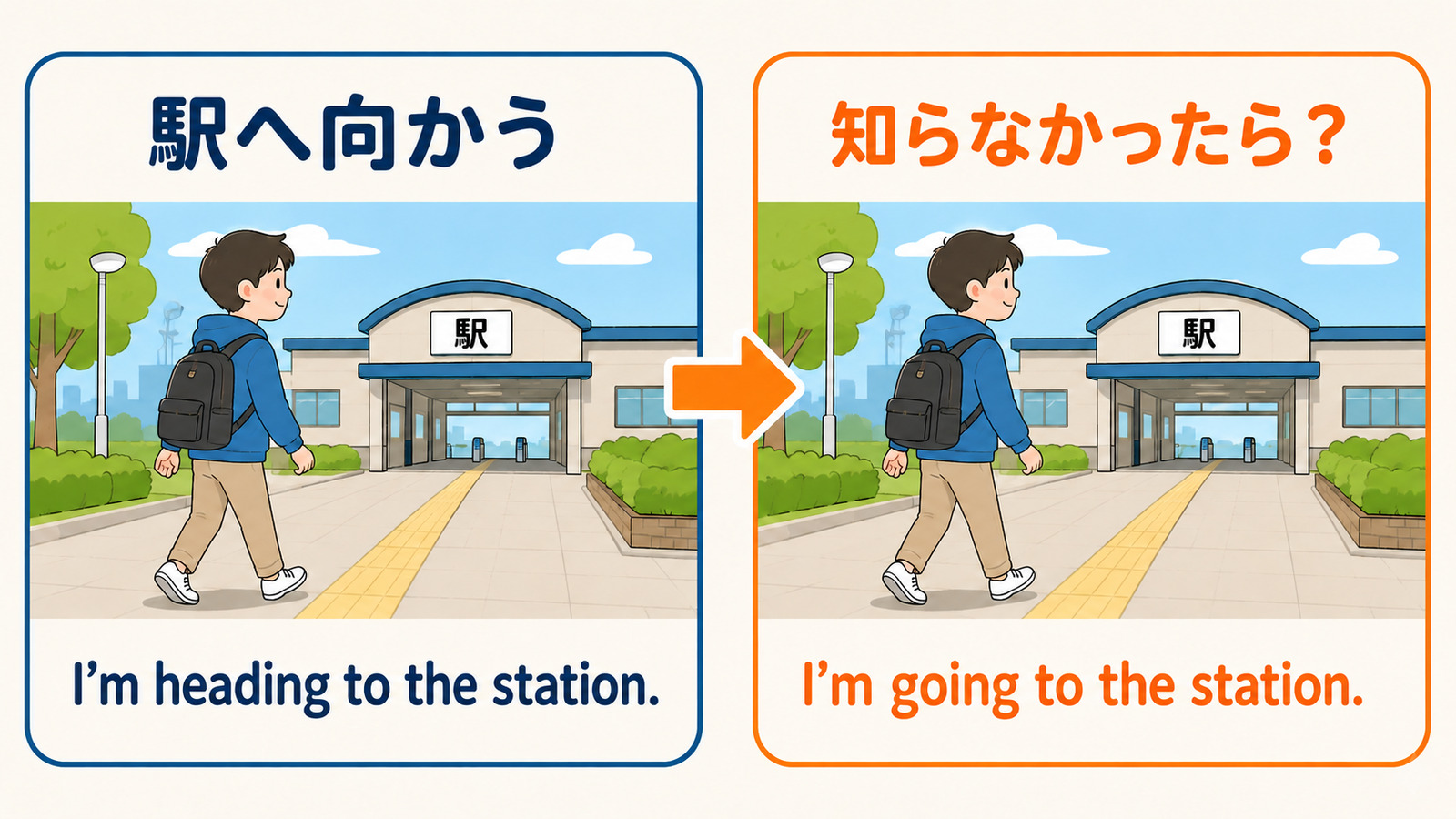
head to を忘れたら、難しく考えず次のように分解します。
どこへ行く?
↓
駅へ行く。
↓
I’m going to the station.
これだけで「今、駅へ向かっている」という状況は十分伝わります。
- I’m going to the station now.
今、駅へ行っています。 - I left home. I’m going to the station.
家を出ました。駅へ行っています。 - I’m walking to the station.
駅まで歩いています。
しゅみすけ(大山俊輔)
駅・移動で一緒に使える関連表現
- 海外の移動・交通で使う英語
- 改札は英語で?ticket gate・fare gateの違い
- 横断歩道は英語で?crosswalk・pedestrian crossingの違い
- 「引き返す」は英語で?turn back・go backの違い
まとめ
「駅へ向かう」は、日常会話なら head to the station が自然です。
I’m heading to the station.
今、駅へ向かっています。
すでに移動中であることを強く伝えるなら、I’m on my way to the station. も便利です。そして head to を忘れても、I’m going to the station. で十分伝わります。
自然な表現は覚える。でも忘れても、知っている go で英語を止めない。この二つをセットで身につけましょう。
改札・ホーム・切符・乗車・乗り換え・遅延など、電車と駅で使う表現をまとめて確認するなら、電車・駅で使う英語総合ガイドもご覧ください。
家を出る・向かう・歩く・迷う・道を尋ねる・到着するまでの表現全体は、外出・徒歩・道案内で使う英語総合ガイドにまとめています。