


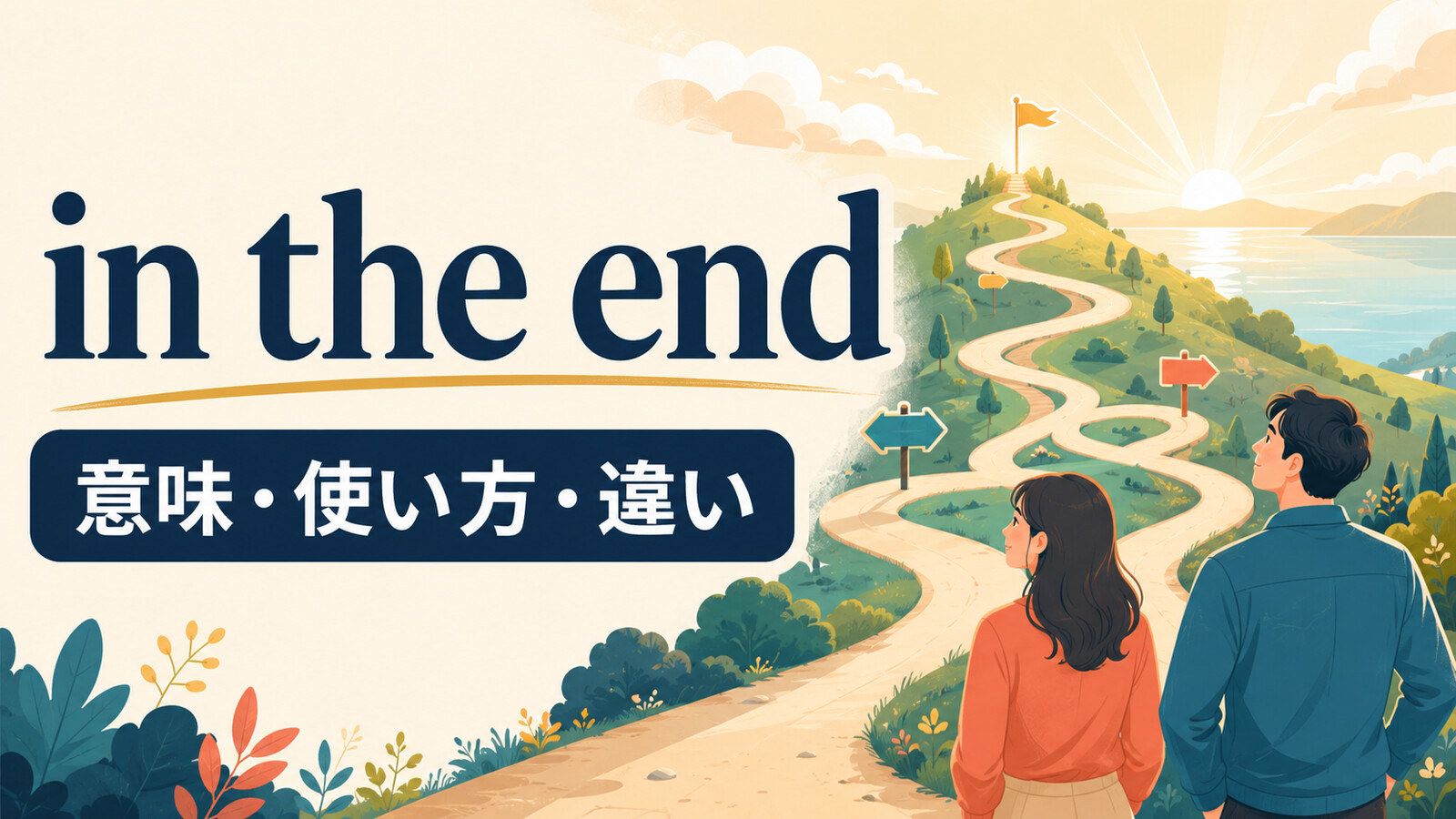
in the end は、「結局」「最終的には」「いろいろあった末に」という意味です。単に時間の最後を示すのではなく、迷い・努力・変化などの経緯を経て、最後にどんな結果になったかを伝えます。
- In the end, we decided to stay home.
結局、私たちは家にいることにしました。 - Everything worked out in the end.
最終的には、すべてうまくいきました。
よく似た at the end は「〜の終わりに」という時間・場所の終点です。この記事では、in the endのニュアンス、文頭・文末の語順、finally・eventually・after allとの違いまで例文で整理します。
Contents
in the endの基本的な意味
in the endの中心は、さまざまな出来事のあとにたどり着いた最終結果です。日本語では文脈に応じて次のように訳せます。
- 結局
- 最終的には
- 最後には
- いろいろあった末に
- We compared several apartments, but in the end we chose the first one.
いくつかの部屋を比較しましたが、結局、最初の部屋を選びました。 - She was nervous at first, but she enjoyed the party in the end.
彼女は最初緊張していましたが、最後にはパーティーを楽しみました。
なぜ「結局」という意味になるの?
end は「終わり・終点」です。そこに in が付くことで、個別の終点を指すというより、出来事全体の「最後の結果の中では」という見方になります。
途中には複数の選択肢や変化があっても、それらを振り返り、「最終的に残った結果はこれだった」とまとめる感覚です。
 しゅみすけ(大山俊輔)
in the endの語順と使い方
文頭:In the end, 主語+動詞
最終結果を先に示し、話をまとめる形です。通常はin the endの後ろにカンマを置きます。
- In the end, I accepted the job offer.
結局、私はその仕事のオファーを受けました。 - In the end, they agreed to talk again.
結局、二人はもう一度話し合うことに同意しました。
文末:主語+動詞+in the end
何が起きたかを述べたあと、それが最終結果だったと締めくくります。会話でも自然です。
- We found a cheaper flight in the end.
最終的には、もっと安い便を見つけました。 - He apologized in the end.
彼は結局、謝りました。
butと一緒に使う
途中の状況と結果が異なるときは、but in the end がよく使われます。
- I wanted to cook, but in the end we ordered pizza.
料理をしたかったのですが、結局ピザを注文しました。 - The project had problems, but it succeeded in the end.
その企画には問題がありましたが、最終的には成功しました。
in the endとat the endの違い
この2つは日本語ではどちらも「最後に」と訳せますが、焦点が違います。
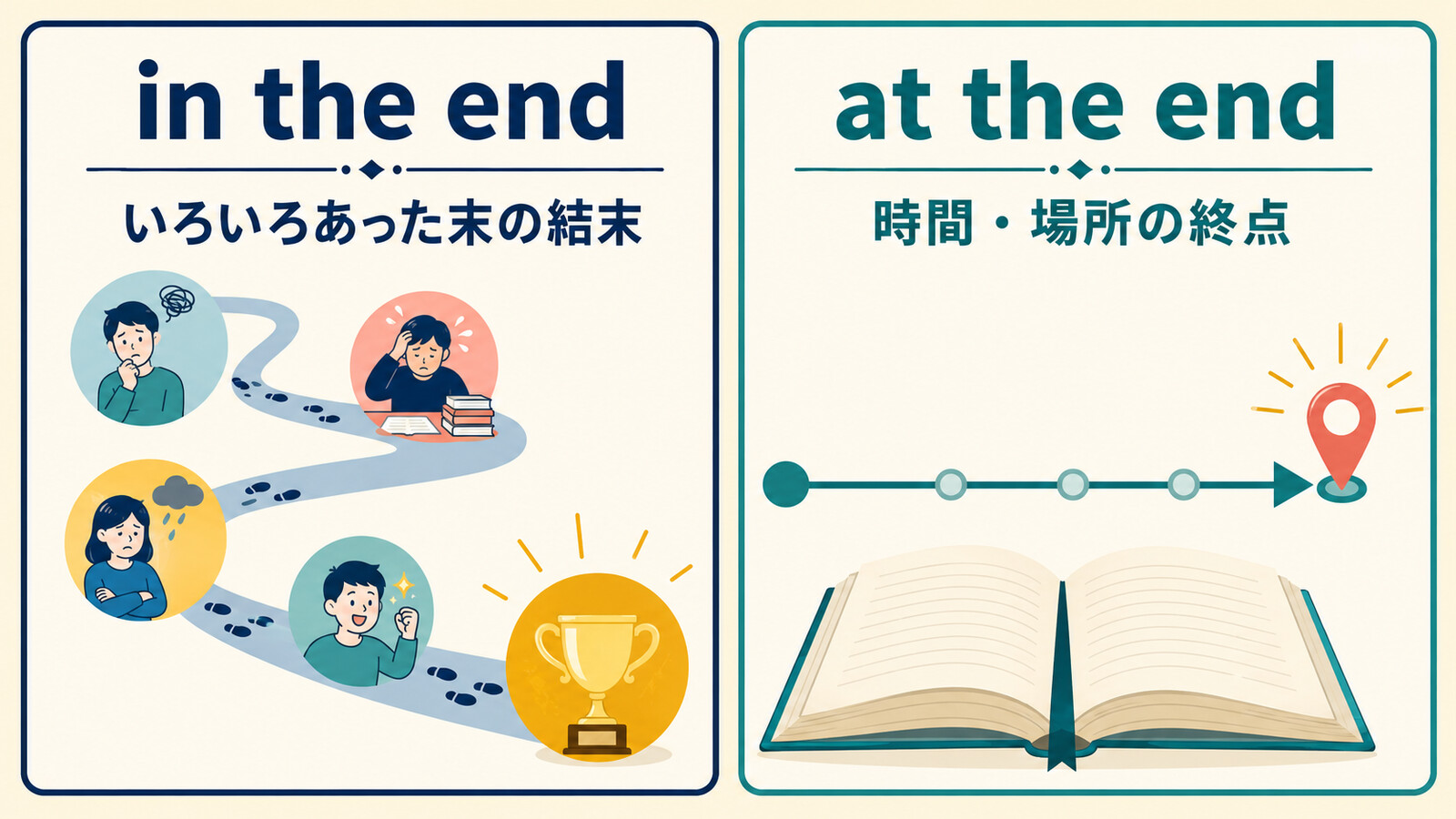
in the end:最終的な結果
- In the end, we canceled the trip.
結局、私たちは旅行を中止しました。
検討や事情の変化を経た「結論」に注目しています。
at the end:時間・場所・作品などの終点
- We canceled the trip at the end of May.
私たちは5月末に旅行を中止しました。 - There’s a café at the end of this street.
この通りの突き当たりにカフェがあります。 - I cried at the end of the movie.
映画の最後に泣きました。
at the endの後ろには、of May / of the street / of the movie のように「何の終わりか」が続くことがよくあります。
日常会話・仕事で使える例文
日常・家庭
- We couldn’t agree on dinner, so in the end I made pasta.
夕食が決まらなかったので、結局私がパスタを作りました。 - The kids were tired, but they had fun in the end.
子どもたちは疲れていましたが、最後には楽しんでいました。
仕事
- In the end, the client approved the simpler design.
結局、クライアントはよりシンプルなデザインを承認しました。 - We tried three tools and went back to the original one in the end.
3つのツールを試し、最終的には元のものに戻りました。
恋愛・人間関係
- We argued for hours, but in the end we understood each other.
何時間も言い合いましたが、最後にはお互いを理解できました。 - In the end, she chose to be honest with him.
結局、彼女は彼に正直に話すことを選びました。
旅行・買い物
- Every hotel was full, but we found a room in the end.
どのホテルも満室でしたが、最終的には部屋を見つけました。 - I tried on five jackets and bought the blue one in the end.
ジャケットを5着試着して、結局青いものを買いました。
finally・eventually・after allとの違い
finally:待った末に「ついに」
finally は、待ち時間・努力・長い手順のあとで、待望のことが起きた感覚を出しやすい副詞です。
- The bus finally arrived.
バスがようやく来ました。 - In the end, we took a taxi.
結局、私たちはタクシーに乗りました。
前者は到着を待ったこと、後者は選択の結果に焦点があります。
eventually:時間がたって「やがて」
eventually は、すぐではないものの、時間の経過後にそうなったことを表します。in the endは時間の長さよりも最終結果をまとめます。
- She eventually became a manager.
彼女はやがて管理職になりました。 - In the end, she turned down the promotion.
結局、彼女は昇進を断りました。
after all:「やはり」「だって」
after all は、予想や判断を見直して「やはり」と言う場合と、理由を後から付け加えて「だって」と言う場合があります。in the endは純粋に最終結果を伝えます。詳しくはafter allの意味とin the endとの違いをご覧ください。
at last:「ついに」
at last は、長く待ったことが実現した喜びや安堵を強く感じさせます。関連表現との比較はat lastの意味・finally・in the endとの違いで確認できます。
日本人が間違えやすいポイント
in the end ofとは言わない
「映画の最後に」を in the end of the movie とするのは不自然です。特定のものの終わりなら at the end of the movie と言います。
- × in the end of the meeting
- ○ at the end of the meeting(会議の終わりに)
- ○ In the end, we reached an agreement.(結局、合意に達した)
文脈のない単なる時刻には使わない
in the endは経緯と結果を意識する表現です。「授業の最後に質問した」のような単なる位置ならat the endを選びます。
必ず悪い結果になるわけではない
「結局」という日本語は残念な響きになることがありますが、in the endは良い結果にも悪い結果にも使えます。
- Everything was fine in the end.
最終的には、すべて大丈夫でした。 - The plan failed in the end.
その計画は結局失敗しました。
しゅみすけ(大山俊輔)
すぐ出てこないときの簡単な言い換え
in the endが出てこなければ、結果を直接伝えるだけでも十分です。
- Finally, we decided.(最後に決めました)
- We decided after talking for a long time.(長く話したあとで決めました)
- Our final choice was the blue one.(最終的に選んだのは青いものでした)
- Everything was okay at last.(ついにすべて大丈夫になりました)
たとえば In the end, I stayed home. が出なければ、I thought about it and stayed home.(考えたあと、家にいました)のように、経緯と結果を基本語で分けて言えます。
まとめ
in the endは、途中の迷い・努力・変化などを経た「最終結果」を表します。
- 意味は「結局・最終的には・いろいろあった末に」
- 文頭のIn the end, …と文末の… in the endが自然
- at the endは時間・場所・作品などの終点
- finallyは待った末の「ついに」
- eventuallyは時間がたって「やがて」
- in the end of …とは言わない
ほかの表現を体系的に学ぶなら、前置詞を使った英熟語一覧と英熟語・定型表現のまとめもあわせてご覧ください。
時・順序を表す英語表現の全体像
時・順序の表現は、いつ起きるか、どのくらい続くか、どの順番か、最終的にどうなったかで整理できます。in the end は出来事の「結末」、at the end は場所・期間の「終わり」、finally は長い過程を経た「ついに」を表します。
最初に覚えたい重要表現
| 機能 | 表現 | 意味 |
|---|---|---|
| 結末 | in the end | 結局・最終的に |
| 終点 | at the end | 〜の終わりに |
| 到達 | finally / at last | ついに・ようやく |
| 当面 | for the time being | 差し当たり・当分の間 |
| 事前 | in advance | 前もって |
| 近い未来 | before long | 間もなく |
| いずれ | sooner or later | 遅かれ早かれ |
時間の位置・長さ・頻度で選ぶ
- 当面の暫定状態:for the time beingとfor nowの違い
- 予定より前に:in advance・beforehand・ahead of timeの違い
- まもなく起きる:before longとsoon・long beforeの違い
- いつか必ず起きる:sooner or laterとeventuallyの違い
- これから先:in the futureとfrom now onの違い
- すぐに終える:in no timeの「あっという間に」
- 長期間:for a long timeとin a long timeの違い
- 一定間隔で:at intervalsの時間・空間での使い方
順序を表す表現
一つずつなら one by one・one at a time・one after anotherの違いを使い分けます。one by one は個々に注目し、one at a time は同時に行わないこと、one after another は連続して次々に起きることを強調します。
おすすめの学習順
- in the end と at the end を区別する
- finally・at last で「ついに」を表す
- in advance・before long で前後関係を示す
- for the time being・for a long time で期間を示す
- one by one・one after another で順序を表す