

「アンティーク巡りが趣味です」と英語で話すなら、I love antique shopping. や I enjoy visiting antique shops. が自然です。蚤の市や骨董市を巡るなら、I like exploring flea markets. と言えます。
今回は、混同しやすい antique・vintage・retro・secondhand の違いから、品物の年代・状態を尋ねる表現、海外のアンティークショップや蚤の市で使える会話まで紹介します。
Contents
「アンティーク巡りが趣味です」の基本表現
- I love antique shopping.
アンティークショッピングが大好きです。 - I enjoy visiting antique shops.
アンティークショップ巡りを楽しんでいます。 - I like exploring flea markets.
蚤の市を見て回るのが好きです。 - I collect antique tableware.
アンティークの食器を集めています。 - I’m interested in vintage furniture.
ヴィンテージ家具に興味があります。
しゅみすけポイント
日本語の「アンティーク巡り」を一語に直訳する必要はありません。visit antique shops や go to flea markets のように、実際にしている行動を簡単な動詞で伝えると自然です。
antique・vintage・retro・secondhandの違い
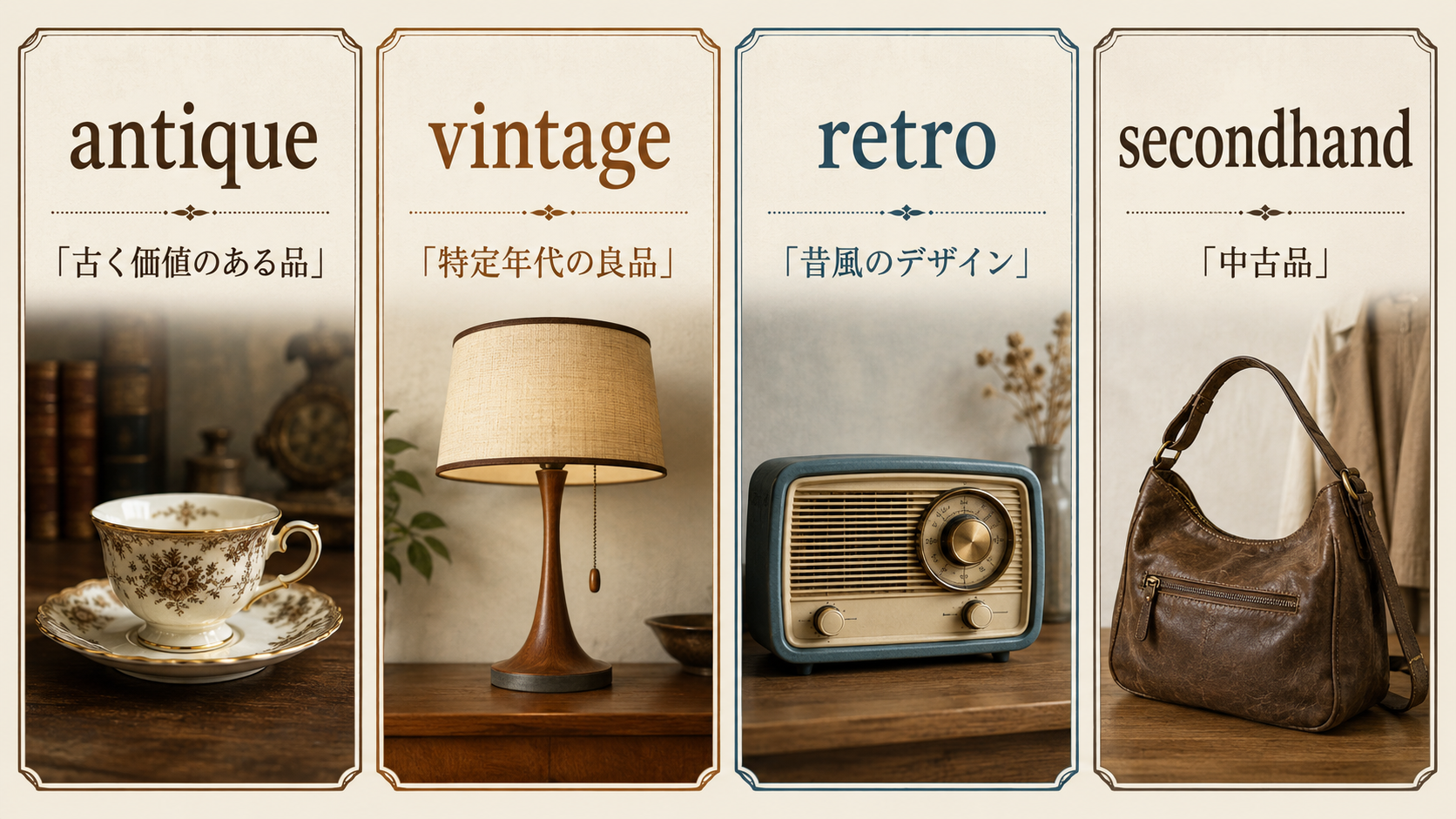
antique:古く、歴史的・美術的価値のある品
antique は単に古いだけでなく、年代を経て価値が認められる家具・食器・宝飾品などに使います。日常会話では厳密な年数よりも「本格的な骨董品」というニュアンスです。
This shop sells antique furniture.
この店はアンティーク家具を扱っています。
vintage:ある年代を代表する質のよい品
vintage は、特定の年代に作られ、その時代らしさや品質が評価される服・家具・時計などに使われます。
I found a beautiful vintage dress.
すてきなヴィンテージドレスを見つけました。
retro:昔風のデザイン
retro は、実際に古い品とは限りません。新しく作られた商品でも、昔を思わせるデザインなら retro と言えます。
I like this retro design.
このレトロなデザインが好きです。
secondhand:誰かが以前使っていた中古品
secondhand は中古品全般です。古さや希少価値は関係ありません。used も「中古の」という意味で使えます。
I bought this bag secondhand.
このバッグを中古で買いました。
骨董市・蚤の市・中古店を英語で
- antique shop / antique store:アンティークショップ
- antique market:骨董市、アンティークマーケット
- flea market:蚤の市、フリーマーケット
- secondhand shop:中古品店
- thrift store:寄付品などを扱う低価格の中古店
- vintage shop:ヴィンテージ品を扱う店
日本語の「フリーマーケット」は free market ではなく、flea market です。flea は「ノミ」を意味します。
何を集めているか話す英語
- antique furniture:アンティーク家具
- vintage clothing:ヴィンテージ衣料
- antique tableware:アンティーク食器
- old books:古書
- vintage jewelry:ヴィンテージジュエリー
- collectibles:収集価値のある品、コレクターズアイテム
I collect antique teacups.(アンティークのティーカップを集めています)、I’m always looking for unique vintage pieces.(いつも個性的なヴィンテージ品を探しています)のように使えます。
年代・素材・由来を尋ねる
- How old is this?
これはどのくらい古いものですか。 - When was this made?
これはいつ作られましたか。 - Do you know where it comes from?
どこのものか分かりますか。 - What is it made of?
何でできていますか。 - Is this an original?
これはオリジナルですか。 - Has it been restored?
修復されていますか。
状態を確認する英語
- It’s in excellent condition.:とても良い状態です。
- It’s in good condition for its age.:年代を考えると良い状態です。
- There are a few scratches.:少し傷があります。
- There is a small chip here.:ここに小さな欠けがあります。
- Is there any damage?:傷みはありますか。
- Does it still work?:まだ動きますか。
食器の小さな欠けは chip、ひびは crack、表面の擦り傷は scratch と表現できます。
値段や配送について尋ねる
- How much is this?:これはいくらですか。
- Is the price negotiable?:値段の交渉はできますか。
- Could you give me a small discount?:少し値引きしていただけますか。
- Do you ship internationally?:海外発送していますか。
- Could you wrap it carefully?:丁寧に包んでいただけますか。
値段交渉が一般的でない店もあります。まず Is the price negotiable? と穏やかに確認すると安心です。
ミニ英会話:アンティークショップで
A: Are you looking for anything in particular?
(何か特にお探しですか)
B: I’m looking for antique teacups. How old is this one?
(アンティークのティーカップを探しています。これはどのくらい古いものですか)
A: It was made in the early twentieth century. It’s in good condition, but there is a small chip underneath.
(20世紀初頭に作られました。状態は良いですが、底に小さな欠けがあります)
B: I see. Could you wrap it carefully if I buy it?
(分かりました。購入したら丁寧に包んでいただけますか)
初心者向け:簡単な英語だけで乗り切る
- I like old things.(古いものが好きです)
- I visit many antique shops.(たくさんのアンティーク店を訪れます)
- When was this made?(いつ作られましたか)
- Is this old or new?(これは古いものですか、新しいものですか)
- Is it broken?(壊れていますか)
- Can you send it to Japan?(日本へ送れますか)
authentic や provenance のような難しい言葉が出なくても、Is this an original?、Where is it from? で十分に確認できます。
趣味の自己紹介例
I love antique shopping. On weekends, I often visit antique shops and flea markets. I especially enjoy looking for old tableware and small decorative pieces. I like learning about where they came from and when they were made.
「アンティーク巡りが好きです。週末にはアンティーク店や蚤の市によく行きます。特に古い食器や小さな装飾品を探すのが好きで、どこから来たのか、いつ作られたのかを知るのも楽しんでいます」という自己紹介です。
まとめ
「アンティーク巡りが趣味です」は、I love antique shopping. や I enjoy visiting antique shops. が自然です。
antique は古く価値のある品、vintage は特定年代の良品、retro は昔風のデザイン、secondhand は中古品です。海外のお店では、まず How old is this?、Is there any damage?、Can you ship it to Japan? の3つを覚えておくと役立ちます。
趣味全般の言い方は「趣味を英語で表す一覧」、文化・創作系の趣味は「創作・文化系の趣味表現」もあわせてご覧ください。
見つけたアンティーク家具や小物を部屋に取り入れるなら、「模様替えを英語で話す表現」も役立ちます。
アンティークのティーカップや食器を集めている方は、「tableware・dinnerware・dishes・crockeryの違い」もあわせてご覧ください。