



「今年は涼しいね」「例年ほど暑くない」「冷夏になるかもしれない」。こんな夏の会話を英語にするとき、まず使えるのが a cool summer です。ただし、日本語の「冷夏」が表す“平年より気温が低い夏”を正確に伝えるなら、cooler than usual や below-average temperatures のほうが自然な場合もあります。
この記事では、日常会話から天気予報・ニュースまで、冷夏にまつわる英語表現を例文つきで整理します。天気全般の言い方は英語の天気表現一覧も参考にしてください。
Contents
「冷夏」の基本は a cool summer
a cool summer は「涼しい夏」という最もシンプルな表現です。気象用語に限らず、夏全体があまり暑くなかったことを日常会話で伝えられます。
- We’re having a cool summer this year.
今年は涼しい夏ですね。 - It was a relatively cool summer.
比較的涼しい夏でした。 - I don’t mind a cool summer.
涼しい夏も悪くないです。
cool はここでは「ほどよく涼しい」という意味です。日本語の「冷夏」のように“平年より低温”を強調したいなら、次の表現がより明確です。
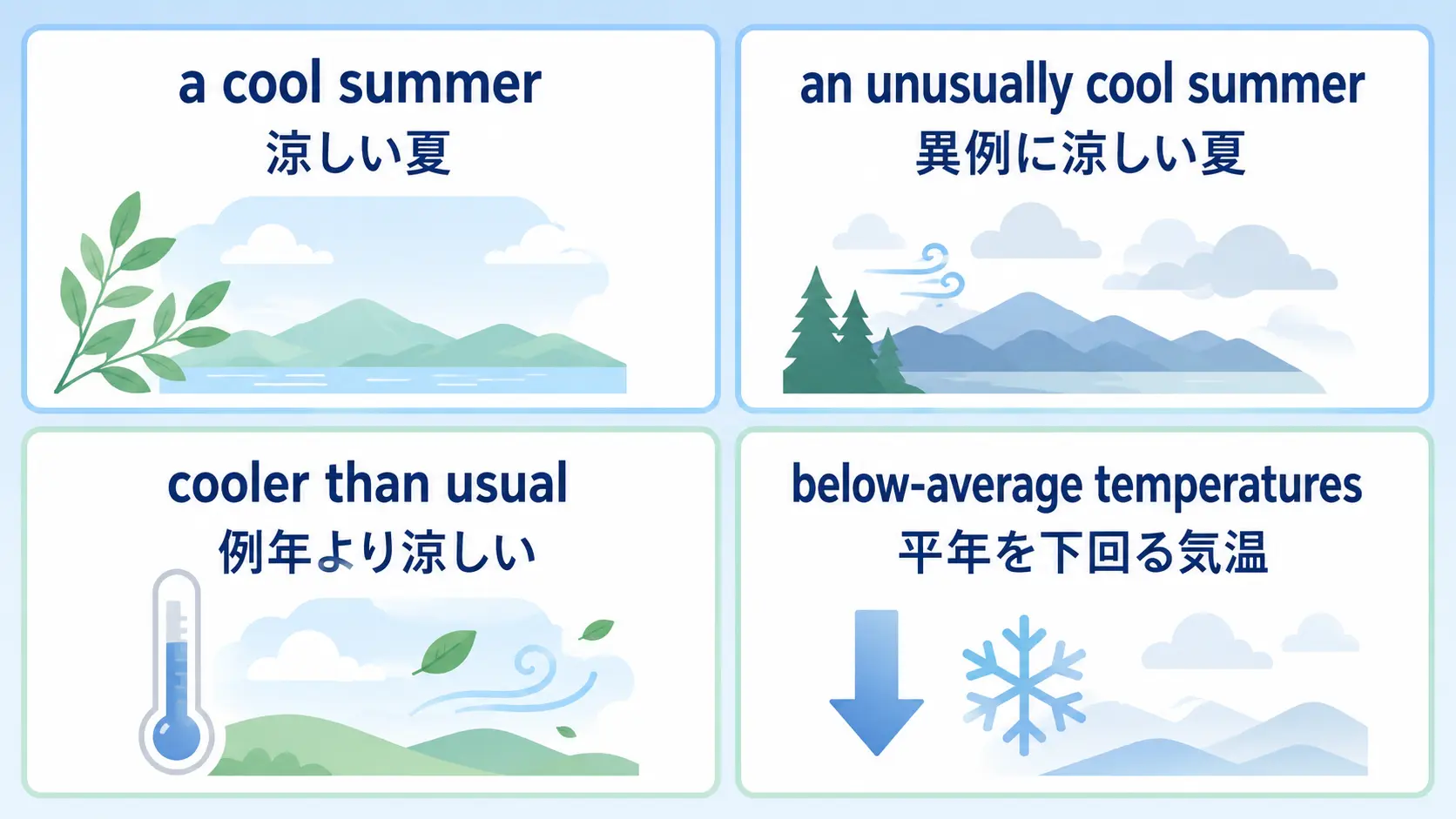
an unusually cool summer:異例に涼しい夏
an unusually cool summer は「例年になく涼しい夏」「異例に涼しい夏」。単なる快適さではなく、いつもの夏と違うという驚きを含みます。
- We’ve had an unusually cool summer.
今年は異例に涼しい夏です。 - After an unusually cool summer, autumn arrived early.
異例に涼しい夏のあと、秋が早く訪れました。
cooler than usual:「例年より涼しい」の定番
会話で「今年は例年より涼しい」と言うなら、cooler than usual がとても自然です。
- This summer is cooler than usual.
今年の夏は例年より涼しいです。 - It has been cooler than usual this month.
今月は例年より涼しい日が続いています。 - This summer may be cooler than usual.
今年は冷夏になるかもしれません。
名詞の前に置くときは、語のまとまりを示すハイフンを入れて a cooler-than-usual summer とします。一方、This summer is cooler than usual. のように文の述語として使う場合はハイフンを入れません。
below-average temperatures:天気予報・ニュース向き
below-average temperatures は「平年を下回る気温」。観測値や予報を客観的に伝える、ニュースや気象情報らしい表現です。気温の単位や読み方は気温は英語で?temperature・degreeの使い方で詳しく解説しています。
- Below-average temperatures are expected this summer.
この夏は平年を下回る気温が予想されています。 - Temperatures remained below average throughout July.
7月を通して気温は平年を下回りました。 - The region experienced a summer of below-average temperatures.
その地域は平年より低温の夏となりました。
unseasonably cool:季節外れに涼しい
unseasonably cool は「その季節にしては異例に涼しい」「季節外れに涼しい」という意味です。夏全体だけでなく、特定の日や期間にも使えます。
- The weather has been unseasonably cool.
季節外れの涼しさが続いています。 - It’s unseasonably cool for August.
8月にしては異例に涼しいです。
mild summerとの違い
a mild summer は「穏やかで過ごしやすい夏」。極端な暑さや寒さがない快適さに焦点があります。一方、a cool summer は気温が低めであることに焦点があり、日本語の「冷夏」にはこちらが近い表現です。
- We had a mild summer with no extreme heat.
猛暑のない穏やかな夏でした。 - We had a cool summer, with temperatures below average.
平年より気温の低い冷夏でした。
反対に、暑さを伝える表現は「暑い」は英語で?、猛暑日の区分は猛暑日・真夏日・夏日・熱帯夜は英語で?もあわせてどうぞ。
冷夏についてすぐ使える英会話例
A: It’s been cooler than usual this summer, hasn’t it?
B: Yes. We haven’t had many really hot days.今年の夏は例年より涼しいよね。
うん。本当に暑い日があまりないね。
A: Do you think we’re going to have a cool summer?
B: Maybe. The forecast says temperatures will remain below average.今年は冷夏になると思う?
かもね。予報では気温が平年を下回るそうだよ。
まとめ:「冷夏」は場面に合わせて言い分けよう
- a cool summer:涼しい夏という基本表現
- an unusually cool summer:異例に涼しい夏
- cooler than usual:例年より涼しい
- below-average temperatures:平年を下回る気温
- unseasonably cool:季節外れに涼しい
日常会話なら This summer is cooler than usual.、予報や客観的な説明なら below-average temperatures が使いやすい表現です。冬の「平年より暖かい」は、反対の季節表現をまとめた「暖冬」は英語で?も参考にしてください。