




「今日の気温は何度ですか?」と英語で聞くときは、temperature と degree を使います。ただし、この2語は同じ意味ではありません。
この記事では、「気温」の基本表現から、最高気温・最低気温・気温が上がる/下がる・摂氏と華氏・体感温度まで、天気予報と日常会話で使える自然な英語を例文付きで紹介します。
まずはこの3文を覚えればOK!
What’s the temperature?(気温は何度ですか?)
It’s 23 degrees.(23度です)
The high will be 28 degrees.(最高気温は28度でしょう)
Contents
「気温」は英語で temperature
「気温・温度」を表す英語は temperature です。気温だけでなく、体温・室温・水温などにも使えます。
The temperature is 23 degrees Celsius.
気温は摂氏23度です。
What’s the temperature outside?
外の気温は何度ですか?
Today’s temperature is higher than yesterday’s.
今日の気温は昨日より高いです。
temperatureの発音・読み方
temperature の発音は、アメリカ英語で /ˈtem.prə.tʃɚ/、イギリス英語で /ˈtem.prə.tʃə/。カタカナの「テンペラチャー」より、速い会話では「テンプリチャー」に近く聞こえます。
最初の tem にアクセントを置き、真ん中の pera を短く弱く読むのがコツです。
temperatureとdegreeの違い
temperatureは「気温・温度」
temperature は、測る対象や温度という概念を表します。
The temperature is rising.
気温が上がっています。
degreeは「度」という単位
degree は温度の単位「度」です。数字のあとに置きます。
It’s 25 degrees.
25度です。
1度なら単数形の one degree、0度や2度以上は複数形の degrees を使います。
- one degree:1度
- zero degrees:0度
- twenty-three degrees:23度
It’s 25 degree. ではなく、It’s 25 degrees. が正解です。
摂氏℃と華氏℉の英語・読み方
Celsiusは「摂氏」
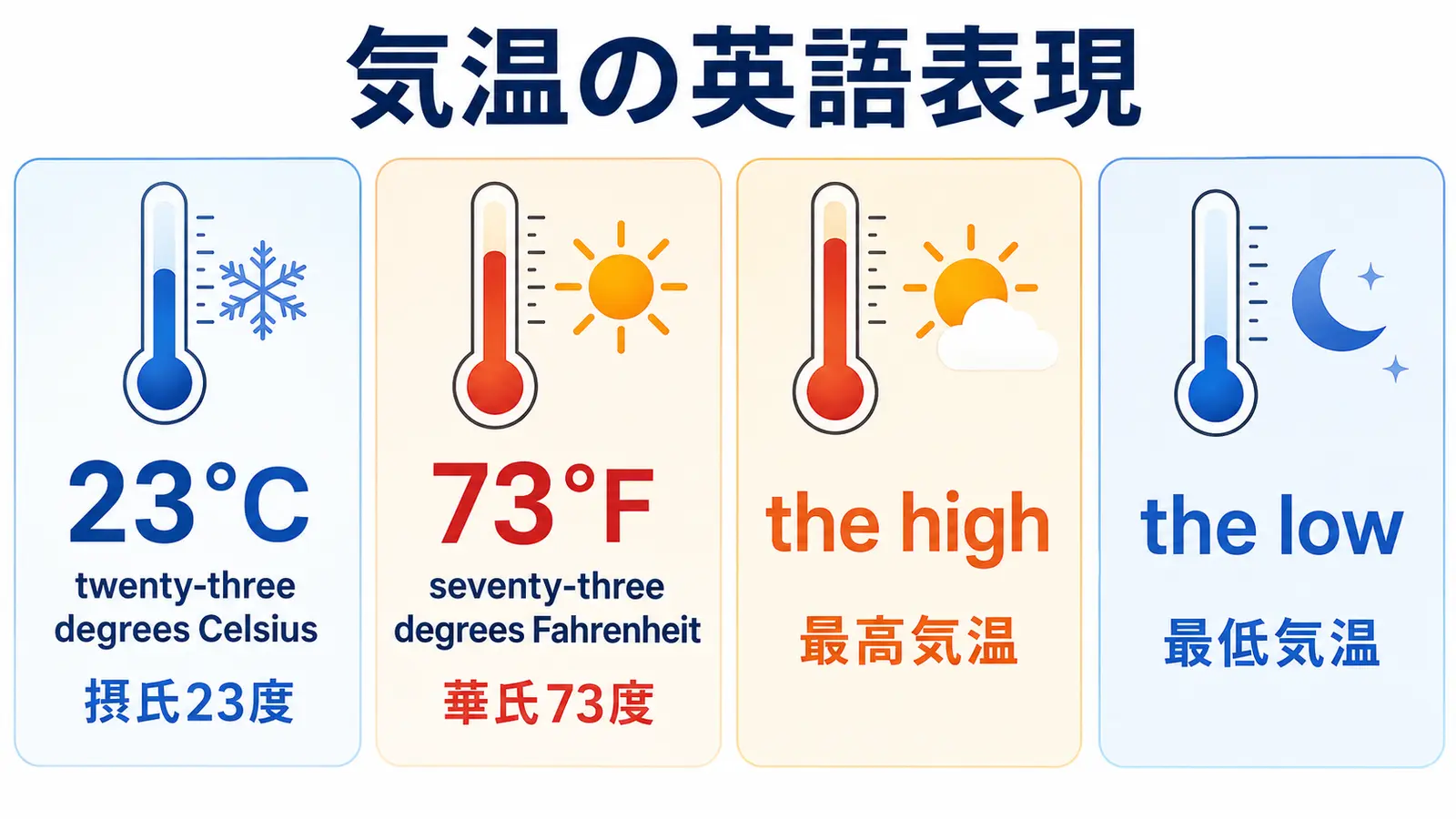
23°C は twenty-three degrees Celsius と読みます。日本を含む多くの国では摂氏が使われます。
Water freezes at zero degrees Celsius.
水は摂氏0度で凍ります。
Fahrenheitは「華氏」
73°F は seventy-three degrees Fahrenheit と読みます。アメリカの日常的な天気予報では華氏が使われます。
It’ll be around 70 degrees Fahrenheit.
華氏70度前後になるでしょう。
海外で「何度?」と聞くとき
単位が分からないときは、次のように確認できます。
Is that Celsius or Fahrenheit?
それは摂氏ですか、華氏ですか?
What’s that in Celsius?
それは摂氏では何度ですか?
目安として、20°Cは68°F、30°Cは86°Fです。
「最高気温・最低気温」の英語
| 日本語 | 英語 |
|---|---|
| 最高気温 | the high / the high temperature / the maximum temperature |
| 最低気温 | the low / the low temperature / the minimum temperature |
日常的な天気予報では、短い the high と the low がよく使われます。
Today’s high will be 30 degrees.
今日の最高気温は30度でしょう。
The overnight low will be 18.
夜間の最低気温は18度でしょう。
Highs will be in the mid-20s.
最高気温は20度台半ばになるでしょう。
気温の範囲を表す英語
- the low 20s:20度台前半
- the mid-20s:20度台半ば
- the high 20s / upper 20s:20度台後半
- around 20 degrees:20度前後
- between 20 and 25 degrees:20度から25度の間
Temperatures will be in the upper 20s.
気温は20度台後半になるでしょう。
It’ll be around 15 degrees tonight.
今夜は15度前後になるでしょう。
「気温が上がる・下がる」の英語
気温が上がる
- The temperature is rising.:気温が上がっています。
- Temperatures will climb.:気温が上昇するでしょう。
- It’s warming up.:暖かくなってきました。
Temperatures will rise sharply this afternoon.
午後は気温が急上昇するでしょう。
気温が下がる
- The temperature is falling.:気温が下がっています。
- Temperatures will drop.:気温が低下するでしょう。
- It’s getting colder.:寒くなってきました。
The temperature dropped by ten degrees overnight.
夜のうちに気温が10度下がりました。
日ごとの大きな変化は、寒暖差を表すtemperature difference・temperature swingsでも詳しく解説しています。
「氷点下・マイナス」の気温
It’s minus five degrees.
マイナス5度です。
It’s five degrees below zero.
氷点下5度です。
Temperatures will fall below freezing.
気温は氷点下まで下がるでしょう。
より詳しい使い分けは、below freezing・subzero・minus degreesの違いをご覧ください。
「体感温度」は英語で?
実際の気温と、風・湿度・日差しなどを含めて体が感じる温度は、次のように表します。
- feels-like temperature:体感温度
- apparent temperature:体感温度(やや専門的)
- heat index:暑さ指数、暑いときの体感温度
- wind chill:風による寒さ、寒いときの体感温度
It’s 30 degrees, but it feels like 35.
気温は30度ですが、体感では35度です。
The wind chill makes it feel much colder.
風のため、体感はずっと寒く感じます。
「ちょうどよい・気持ちいい気温」の英語
It’s a comfortable temperature.
快適な気温です。
It’s nice and mild today.
今日は穏やかで気持ちのよい気温です。
It’s neither too hot nor too cold.
暑すぎず、寒すぎません。
The temperature is perfect for a walk.
散歩にちょうどよい気温です。
気温についての英会話
A: What’s the temperature outside?
B: It’s about 22 degrees.
A: 外は何度?
B: 22度くらいだよ。
A: What’s the high today?
B: Around 28, but it’ll feel hotter.
A: 今日の最高気温は?
B: 28度くらいだけど、もっと暑く感じるみたい。
よくある間違い
How many temperature?→ What’s the temperature?It’s 25 degree.→ It’s 25 degrees.The temperature is going high.→ The temperature is rising.Today’s highest is 30.→ Today’s high is 30.
初心者はこの3文から!
What’s the temperature?(気温は何度ですか?)
It’s 23 degrees.(23度です)
It’s warming up.(暖かくなってきました)
ほかの天気表現もまとめて覚えよう
気温は天気のスモールトークで頻繁に使います。基本から体系的に知りたい方は、英語の天気表現一覧をご覧ください。
気温とあわせて体感を左右する湿度は、humidity・humid・muggyの違いで詳しく解説しています。
「気温」の英語表現まとめ
- 気温・温度は temperature、度は degree
- 23度は twenty-three degrees
- 最高気温は the high、最低気温は the low
- 気温が上がるは rise、下がるは fall / drop
- 体感温度は feels-like temperature
まずは What’s the temperature? と It’s 〇 degrees. の2つを使えるようにして、毎日の天気の会話に取り入れてみましょう。
マイナスの数値全般とminus/negativeの使い分けはマイナスを英語で|-5・負の数の読み方で解説しています。
気温を見ながら朝夕の散歩について話す表現は、「散歩する」は英語で?でも紹介しています。