


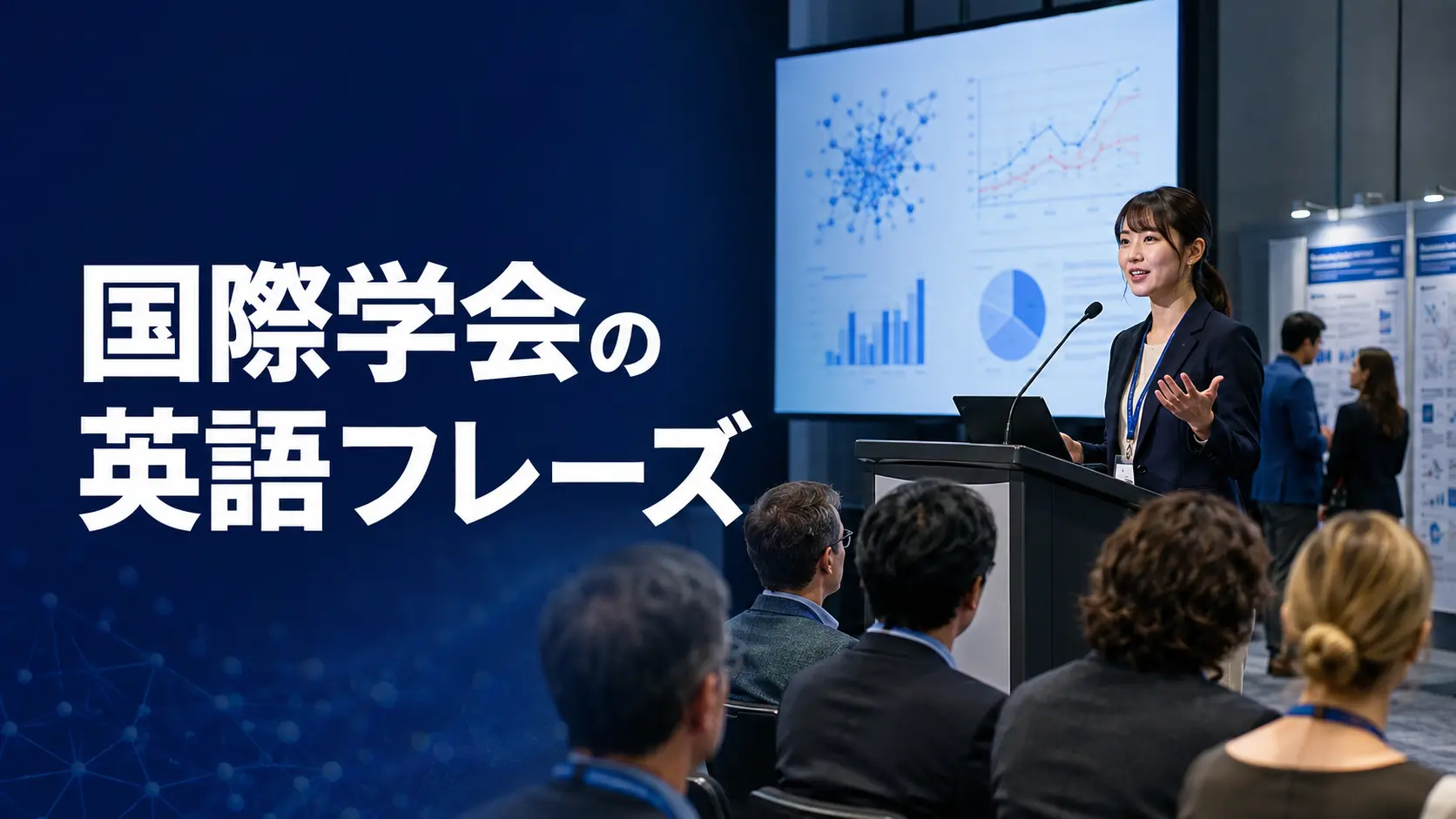
国際学会では、発表原稿を準備していても、スライドの切り替え、質疑応答、ポスター前での説明、懇親会での会話など、その場で英語を使う場面が続きます。すべてを難しい学術英語で話す必要はありません。研究の目的、結果、根拠、限界を短い文で区切って伝えることが大切です。
この記事では、国際学会の口頭発表・質疑応答・ポスター発表・交流で使える英語フレーズを、当日の流れに沿って紹介します。英語が聞き取れない原因や本番までの練習法を知りたい方は、be:RIZEの「国際学会の英語が聞き取れない|発表・質疑応答・懇親会に備える勉強法」もあわせてご覧ください。
Contents
国際学会の発表を始める英語フレーズ
- Good morning. Thank you for the opportunity to present our work.
おはようございます。私たちの研究を発表する機会をいただき、ありがとうございます。 - My name is Yuki Tanaka from ABC University.
ABC大学の田中由紀です。 - Today, I’d like to talk about our recent study on …
本日は、〜に関する私たちの最近の研究についてお話しします。 - The title of my presentation is …
発表タイトルは〜です。 - I have no conflicts of interest to disclose.
開示すべき利益相反はありません。 - My presentation is divided into four parts.
発表は4つの部分に分かれています。
利益相反の表現や開示方法は、必ず所属機関と学会の指定に従ってください。
研究背景と目的を説明する英語
- Let me begin with some background.
まず背景からご説明します。 - Previous studies have shown that …
先行研究では〜が示されています。 - However, it remains unclear whether …
しかし、〜かどうかはまだ明らかではありません。 - There is limited evidence regarding …
〜に関するエビデンスは限られています。 - The aim of this study was to examine …
本研究の目的は〜を検討することでした。 - We hypothesized that …
私たちは〜と仮説を立てました。 - This study addresses the following research question.
本研究では、次の研究課題を扱います。
研究方法を説明する英語フレーズ
- We conducted a prospective study.
前向き研究を実施しました。 - Participants were recruited between April and December.
参加者は4月から12月の間に募集しました。 - The participants were divided into two groups.
参加者を2つのグループに分けました。 - We measured three main outcomes.
3つの主要なアウトカムを測定しました。 - The data were analyzed using …
データは〜を用いて解析しました。 - This slide summarizes the study design.
このスライドは研究デザインをまとめたものです。 - For the full inclusion criteria, please refer to the paper.
組み入れ基準の詳細は論文をご参照ください。
スライドを切り替え、図表を案内する英語
- Let’s move on to the results.
結果に移ります。 - Please look at the graph on the left.
左側のグラフをご覧ください。 - As shown in this table, …
この表に示すように、〜です。 - The blue line represents the intervention group.
青い線は介入群を示しています。 - I’d like to draw your attention to this point.
この点にご注目ください。 - The key message from this slide is …
このスライドの重要なメッセージは〜です。 - I’ll come back to this point later.
この点には後ほど戻ります。
研究結果を伝える英語フレーズ
- We found that …
〜であることが分かりました。 - The primary outcome improved significantly.
主要アウトカムは有意に改善しました。 - There was no significant difference between the groups.
群間に有意差はありませんでした。 - The effect was greater in the younger subgroup.
効果は若年サブグループでより大きく見られました。 - This trend was consistent across the analyses.
この傾向は各解析で一貫していました。 - These results support our hypothesis.
これらの結果は私たちの仮説を支持しています。 - However, the finding should be interpreted with caution.
ただし、この結果は慎重に解釈する必要があります。
限界・今後の研究・結論を説明する英語
- This study has several limitations.
本研究にはいくつかの限界があります。 - First, the sample size was relatively small.
第一に、サンプル数が比較的少ない点です。 - We cannot rule out the possibility of selection bias.
選択バイアスの可能性は排除できません。 - Further validation is needed.
さらなる検証が必要です。 - We plan to examine this in a larger population.
今後、より大きな集団で検討する予定です。 - In conclusion, our findings suggest that …
結論として、今回の結果は〜を示唆しています。 - Thank you for your attention. I’d be happy to take any questions.
ご清聴ありがとうございました。ご質問をお受けします。

質疑応答を始める英語フレーズ
- Thank you for your question.
ご質問ありがとうございます。 - That is an important point.
重要な点です。 - If I understand correctly, you’re asking about …
正しく理解していれば、〜についてのご質問ですね。 - Are you asking about the study population or the analysis method?
研究対象についてですか、それとも解析方法についてですか。 - Let me make sure I understood your question.
ご質問を正しく理解できているか確認させてください。 - The short answer is yes.
短くお答えすると、はい、です。
質問が聞き取れないときの英語
- Could you repeat the last part of your question?
質問の最後の部分をもう一度お願いできますか。 - Could you speak a little more slowly, please?
もう少しゆっくり話していただけますか。 - I’m sorry, I didn’t catch the first part.
申し訳ありません。最初の部分を聞き取れませんでした。 - Could you rephrase the question?
質問を別の言い方でお願いできますか。 - Do you mean that …?
〜という意味でしょうか。 - Could the chair help clarify the question?
座長から質問を明確にしていただけますか。
聞き返すことは失敗ではありません。理解していない質問に推測で答えるより、論点を確認するほうが正確な議論につながります。
結論と根拠を短く答える英語
- Yes. We observed the same pattern in both groups.
はい。両群で同じ傾向が見られました。 - No. Our data do not support that conclusion.
いいえ。私たちのデータはその結論を支持していません。 - We chose this method because …
〜という理由でこの方法を選びました。 - The main reason is that …
主な理由は〜です。 - Our interpretation is based on two findings.
私たちの解釈は2つの結果に基づいています。 - This is consistent with previous studies.
これは先行研究と一致しています。 - However, the effect was limited to one subgroup.
ただし、効果は1つのサブグループに限られていました。
答えられない質問や未検討事項への英語
- We have not examined that question yet.
その点はまだ検討していません。 - We do not have enough data to answer that.
お答えするのに十分なデータがありません。 - That is beyond the scope of the current study.
それは今回の研究範囲を超えています。 - I don’t want to speculate without supporting data.
裏づけるデータなしに推測することは避けたいと思います。 - That is an interesting direction for future research.
今後の研究として興味深い方向性です。 - I’d be happy to discuss this with you after the session.
セッション後にぜひ詳しくお話しさせてください。
質疑応答の英会話例
Audience: Why did you choose this analysis method?
Presenter: Thank you. We chose it because it allowed us to adjust for two major factors. However, additional validation is needed in a larger sample.
聴衆:なぜこの解析方法を選んだのですか。
発表者:ありがとうございます。2つの主要因を調整できるため、この方法を選びました。ただし、より大きなサンプルでの追加検証が必要です。
Audience: Can these findings be generalized to older adults?
Presenter: That is an important question. Our participants were mainly under 65, so we cannot draw a firm conclusion about older adults.
聴衆:この結果は高齢者にも一般化できますか。
発表者:重要なご質問です。参加者は主に65歳未満でしたので、高齢者について確かな結論を出すことはできません。
ポスター発表で使える英語フレーズ
- Would you like a quick overview of the study?
研究の概要を簡単にご説明しましょうか。 - The main finding is shown here.
主な結果はこちらに示しています。 - This section explains our methodology.
この部分で研究方法を説明しています。 - We compared these two groups.
この2群を比較しました。 - What aspect of the study are you most interested in?
研究のどの点に最もご関心がありますか。 - Would you like me to go into more detail?
もう少し詳しくご説明しましょうか。 - Here is my contact information.
こちらが私の連絡先です。
懇親会・ネットワーキングで使える英語
- Hi, I enjoyed your presentation.
こんにちは。発表、とても興味深かったです。 - What are you currently working on?
現在はどのような研究に取り組んでいますか。 - Our research areas seem to overlap.
私たちの研究領域には共通点がありそうですね。 - How did you become interested in this topic?
どのようにしてこのテーマに関心を持たれたのですか。 - I’d like to learn more about your work.
先生の研究についてもっと伺いたいです。 - Would it be all right if I followed up by email?
後日メールでご連絡してもよろしいでしょうか。 - It was a pleasure talking with you.
お話しできてうれしかったです。
国際学会で覚えたい英単語
| 英語 | 意味 |
|---|---|
| oral presentation | 口頭発表 |
| poster presentation | ポスター発表 |
| session chair | 座長 |
| audience | 聴衆 |
| background | 研究背景 |
| objective / aim | 目的 |
| methodology | 研究方法 |
| finding | 研究結果・発見 |
| interpretation | 解釈 |
| limitation | 限界 |
| sample size | サンプル数 |
| selection bias | 選択バイアス |
| generalize | 一般化する |
| validate | 検証する |
| conflict of interest | 利益相反 |
| networking reception | 交流会・懇親会 |
まとめ
国際学会の英語は、発表原稿を読むことだけではありません。質問の論点を確認し、結論、根拠、限界・今後の順に短く答える型を持っておくと、質疑応答でも話し始めやすくなります。ポスター発表や懇親会では、説明だけで終わらず、相手の研究に関心を示す質問も準備しておきましょう。
実験条件・結果・仮説を説明する表現は「研究開発で使う英語フレーズ」、製薬分野の薬事・安全性・品質との連携は「製薬会社で使う英語フレーズ」、会議での聞き返しや意見交換は「英語ミーティングで使えるフレーズ」も参考になります。仕事全般の表現は「仕事・ビジネスで使う英語フレーズ総まとめ」から探せます。
医師が外国人患者への問診・検査・説明・理解確認で使う表現は、医師・医療現場で使う英語フレーズも参考になります。