



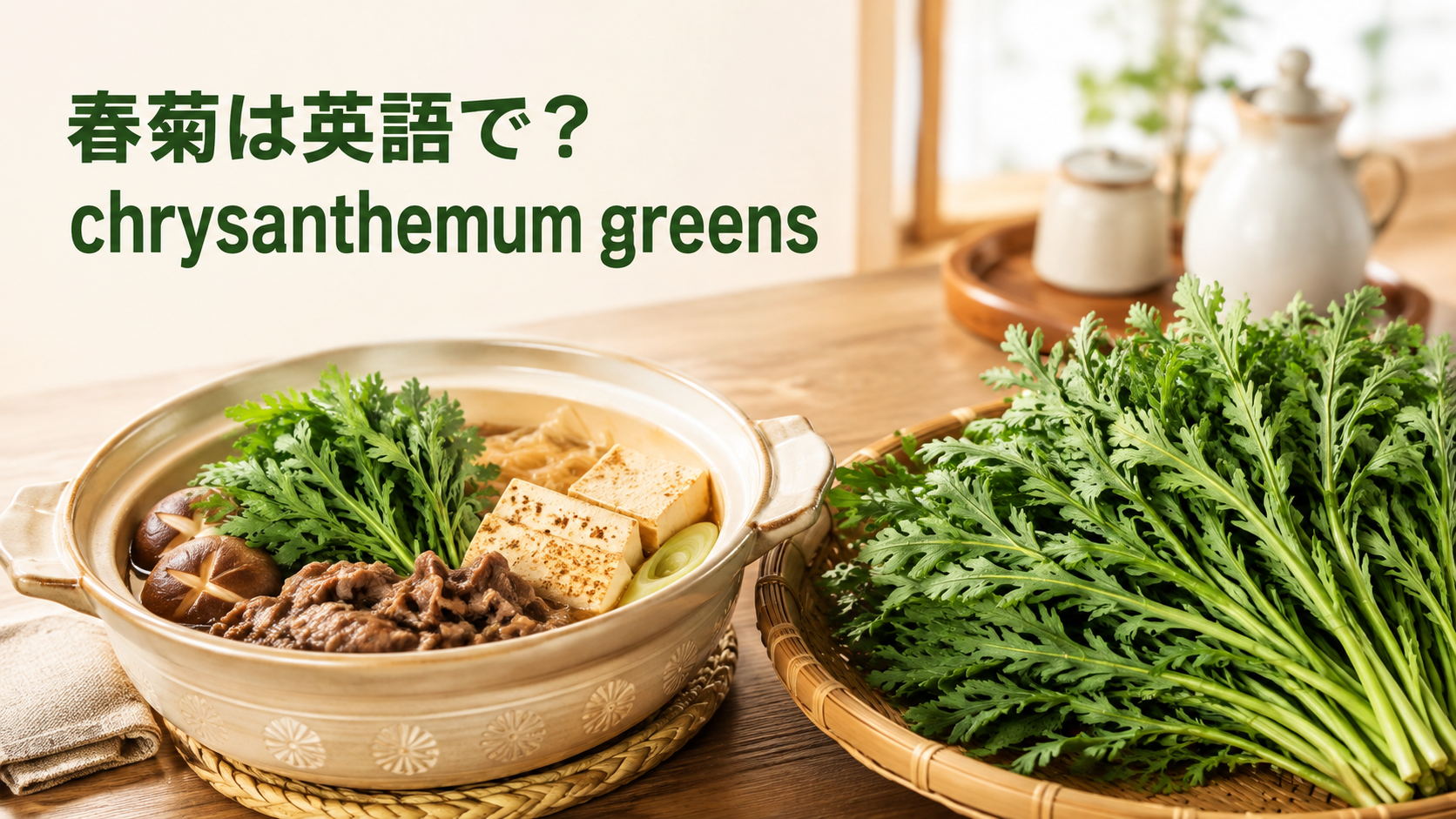
春菊は英語でchrysanthemum greens または chrysanthemum leaves と言います。日本食の文脈では、日本語をそのまま使ったshungikuも通じます。
植物全体の名前としては、crown daisy や garland chrysanthemum も使われます。ただし、食材売り場や料理の説明では「食べる葉」だと分かりやすいchrysanthemum greensが便利です。
この記事では、chrysanthemum greens・crown daisy・shungikuの違い、独特の香りや苦味の表現、すき焼き・鍋・ごま和えなどの料理英語、調理動詞、単語が出てこないときの簡単な言い換えまで紹介します。
Contents
- 1 春菊は英語でchrysanthemum greens
- 2 chrysanthemumの発音
- 3 crown daisyは植物全体の名前
- 4 shungikuは日本食の文脈で便利
- 5 chrysanthemum greens・crown daisy・shungikuの違い
- 6 春菊と水菜・パクチー・ほうれん草の違い
- 7 春菊の香り・味・食感を英語で説明する
- 8 春菊料理を英語で言ってみよう
- 9 洗う・切る・鍋に加えるときの英語
- 10 chrysanthemum greensが出てこないときの言い換え
- 11 スーパーや食卓で使える会話例
- 12 まとめ:食材としての春菊はchrysanthemum greens
- 13 野菜の英語を種類別に調べる
春菊は英語でchrysanthemum greens
chrysanthemum greens は、野菜として食べる春菊の葉を表す、分かりやすい英語です。chrysanthemum は「菊」、greens は食用の葉物野菜を意味します。
観賞用の花としての菊、短い呼び方mum、複数形については、菊は英語で?chrysanthemumの発音・複数形とmumとの違いをご覧ください。
- I bought some chrysanthemum greens for sukiyaki.
すき焼き用に春菊を買いました。 - Add the chrysanthemum greens at the end.
春菊は最後に加えてください。 - Do you like the flavor of chrysanthemum greens?
春菊の風味は好きですか?
chrysanthemum leaves も春菊の食べる葉を指します。海外の日本食材紹介では、shungiku / chrysanthemum leaves のように併記されることもあります。
chrysanthemumの発音
chrysanthemum は長く見えますが、英語では「クリサンセマム」に近い音です。細かく区切るなら、chry-SAN-the-mum のように中央を強めに発音します。
会話中に難しいと感じたら、無理にこの長い単語を言わず、shungiku と言ってから簡単な英語で説明しても大丈夫です。
crown daisyは植物全体の名前
crown daisy は、春菊と同じ植物を指す一般名の一つです。葉を食用にするだけでなく、黄色いキク科の花を咲かせる植物全体を表す場面で使われます。
garland chrysanthemum や edible chrysanthemum という名称もあります。
- crown daisy:植物名として使われる一般名
- garland chrysanthemum:植物・園芸分野で見かける別名
- edible chrysanthemum:食用の菊だと説明する言い方
レストランで料理に入っている春菊を説明するなら、crown daisyよりchrysanthemum greensの方が「葉物野菜」だと伝わりやすいでしょう。
shungikuは日本食の文脈で便利
shungiku は日本語由来の名称です。日本料理、アジア食材店、レシピなどでは、そのまま使われることがあります。
- Shungiku is commonly used in Japanese hot pots.
春菊は日本の鍋料理によく使われます。 - This is shungiku, also known as chrysanthemum greens.
これは春菊で、chrysanthemum greensとも呼ばれます。
相手がshungikuを知らなければ、a Japanese leafy green with a strong herbal aroma(強いハーブのような香りがある日本の葉物野菜)と補足できます。
chrysanthemum greens・crown daisy・shungikuの違い
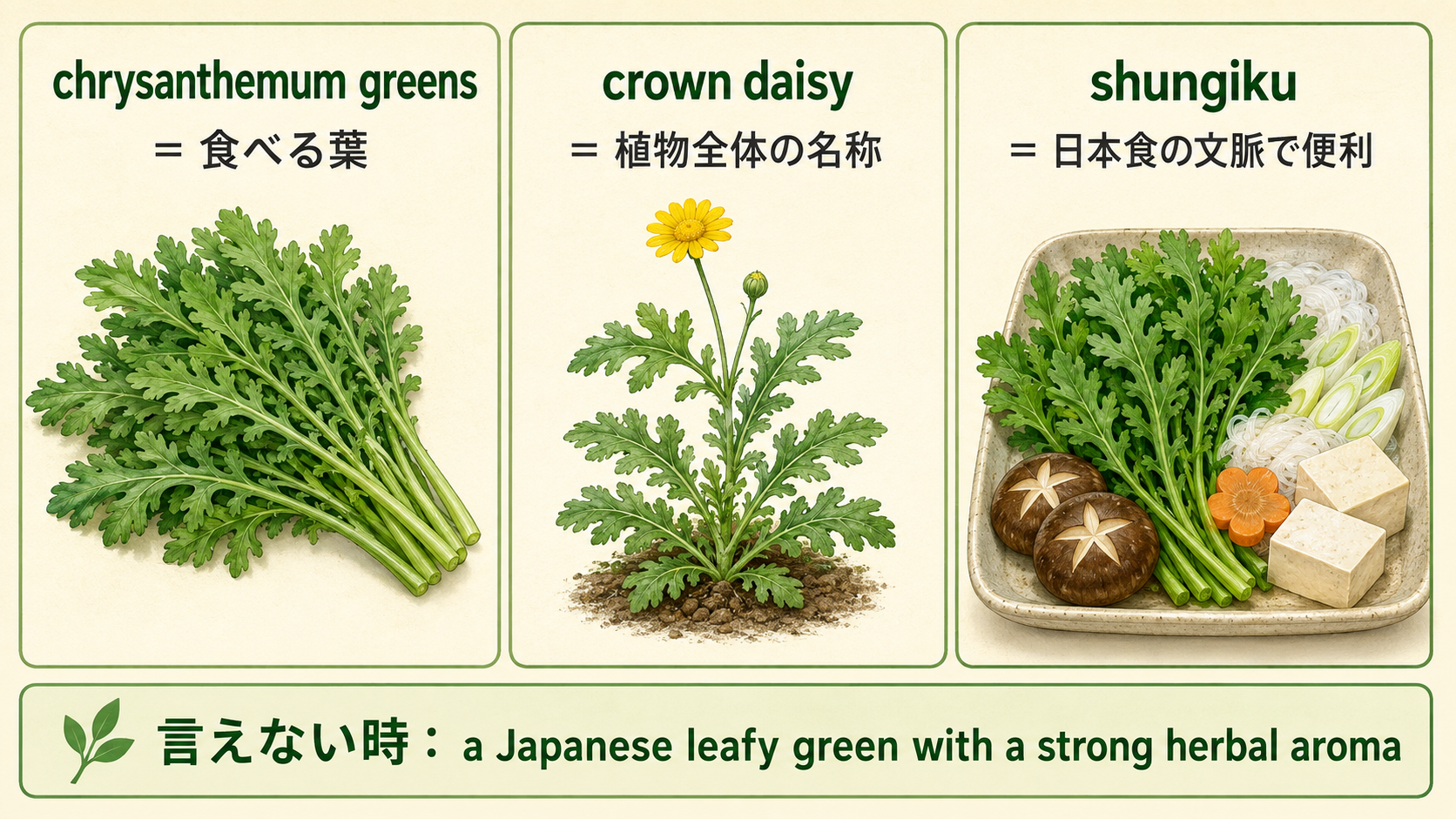
- chrysanthemum greens:食材としての葉を伝えやすい
- crown daisy:花も含めた植物全体の名称として使われる
- shungiku:日本料理や日本食材の文脈で便利
Shungiku is the Japanese name for chrysanthemum greens, which come from a plant also called crown daisy.
shungikuはchrysanthemum greensの日本語名で、その植物はcrown daisyとも呼ばれます。
春菊と水菜・パクチー・ほうれん草の違い
- chrysanthemum greens:春菊。菊に似た香りとほろ苦さがある
- mizuna:水菜。細く切れ込んだ葉で、味はより穏やか
- cilantro / coriander:パクチー。柑橘系を思わせる独特の香り
- spinach:ほうれん草。香りは春菊ほど強くない
Chrysanthemum greens have a stronger aroma than mizuna.
春菊は水菜より香りが強いです。
It has a distinctive herbal flavor, but it doesn’t taste like cilantro.
独特のハーブのような風味がありますが、パクチーの味とは異なります。
水菜について詳しくは、「水菜は英語で?」もご覧ください。
春菊の香り・味・食感を英語で説明する
- aromatic:香りの強い、芳香のある
- herbal:ハーブのような
- distinctive:独特の、特徴的な
- slightly bitter:少し苦い
- earthy:土や大地を感じさせる風味の
- tender:柔らかい
- fresh:さわやかな、みずみずしい
- Shungiku has a distinctive herbal aroma.
春菊には独特のハーブのような香りがあります。 - The leaves are tender and slightly bitter.
葉は柔らかく、少し苦味があります。 - Its strong aroma goes well with rich hot-pot dishes.
強い香りは、濃厚な鍋料理によく合います。
春菊料理を英語で言ってみよう
すき焼きの春菊
chrysanthemum greens in sukiyaki または shungiku in sukiyaki と言えます。
Shungiku is a common ingredient in sukiyaki.
春菊はすき焼きの定番具材です。
Add the shungiku near the end so it doesn’t overcook.
火を通しすぎないよう、春菊は終盤に加えてください。
春菊の鍋
- Japanese hot pot with chrysanthemum greens:春菊入りの日本の鍋
- chrysanthemum greens in hot pot:鍋に入れた春菊
- hot pot with tofu, mushrooms, and shungiku:豆腐・きのこ・春菊の鍋
春菊のごま和え
chrysanthemum greens with sesame dressing または sesame-dressed shungiku と説明できます。
I made chrysanthemum greens with sesame dressing.
春菊のごま和えを作りました。
そのほかの料理
- shungiku tempura:春菊の天ぷら
- blanched chrysanthemum greens:さっとゆでた春菊
- stir-fried chrysanthemum greens:春菊炒め
- chrysanthemum greens soup:春菊のスープ
- shungiku salad:春菊のサラダ
洗う・切る・鍋に加えるときの英語
- wash the shungiku thoroughly:春菊をよく洗う
- trim off the ends:根元の端を切り落とす
- remove the tough stems:硬い茎を取り除く
- separate the leaves and stems:葉と茎を分ける
- cut it into bite-sized pieces:食べやすい大きさに切る
- blanch it briefly:さっとゆでる
- drain it well:よく水を切る
- add it near the end:終盤に加える
- cook until just wilted:少ししんなりするまで加熱する
- do not overcook it:火を通しすぎない
Remove the tough stems and cut the shungiku into bite-sized pieces.
硬い茎を取り除き、春菊を食べやすい大きさに切ります。
Add it near the end and cook until just wilted.
終盤に加え、少ししんなりするまで加熱します。
chrysanthemum greensが出てこないときの言い換え
chrysanthemumは長く、すぐに出てこなくても不思議ではありません。簡単な単語で見た目・香り・使い方を説明しましょう。
- a Japanese leafy green with a strong herbal aroma
強いハーブのような香りがある日本の葉物野菜 - the green vegetable often used in sukiyaki
すき焼きによく使う緑の野菜 - a slightly bitter leafy vegetable used in hot pots
鍋に使う少し苦い葉物野菜 - green leaves with a distinctive smell
独特の香りがある緑の葉
I can’t remember the English name, but it’s a Japanese leafy green often used in sukiyaki.
英語名が思い出せませんが、すき焼きによく使う日本の葉物野菜です。
 しゅみすけ(大山俊輔)
スーパーや食卓で使える会話例
海外のアジア食材店で
A: Do you have chrysanthemum greens?
春菊はありますか?
B: You may find them labeled as shungiku.
shungikuという表示で置いてあるかもしれません。
すき焼きを説明するとき
A: What are these green leaves?
この緑の葉は何ですか?
B: They’re shungiku, or chrysanthemum greens. They have a distinctive aroma.
春菊です。英語ではchrysanthemum greensと言い、独特の香りがあります。
苦味について話すとき
A: Is shungiku bitter?
春菊は苦いですか?
B: It’s slightly bitter and very aromatic.
少し苦味があり、とても香りが強いです。
まとめ:食材としての春菊はchrysanthemum greens
春菊は英語でchrysanthemum greensまたはchrysanthemum leavesです。日本食の文脈ではshungikuも使えます。crown daisyやgarland chrysanthemumは、植物全体の名前として見かけます。
長い単語が出てこないときは、a Japanese leafy green with a strong herbal aroma や the green vegetable often used in sukiyaki と言い換えれば十分です。
鍋に使う食材の英語は、白菜の英語、ねぎの英語、きのこの英語、野菜・果物の英語まとめもあわせてご覧ください。