


「宇宙」は英語でspaceと習いますが、どんな宇宙を指すかによってouter space・universe・cosmosも使い分けます。
この記事は、太陽・月・惑星から銀河、宇宙開発まで、宇宙に関する英語記事をつなぐ総合ガイドです。
最初に違い
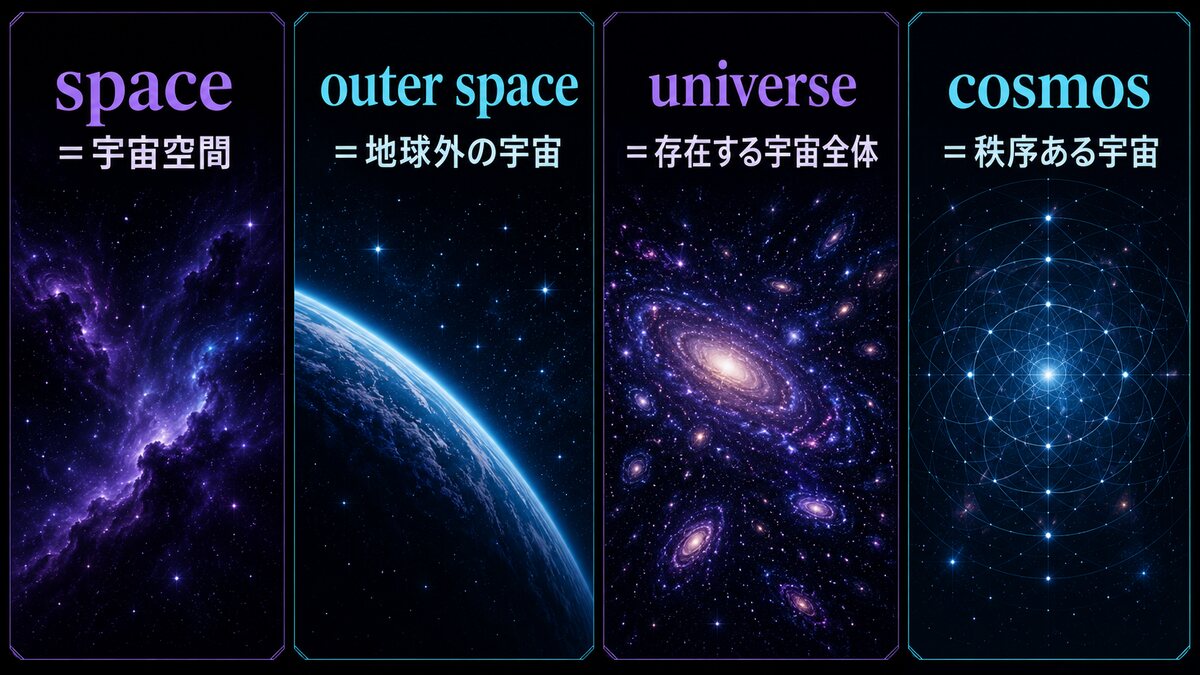
space=宇宙空間、universe=存在する宇宙全体、cosmos=秩序ある宇宙。
Contents
宇宙は英語でspace・universe・cosmos
| 英語 | 中心イメージ | よく使う場面 |
|---|---|---|
| space | 地球外の空間 | 宇宙旅行・宇宙開発 |
| outer space | 地球の大気圏外 | 地上のspaceとの区別 |
| the universe | 存在するものすべて | 科学・宇宙論 |
| the cosmos | 秩序ある宇宙 | 科学解説・哲学・文学 |
spaceの使い方
spaceは不可算名詞として無冠詞で使うのが基本です。go to spaceより、一般にはgo into spaceやtravel in spaceが自然です。
- Astronauts live and work in space.
- The spacecraft was launched into space.
- Space exploration requires advanced technology.
universeの使い方
universeは空間だけでなく、時間・物質・エネルギーを含む宇宙全体。通常はthe universeとtheを付けます。
- The universe is expanding.
- There are billions of galaxies in the universe.
cosmosのニュアンス
cosmosも宇宙全体を表しますが、「秩序だった全体」という語源的な響きがあります。形容詞はcosmic(宇宙の)です。
- Scientists study the origins of the cosmos.
- Cosmic rays travel through space.
 しゅみすけ(大山俊輔)
spaceは「場所」、universeは「存在するもの全部」、cosmosは「秩序ある全体」。この3つのレンズで見ると、日本語の「宇宙」が立体的になります。
宇宙の英語|テーマ別入口
太陽系と惑星
天体の種類
銀河と宇宙の階層
銀河・宇宙は英語で?galaxy・Milky Way・universeの違い
太陽・月・8惑星の記事
- 太陽=the Sun
- 月=the Moon
- 水星=Mercury
- 金星=Venus
- 地球=Earth
- 火星=Mars
- 木星=Jupiter
- 土星=Saturn
- 天王星=Uranus
- 海王星=Neptune
宇宙開発に関する英語
| 宇宙飛行士 | astronaut |
| 宇宙船 | spacecraft / spaceship |
| ロケット | rocket |
| 人工衛星 | satellite / artificial satellite |
| 宇宙ステーション | space station |
| 宇宙探査 | space exploration |
宇宙の天体・現象
| ブラックホール | black hole |
| 星雲 | nebula |
| 銀河 | galaxy |
| 日食 | solar eclipse |
| 月食 | lunar eclipse |
| 流れ星 | shooting star / meteor |
| 隕石 | meteorite |
| 星座 | constellation |
| 天文学 | astronomy |
| 占星術 | astrology |
しゅみすけ(大山俊輔)
ここは宇宙英語の玄関です。これからblack hole、nebula、astronautなどの個別記事が増えるほど、この親記事から学べる範囲も広がっていきます。
まとめ
宇宙空間はspace、地球外空間を明示するならouter space、宇宙全体はthe universe、秩序ある宇宙という響きならthe cosmosです。個別の天体から太陽系、銀河、宇宙全体へリンクをたどって理解を広げてください。